


AI & Sales Technology
8 AI Companies Transforming Hotel Operations Today
AI adoption in hospitality is accelerating, with the global market estimated at $20.47 billion and 82% of hotels expanding their AI use in 2026. This article profiles eight companies applying AI across guest journeys, pricing, procurement, communication, robotics, and group sales, and argues that the RFP-to-proposal workflow is where AI adoption is currently moving fastest on the buyer's side.



AI in Hospitality: Top 8 Companies Building the Infrastructure Behind the Hype
AI has arrived in hotels. That part isn't up for debate anymore.
RateGain, a hospitality technology research firm, estimates the global AI-in-hospitality market at $20.47 billion, growing more than 27% a year. Adoption is picking up speed too. According to Canary Technologies' 2026 survey of hospitality technology decision-makers, 82% of hotels say they're expanding their AI use this year, up from 63% in 2024.
So the interesting question has changed. It's no longer "is AI coming?" It's "where is AI actually changing outcomes, and where is it still a slide in a vendor's roadmap deck?"
A good place to start is a September 2025 Hotels Magazine feature that profiled five companies applying AI across different corners of hospitality: a GDS-turned-data-platform, a natural-language travel search company, a guest-journey infrastructure startup, a procurement automation firm, and a robotics company. That spread is a fair snapshot of where AI money has gone: pricing data, guest search, personalization, back-office procurement, and physical labor.
This list builds on that snapshot. We've kept those five, added two companies working on guest communication and commercial intelligence, and then added the piece most AI-in-hospitality coverage leaves out entirely: the commercial engine that decides whether a hotel actually wins the group and meetings business already sitting in its inbox. That gap deserves attention, because it's where AI adoption is currently moving fastest on the buyer's side of the table.
Here's how AI is showing up across different areas of hotel operations, followed by a closer look at group sales, the area with some of the most direct revenue consequences.
1. Guest Journey Infrastructure: Agentic Hospitality
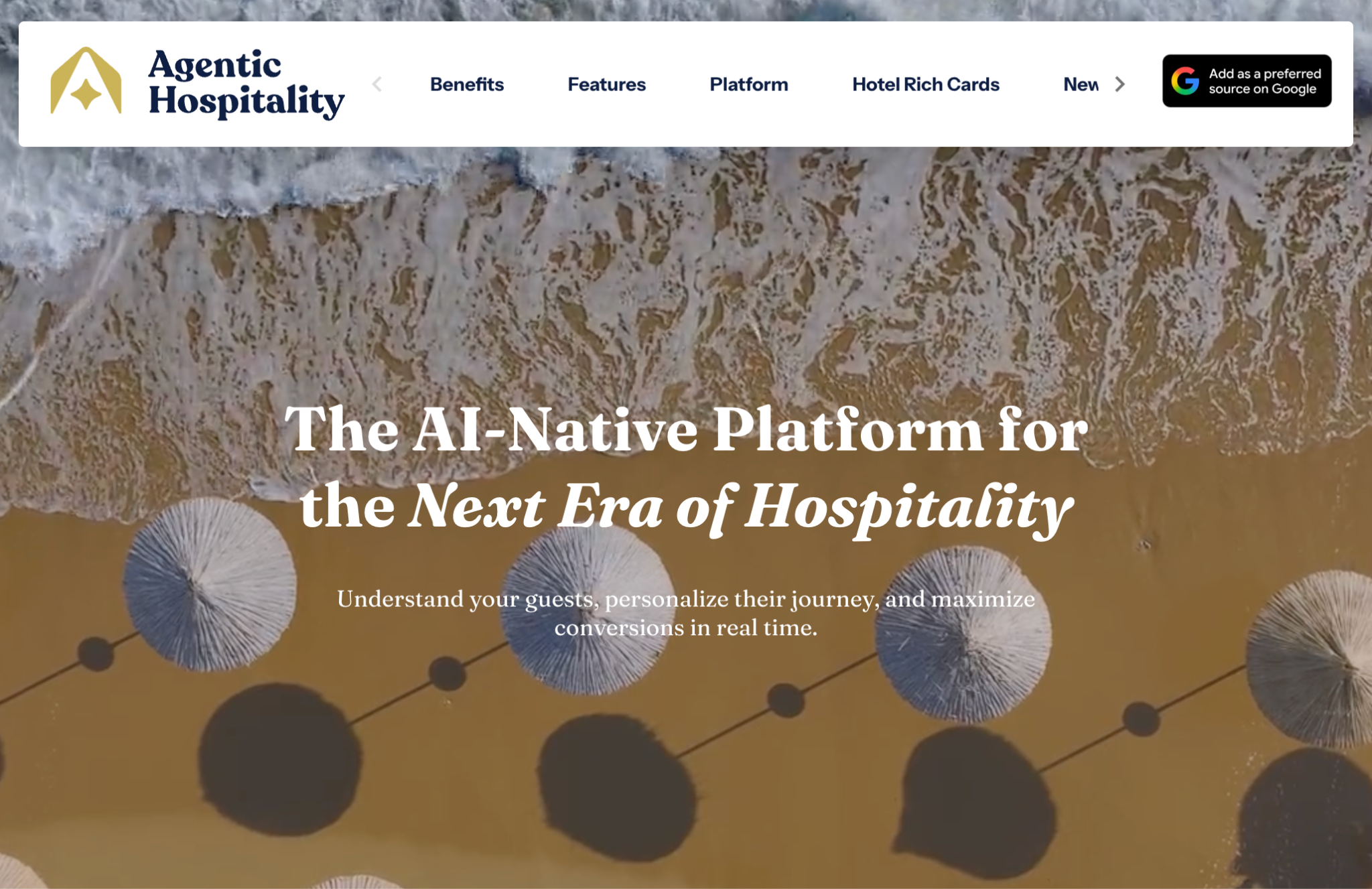
Think about what happens to a guest today. They tell the booking engine one thing, the front desk another, and the restaurant a third, because each system forgets them the moment they walk away. It's like visiting a clinic where every department makes you fill out the same form again.
Agentic Hospitality is building the plumbing to fix that. Specifically, it's a Model Context Protocol adapter that links hotel systems that were never designed to share information: CRS, PMS, POS, CRM, loyalty, and web analytics. The goal is for a guest's preferences and context to follow them across every touchpoint instead of resetting at each one. The company describes the bigger ambition as letting hotels build an AI-native commerce layer inside their own ecosystem, so guest intent isn't captured and monetized by third-party intermediaries first.
The individual features matter less than what this category represents. AI applications keep running into the same wall: they depend on data flowing across systems that were bought separately and never introduced to each other.
2. Guest Search and Discovery: Mobi
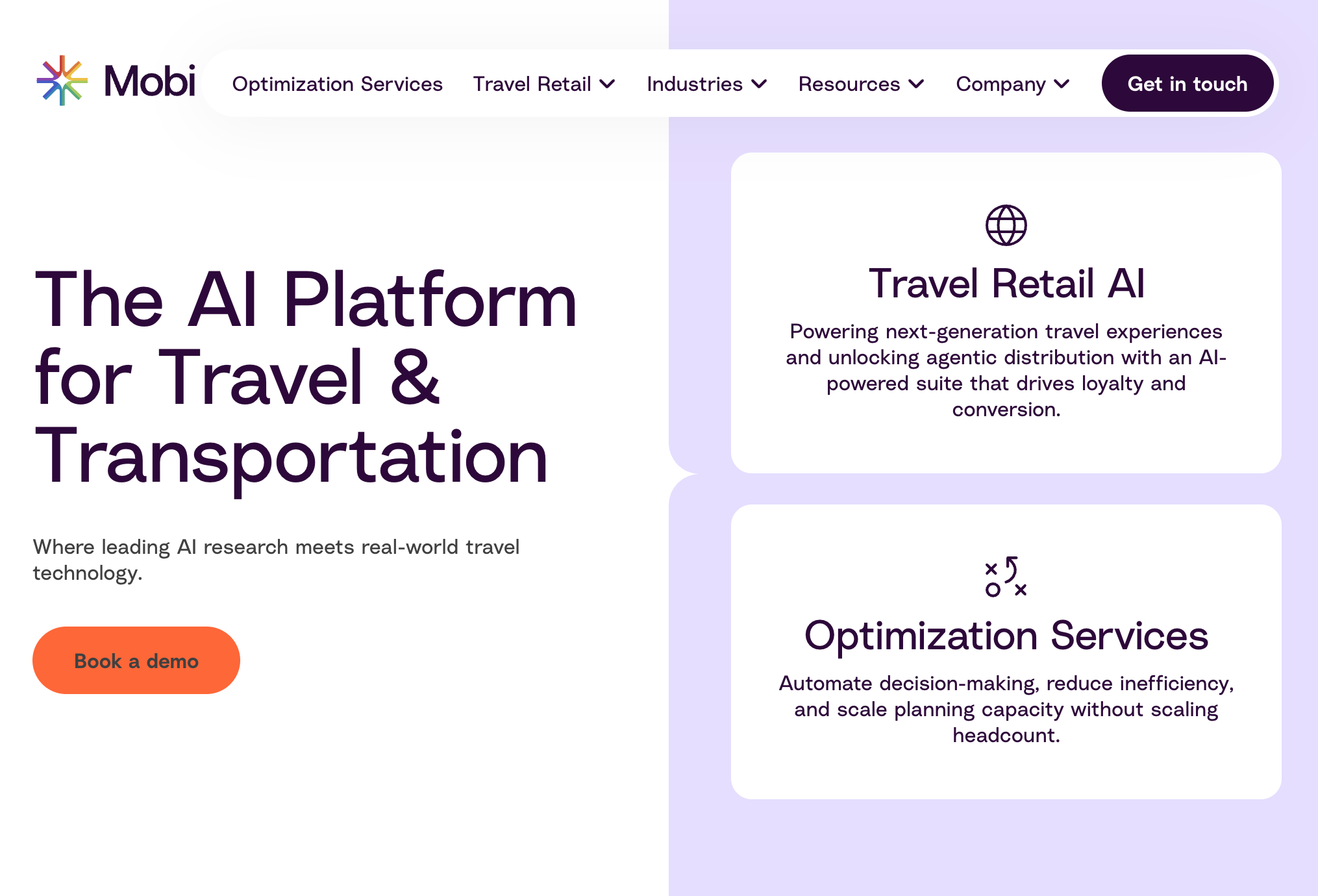
Mobi, founded at MIT, builds natural-language search and virtual concierge infrastructure that connects hotel and travel supplier content to AI-powered interfaces.
The idea behind it is a shift in where trip planning starts. The old path was browsing: a traveler starts on an OTA, scrolls through options, and works backward to a property. The emerging path is asking: a traveler describes what they want to a conversational AI and gets matched forward. It's the difference between wandering the aisles of a store and telling a knowledgeable shopkeeper what you need. That changes when and how a hotel's own content gets discovered.
This category is earlier-stage than pricing AI. It depends on travelers actually using conversational AI for trip planning at scale, which is growing but not yet universal. For hotels, the practical takeaway today is less about buying a specific tool and more about making sure property data and content are structured so AI search systems can read and surface them.
3. Pricing and Demand Data: Amadeus
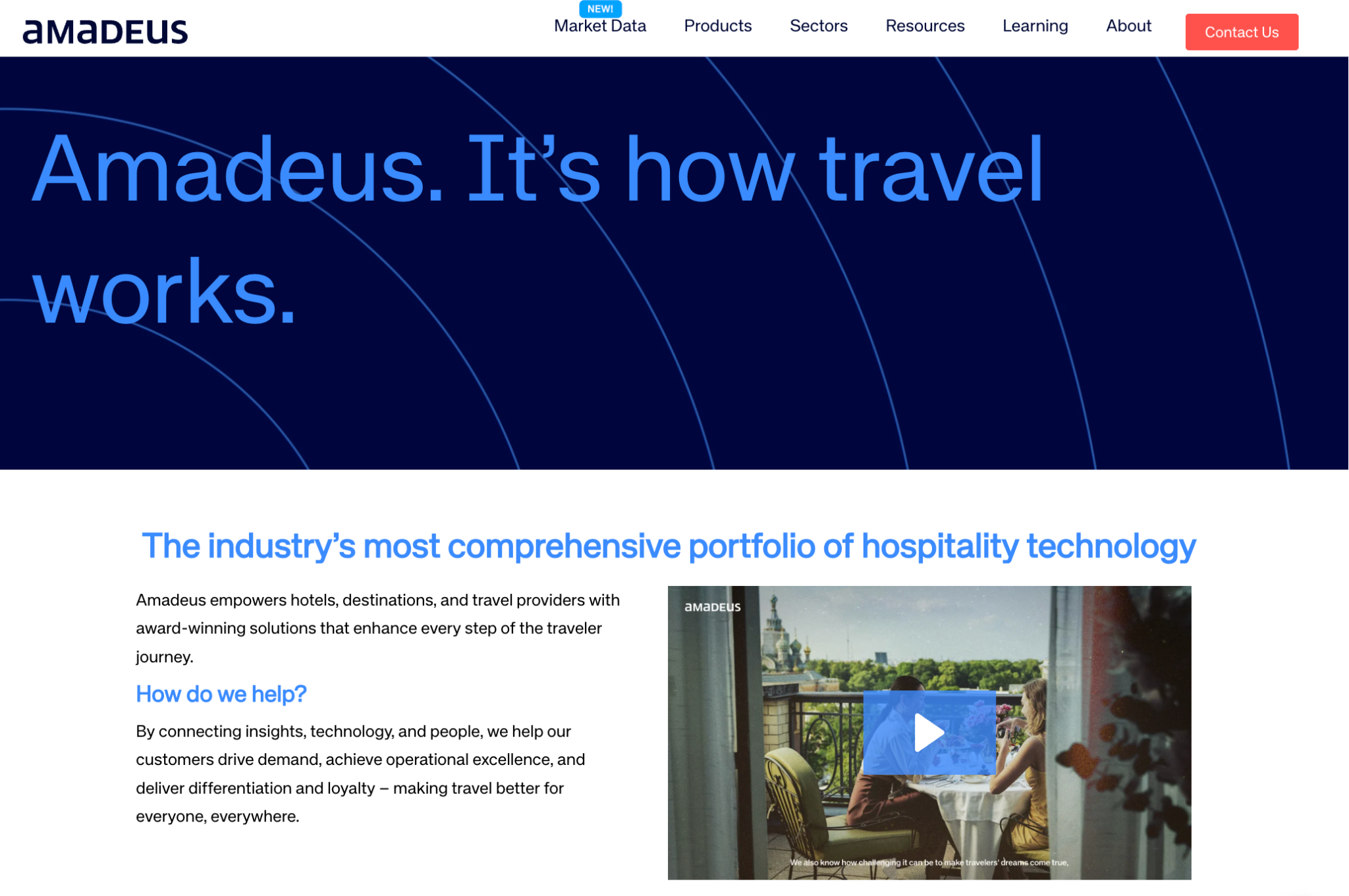
Amadeus built its name as a global distribution system, but its current hospitality suite leans heavily on AI applied to forecasting data. Its Demand360 platform gives hotels forward-looking booking data to guide pricing strategy, with a generative AI chatbot layer on top so hoteliers can ask questions of that data in plain language instead of building custom reports.
The logic is the same one behind most revenue management AI. Repeatable, data-heavy work is a good fit for automation. That frees revenue managers for the calls that still need a human, like reading a market shift the model has never seen before.
AI-assisted forecasting and dynamic pricing is one of the more mature applications in hospitality. Industry research on AI-driven revenue management points to real-time dynamic pricing lifting ADR by roughly 10 to 15%, and 86% of hoteliers now report relying on AI for demand forecasting, according to 2026 hospitality technology research. It's also the application most hotels have already budgeted for, which helps explain why it tends to show up first in industry surveys.
4. Procurement and Back-Office Automation: Reeco
Reeco applies AI to procure-to-pay workflows. It uses optical character recognition and machine learning to extract, validate, and auto-code vendor invoices, a job that quietly eats a lot of back-office hours, especially at management companies running multiple properties. The platform also connects real-time inventory data to recipes and vendor pricing, so hotels can spot food cost waste at the menu level. According to the company, properties using the platform have reported procurement time reductions of up to 60%.
Procurement is a good reminder that some of AI's most useful work happens where guests never look and the industry rarely pays attention, yet it lands directly on margin. Adoption here has concentrated among multi-property management companies, and that makes sense. For a single independent hotel, invoices are a chore. Across twenty properties doing things twenty slightly different ways, inconsistency becomes the real pain.
5. Guest Communication: Canary Technologies
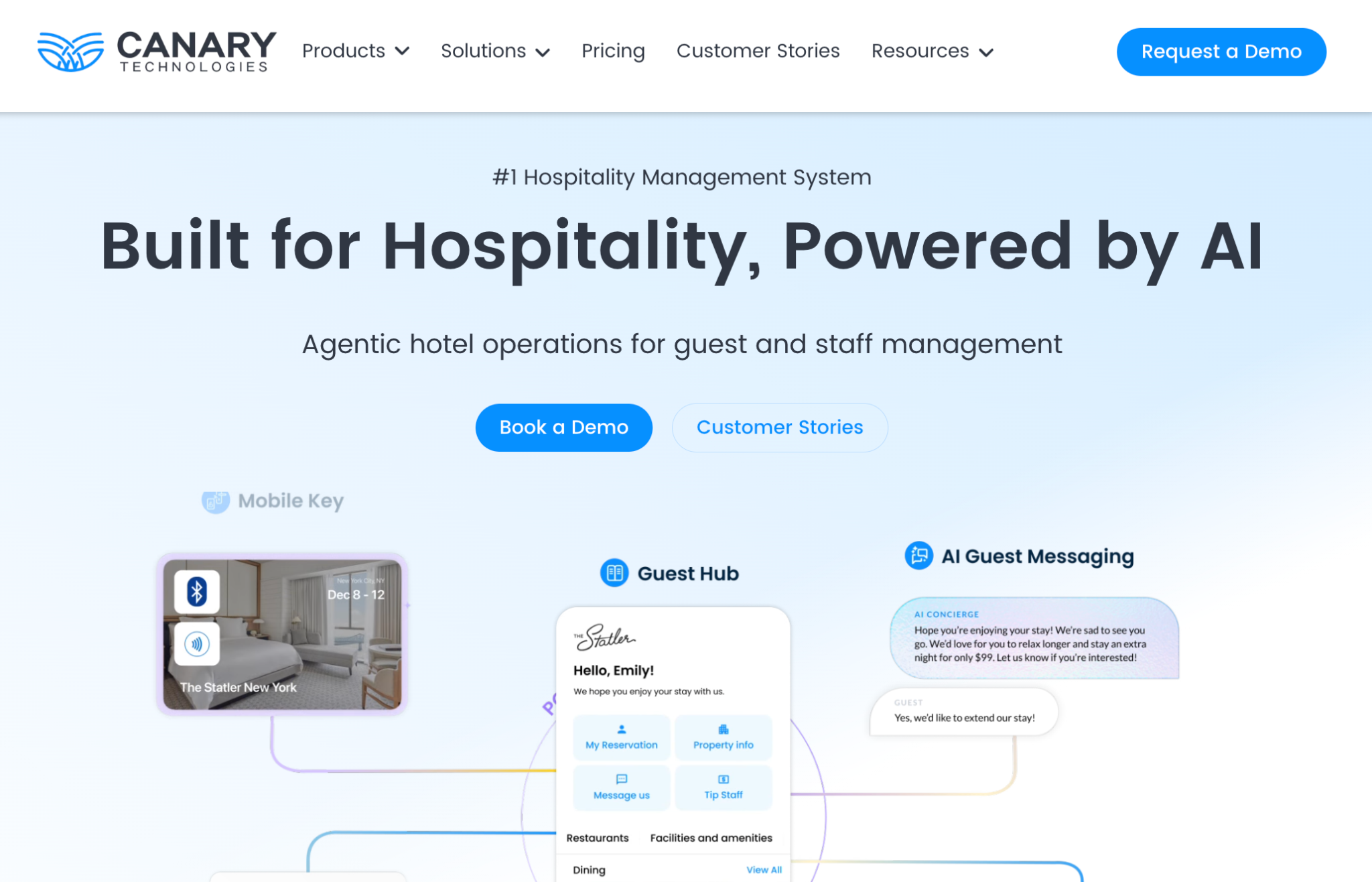
Canary Technologies started with guest management tools like mobile check-in, digital authorization forms, and upsells. It has since built an AI layer across every channel a guest uses to reach a hotel. Its AI Voice product answers calls around the clock, resolves common requests, and routes the rest to the right staff member. AI Webchat and AI Messaging do the same work over text and web chat. In March 2026, the company launched a Hospitality AI Agent Studio, letting hotels configure pre-built agents for roles like front desk, concierge, and central reservations, or build their own. Canary's AI Voice was named Best Voice & Call Center Software in the 2026 HotelTechAwards.
The problem this category solves is simple and expensive: nobody picked up. According to the company, up to 40% of hotel calls go unanswered, and each missed call is a booking, upsell, or service request that goes somewhere else.
6. Commercial Intelligence and AI Distribution: Lighthouse
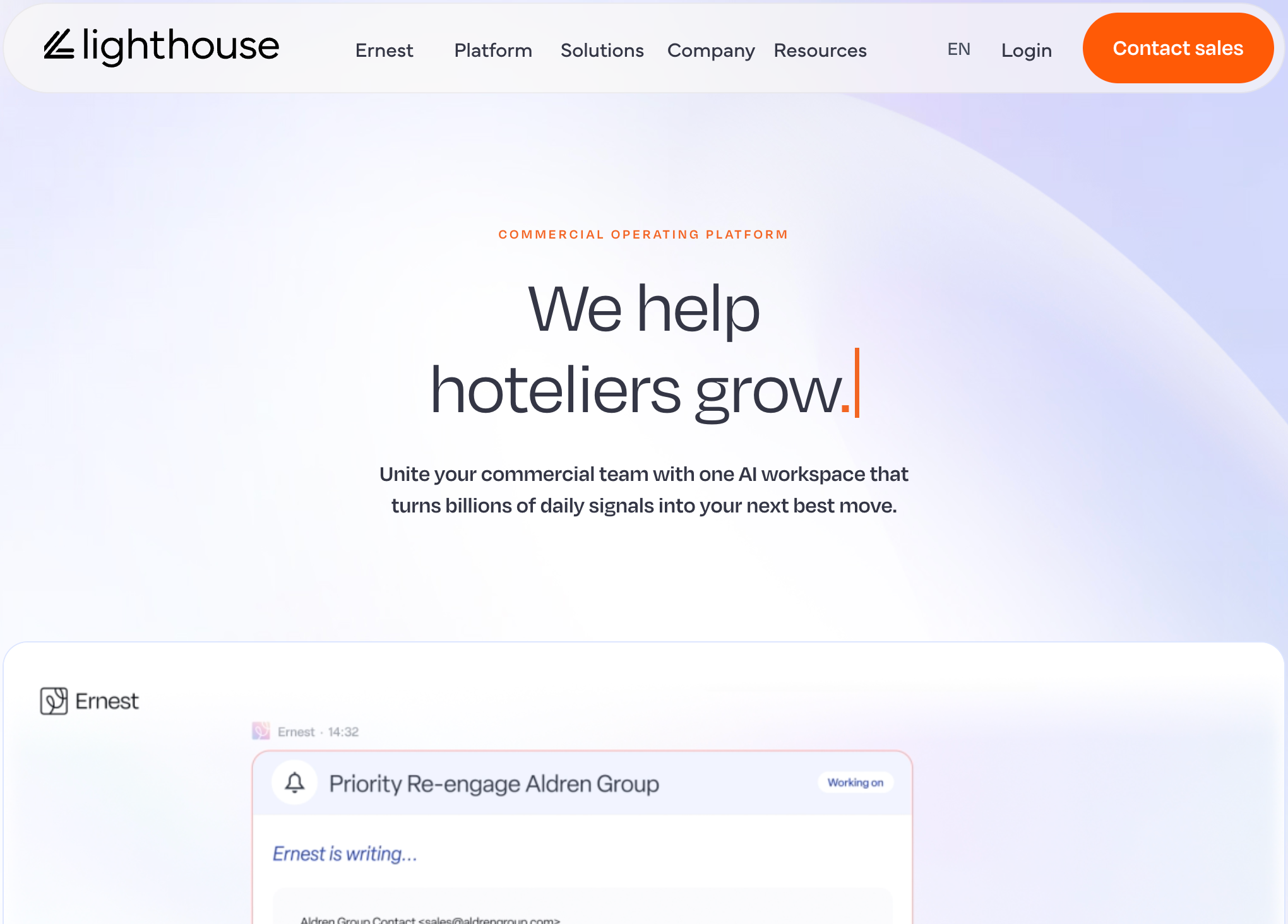
Lighthouse, formerly OTA Insight, built its business on market and rate intelligence. It now positions itself as an AI commercial operating platform that connects pricing, distribution, marketing, and performance data.
It has been busy in 2026. In February, it introduced Revenue Agent, which scans market data to surface high-priority anomalies and opportunities for each property. In June, it launched Ernest, a conversational AI workspace for commercial teams that works across a hotel's own data and systems, currently in beta. It has also moved into AI distribution. Its Connect AI product aims to make hotels discoverable and bookable by AI agents, and its May 2026 acquisition of Hotelrank.ai added tracking of how hotels rank and are described on platforms like ChatGPT and Gemini, including whether those platforms send travelers to book direct or through an OTA.
Lighthouse makes a neat pair with Mobi. Mobi helps AI interfaces read a hotel's content. Lighthouse measures what those interfaces end up saying about the hotel. One writes the résumé; the other checks what the interviewer heard.
The company's stated view is that the bigger AI shift is happening inside the commercial team and the back office, more than at the guest-facing layer.
7. Labor and Physical Operations: Tailos
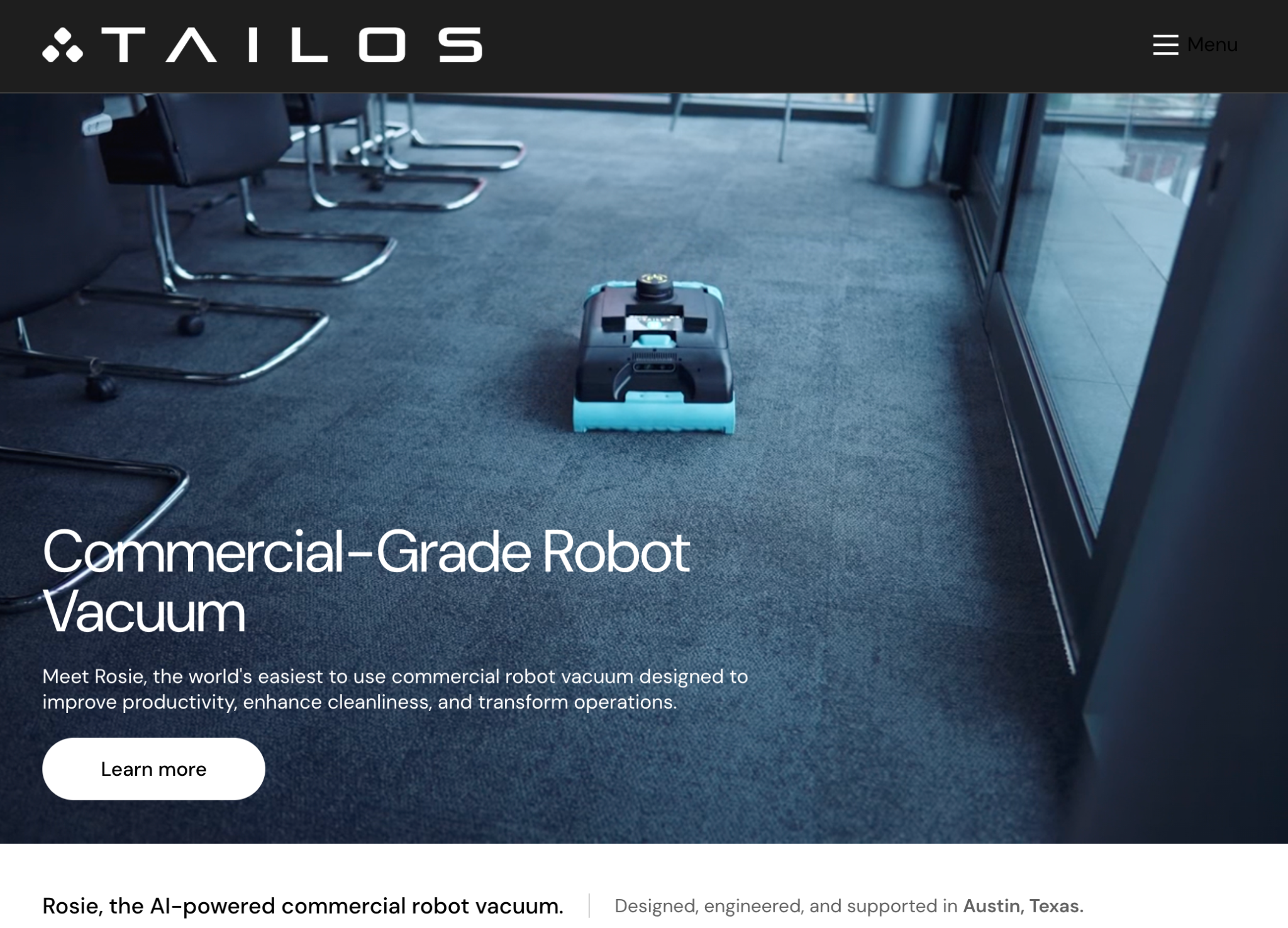
Tailos makes an AI-powered commercial robot vacuum, aimed at easing labor strain in an industry that has been short on labor for a long time. The AI handles navigation through busy, complex spaces and adjusts cleaning routes based on how spaces are actually used, rather than following a fixed schedule. Hotels using it have reported lower overtime and outsourced labor costs, plus faster room readiness.
Robotics is the most visibly "AI" thing a guest will ever notice, and it sits furthest from the commercial side of the business. It works as a bookend for this list. AI in hospitality now stretches from a chatbot answering a booking question to a machine finding its way down a hallway.
Where AI Is Moving Fastest Right Now: The Group RFP Process
Look back across those seven categories and notice what none of them touch: what happens after a corporate meeting planner sends a group RFP to a hotel.
That's a real blind spot, because the buyer's side of that transaction is adopting AI faster than almost any other part of hospitality commerce. A 2026 survey of 258 corporate travel managers, run by the Global Business Travel Association with Radisson Hotel Group, found that AI use in hotel RFPs is projected to jump from 32% in the most recent sourcing cycle to 69% in the cycle ahead. Buyers report strong comfort using AI for decision support (70%) and process automation (56%), while stressing that human judgment is still needed for qualitative factors like brand fit and traveler preferences.
Now picture the other side of that exchange. For most hotel sales teams, the response process is still largely manual. Industry estimates put a hand-built RFP response at roughly 37 minutes. Roughly 36% of group RFPs go unanswered by hotels altogether, and that's not because the demand isn't there. It's because inbound volume outruns the sales team. Hotel sellers spend an estimated 71% of their time on non-selling administrative work, a gap that contributes to an estimated $500,000 in annual revenue leakage per salesperson across the industry.
8. Hippo Rev: AI Applied to Group Sales Revenue Capture and Response
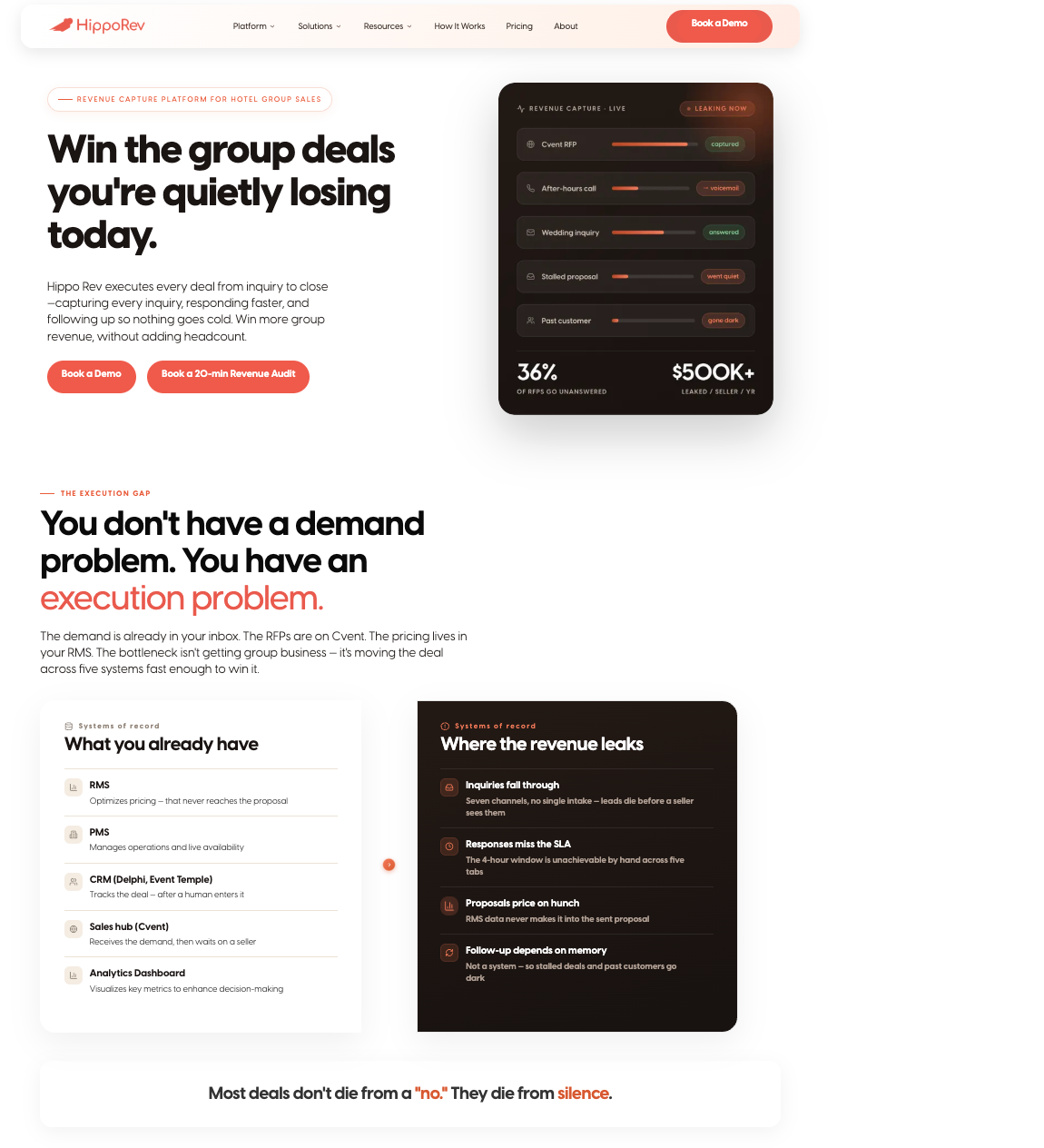
This is the gap Hippo Rev is built for. It earns the last spot on this list because it applies AI to a workflow the other seven companies don't touch: everything that happens between an inbound group inquiry and a submitted, priced proposal.
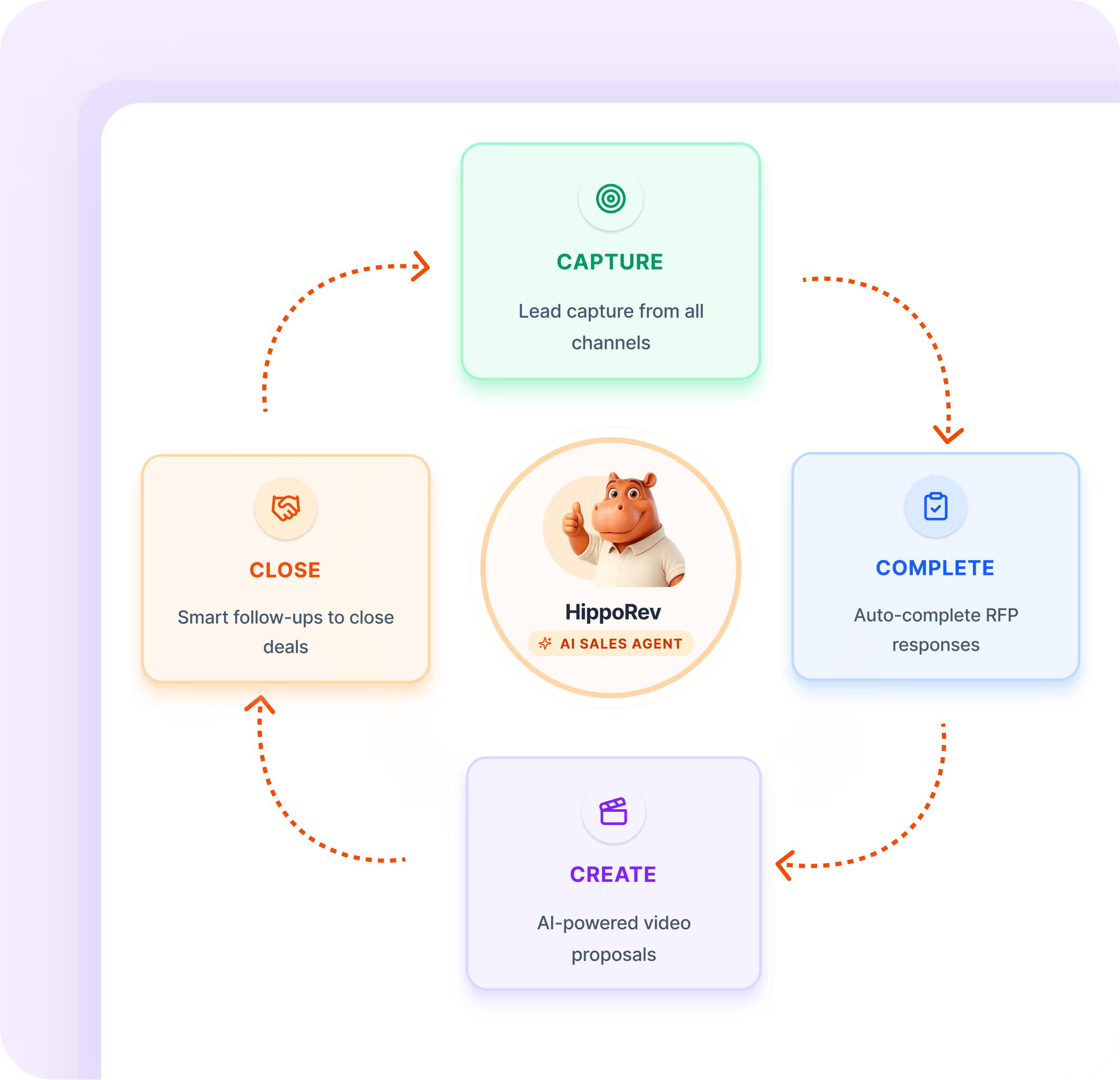
The platform is organized around three stages: Capture, Convert, and Grow.
Capture. Group leads arrive from everywhere: RFP platforms like Cvent, HotelPlanner, and Groups360, direct email, phone, and the hotel's own website. Today, each of those channels often gets checked separately by whoever happens to have a free minute. Hippo Rev pulls them into a single point of visibility. Inquiries are qualified against the property's ideal lead profile and routed to the right salesperson automatically, which closes the gap where leads sit unseen across scattered inboxes and portals.
Convert. Instead of a seller checking the revenue management system in one tab and the property management system in another, the platform pulls pricing and availability context directly from those existing systems. It uses that data to help assemble a proposal draft against the RFP's stated requirements. A seller reviews, adjusts, and approves before anything goes out. Every pricing decision stays subject to human sign-off. That matters, because both the corporate buyer research above and broader hospitality AI research point the same way: human oversight remains essential for judgment calls a model can't make from an RFP document alone.
Grow. Once a proposal is out, a shared deal room lets the planner review details, ask questions, and track the deal's status. Engagement signals flag when a proposal has been opened or reviewed. That gives sales teams a real basis for deciding where to follow up. The alternative is blind, equal-effort follow-up across every open deal, which is one of the most common reasons proposals stall quietly instead of closing.
The design is narrower than "AI in hospitality" might suggest, and deliberately so. It targets the manual coordination tax sales teams pay every time a group inquiry has to travel across a stack of systems that were never built to talk to each other.
What This Means for Hotels Evaluating AI Investment
Step back and a consistent pattern shows up across all eight companies. AI delivers its clearest value where it automates a specific, repeatable coordination task: pricing lookups, invoice coding, robot navigation, call handling, proposal assembly. It struggles where it's asked to replace judgment wholesale.
The flip side is just as consistent. Adoption stalls wherever data lives in disconnected systems AI can't read across. That's why integration, more than the AI models themselves, keeps coming up as the harder problem.
For hotel sales and revenue leaders, the group RFP process is worth watching closely in 2026. It isn't the flashiest AI application in hospitality. But the buyer's side of that transaction is adopting AI faster than the hotel side is responding, and that mismatch has direct, measurable revenue consequences for whichever side moves slower.
Frequently Asked Questions
What's the difference between AI in hospitality generally and AI applied to hotel group sales specifically?
Most AI in hospitality covers guest-facing tools, pricing engines, guest communication, and back-office automation. AI applied to group sales targets the RFP-to-proposal workflow: capturing inbound leads, qualifying them, pulling pricing, and tracking follow-up.
Is AI actually replacing hotel salespeople in group sales?
No. Industry research, including corporate travel buyer surveys, consistently finds that human judgment is still needed for qualitative decisions like pricing exceptions, brand fit, and relationship context. AI handles the repetitive, data-lookup parts of the process.
Why is AI adoption in hotel RFPs increasing so quickly?
Corporate travel buyers are adopting AI for decision support and sourcing automation faster than most hotels are adopting it on the response side, according to 2026 research from the Global Business Travel Association and Radisson Hotel Group. That narrows the margin for hotels that still respond manually.
What's the biggest obstacle to AI adoption across hospitality?
Data integration, across every category from guest journey platforms to group sales tools. AI applications depend on connecting systems (PMS, CRM, RMS, booking platforms) that were often built and bought independently of each other.
Does adopting AI for group sales require replacing existing hotel systems?
Not necessarily. Tools in this category are generally designed to connect to a hotel's existing revenue management, property management, and CRM systems rather than replace them.
Share this post
Ready to close more group business?
See how HippoRev can transform your hotel sales workflow in 15 minutes.

Follow us


