


Proposals and Conversion
How to Reopen a Silent Hotel Group Proposal
A planner goes quiet after receiving a hotel group proposal, and most sales teams don't know when or how to follow up. This guide breaks down why proposals stall, a four-touch reopening cadence with exact timing, and ready-to-adapt email templates for each stage.



How to Reopen a Silent Hotel Group Proposal
A meeting planner asked for a proposal, you sent one, and then nothing. No confirmation, no questions, no "thanks, going another direction." The fastest way to reopen a silent hotel group proposal is a short, specific email that references one detail from the original RFP rather than asking a generic "just checking in" question, sent 3 to 5 business days after your proposal went out, followed by a second, different-angle touch a week later.
Silence after a proposal is one of the most common failure points in hotel group sales, and it's rarely about your rate. Understanding why planners go quiet, and building a deliberate reopening sequence around that reason, is what separates properties that recover stalled business from properties that just lose it to a faster-moving competitor down the street.
Why Hotel Group Proposals Go Silent
A planner going quiet after receiving your proposal is not usually a rejection. It is more often a sign that the decision has stalled somewhere you can't see.
The RFP was sent to multiple properties at once. Planners typically send a single group RFP to around ten venues, according to Cvent research shared in its hospitality RFP guidance. Your proposal is one of a stack, and the planner is often waiting to collect every response before comparing any of them line by line.
An internal stakeholder hasn't signed off yet. Group bookings, especially corporate ones, usually need budget approval, a site visit, or sign-off from someone who wasn't on your original call. The planner may be waiting on that person, not ignoring you.
Something in the proposal raised a question the planner hasn't asked yet. A rate that doesn't match their budget assumption, an F&B minimum they need to check with finance, or attrition terms that need legal review can all stall a reply without the planner ever telling you why.
The proposal simply got buried. Group sales inboxes on both sides are heavy. A proposal sent on a Thursday afternoon competes with the rest of the planner's week.
None of these reasons mean the deal is dead. They mean the ball is sitting somewhere it shouldn't be, and a well-timed follow-up is what moves it.
What a Good Follow-Up Cadence Looks Like
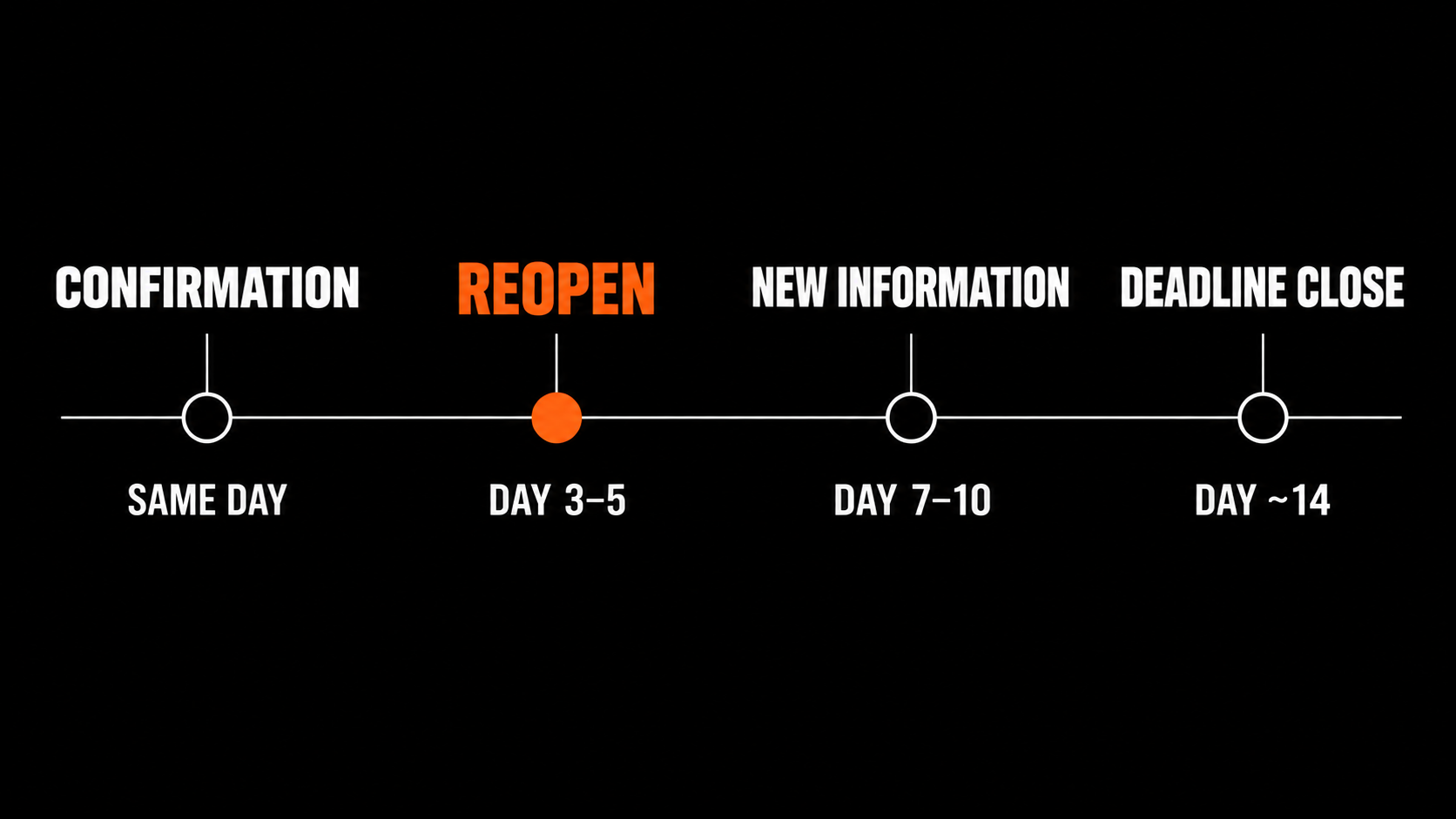
Hospitality sales research consistently points to the same window: proposals that go unanswered for 5 to 7 days need a follow-up touch, and most hotel sales teams under-follow-up on group proposals rather than over-follow-up, according to group sales pipeline research from M1 Intel. That matters, because the instinct after silence is often to wait longer out of politeness. In practice, waiting longer just gives the planner more time to finalize with a competitor who followed up sooner.
A workable cadence for a group proposal looks like this:
The shape matters more than the exact day count. Each touch should give the planner a new reason to reply, rather than repeating "just following up" language that adds no information and signals that you have nothing else to offer.
What to Actually Send: Four Reopening Templates
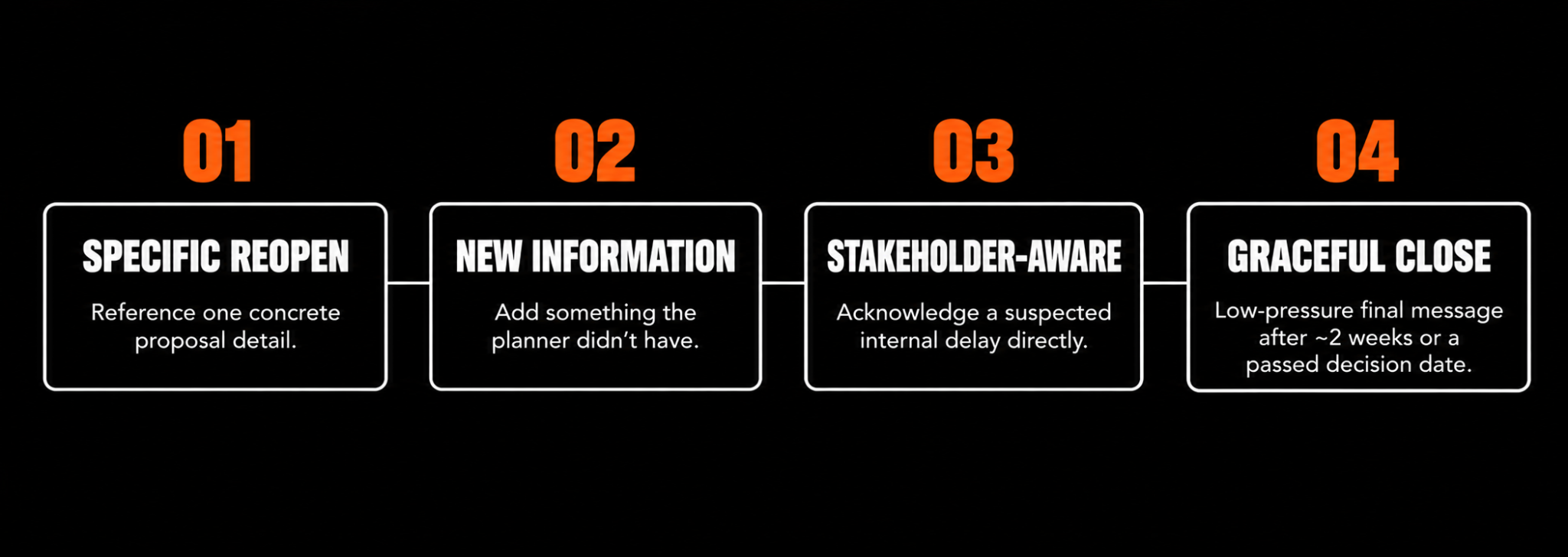
1. The specific reopen (Day 3 to 5)
The single biggest mistake in a reopening email is asking "did you get a chance to review our proposal?" It puts the entire burden of moving the deal forward on the planner and gives them nothing to react to. A stronger reopen references one concrete element of the proposal itself.
For example, instead of a generic check-in, reopen the attrition clause, a specific room block hold date, or a food and beverage minimum, and ask a direct question about that one item. This does two things: it proves you remember the details of their specific event rather than treating it as one of many RFPs, and it gives the planner something narrow and easy to answer, rather than a broad "any updates?"
2. The new-information touch (Day 7 to 10)
If the reopen doesn't get a reply, the next touch should add something the planner didn't already have. That could be an updated hold on the room block, a comparable group you've hosted recently in the same space, or a flexible date range if their original dates are tightening availability elsewhere. New information gives the planner a reason to open the email that isn't just persistence.
3. The stakeholder-aware touch
If you know or suspect the delay is on the planner's side (a budget approval, a committee decision, a site visit still pending) acknowledge that directly rather than pretending you don't know it exists. A line like "I know these often need sign-off from a few people on your end. Happy to put together a one-page summary you can forward internally if that's useful" respects the planner's actual bottleneck instead of adding pressure to a conversation they can't control.
4. The graceful close
If a stated decision date has passed, or if it has been roughly two weeks with no reply across two or three touches, send a final, low-pressure message that gives the planner an easy way to say no, hold, or yes. This is not a "breakup" in the aggressive sense. It's an honest acknowledgment that plans change, paired with an open door: hold the date a few more days if useful, or close the file and stay in touch for future business. Planners remember which properties respected their time when a deal didn't move forward, and that memory often resurfaces on the next RFP.
How Many Touches Is Too Many
Across proposal follow-up research outside hospitality specifically, three to four well-spaced touches over roughly two weeks is the general ceiling before a lead should move to long-term nurture rather than active daily follow-up. Beyond that point, continued weekly emails tend to read as pressure rather than diligence, and can hurt deliverability into a planner's inbox for future RFPs from the same address.
For hotel group sales specifically, the RFP-crowded nature of the process makes this even more important. Planners are managing responses from roughly ten properties at once. A hotel that sends four thoughtful, spaced-out touches looks organized. A hotel that sends six identical "just checking in" emails looks like it has nothing else going on, which is a worse signal than silence.
Why Speed and Follow-Up Discipline Matter More Than They Used To
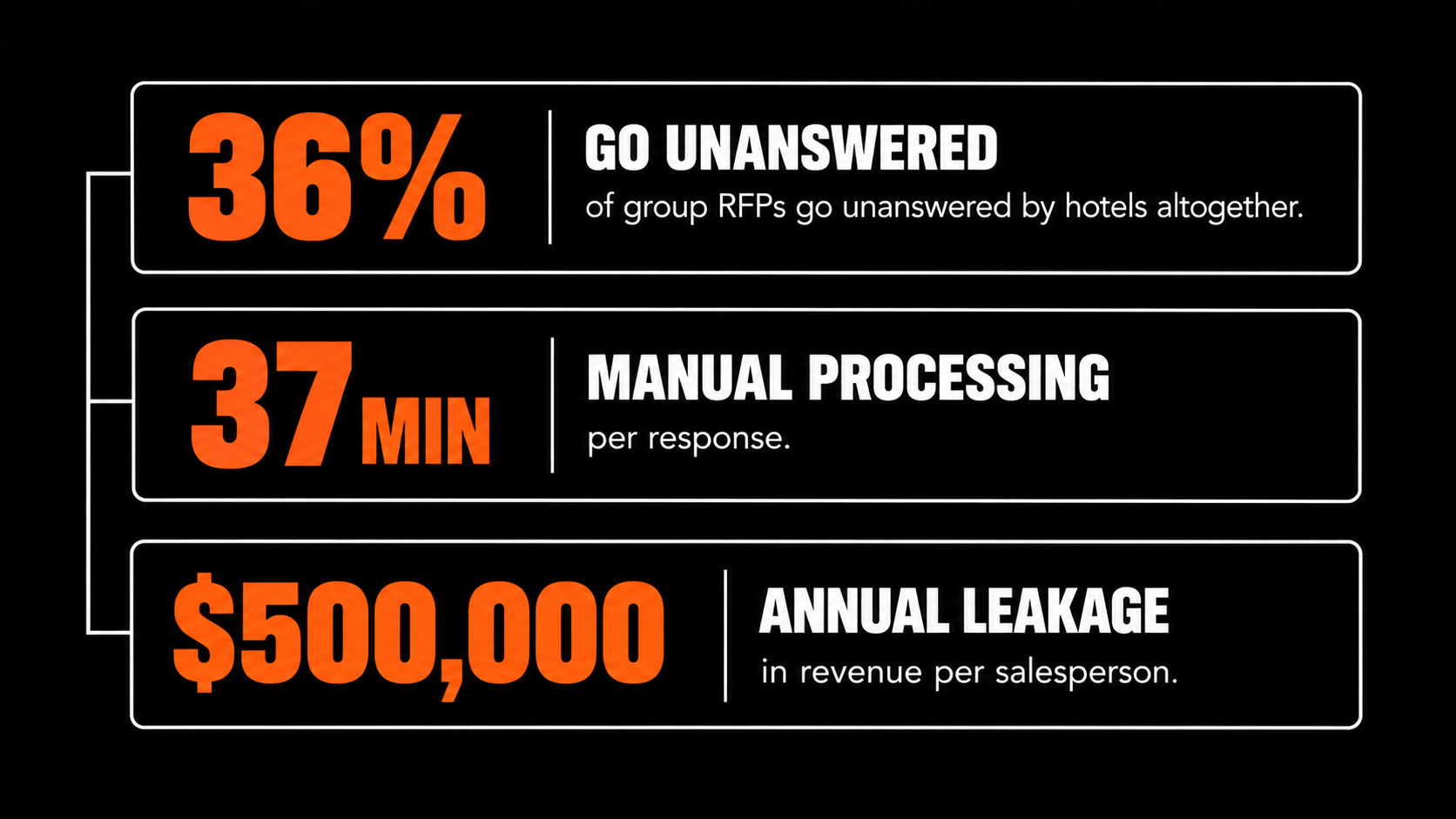
The competitive backdrop for this is worth naming directly, because it changes how much a stalled proposal actually costs. Roughly 36% of group RFPs go unanswered by hotels altogether, a gap that has less to do with hotels lacking demand and more to do with sales teams being buried in manual RFP processing. On top of that, planners increasingly favor whichever property responds fastest and follows up most consistently, since a slow or inconsistent process reads as a signal of how the group's actual event will be handled.
That combination, high RFP volume per planner and inconsistent hotel follow-through, is exactly why proposals stall in the first place. A sales manager juggling a full desk of RFPs, proposals, and site visit requests will naturally let a quiet proposal slip past the 5-to-7-day window where a reopen is still easy. Industry estimates put manual RFP processing at roughly 37 minutes per response when handled by hand, time a sales manager doesn't have to spend chasing the reopen email on top of everything else on their desk. Across a full pipeline, that adds up: unfollowed proposals and unanswered RFPs are a meaningful share of the estimated $500,000 in annual revenue leakage per salesperson that hotel sales teams lose to process gaps rather than lost bids.
What This Means for How You Structure Follow-Up
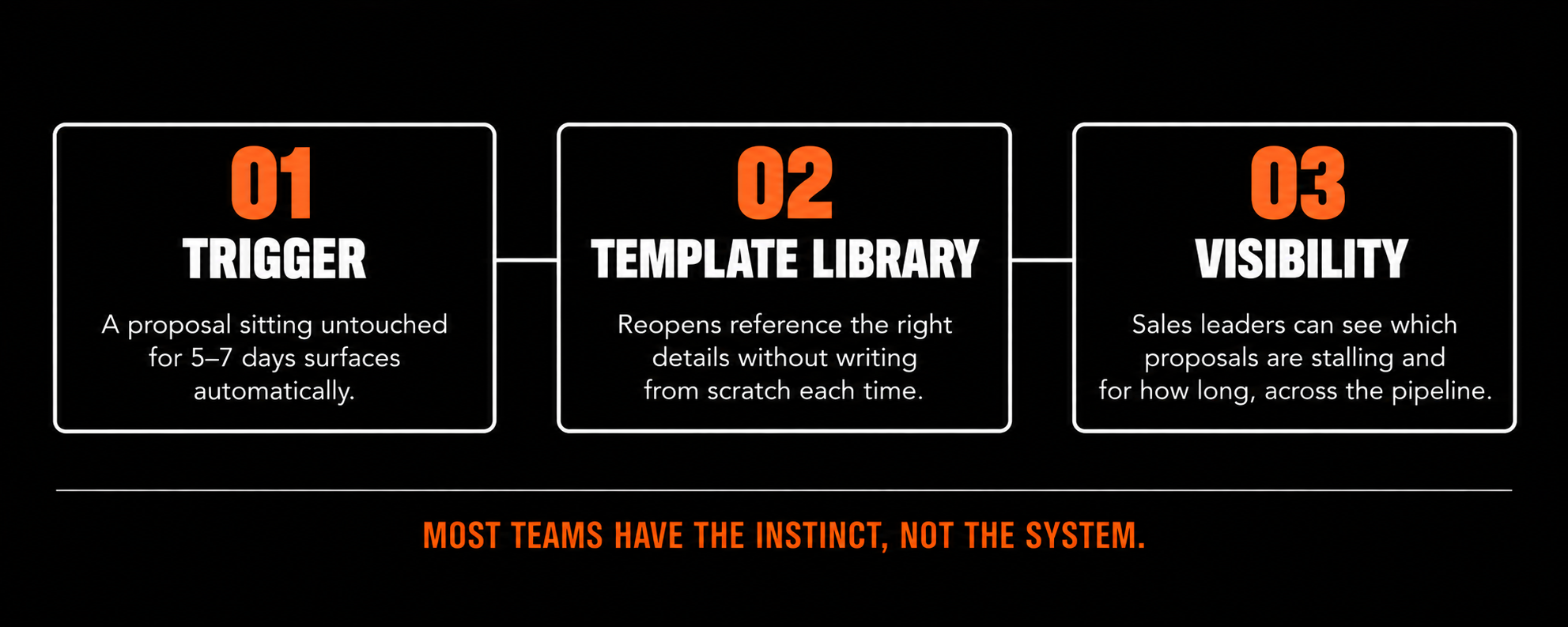
The practical takeaway is that reopening a silent group proposal works best as a system, not a one-off email someone remembers to send when they happen to notice a stalled deal. That system needs three things: a trigger (a proposal sitting untouched for 5 to 7 days should surface automatically, not depend on someone remembering), a template library (so the reopen references the right details without a sales manager writing from scratch each time), and visibility (someone should be able to see, across the whole group sales pipeline, which proposals are stalling and for how long).
Most hotel sales teams have the first instinct right (follow up, don't wait) but lack the second and third. Proposals live in inboxes and sales and catering systems that don't automatically flag a stall, so the reopen email depends entirely on a busy sales manager's memory during the same week they're also processing four new RFPs.
If stalled proposals are a recurring problem for your group sales team, Hippo Rev is built around that execution gap: surfacing RFPs and proposals that have gone quiet, keeping the details of each deal in a shared deal room so a reopening email can reference specifics without digging back through email threads, and giving sales leaders visibility into where proposals are stalling across the whole pipeline. You can see how it works by booking a Capture Audit here.
Frequently Asked Questions
How long should I wait before following up on a hotel group proposal?
Send a specific reopen 3 to 5 business days after the proposal goes out, and treat 5 to 7 days of total silence as the point where a proposal needs active follow-up rather than continued waiting.
What should the subject line of a reopening email say?
Reference the specific event or dates rather than a generic phrase like "Following up." A subject line tied to the planner's own event (dates, group name, or space) is more likely to get opened in an inbox that's also holding nine other venue responses.
Is it ever too late to reopen a group proposal?
Not usually. Because planners are often waiting on internal approvals rather than actively deciding against your property, a graceful reopen even 2 to 3 weeks after the original proposal can still land, particularly if their stated dates haven't been finalized elsewhere.
Should I offer a discount to get a response?
No. Dropping rate inside a follow-up touch, unprompted, tends to signal panic rather than confidence, and it resets the negotiation floor before the planner has even engaged with the rest of the proposal. Add information or value instead.
How many follow-up emails are appropriate before I stop?
Three to four spaced touches over about two weeks is a reasonable ceiling for a group proposal. After that, a graceful close and a move to periodic, lower-frequency contact protects the relationship for future RFPs.
The proposals that get reopened successfully are the ones where the follow-up itself signals how organized your property's sales process is, and the ones that die in silence are usually a process gap, not a rejection.
Share this post
Ready to close more group business?
See how HippoRev can transform your hotel sales workflow in 15 minutes.

Follow us


.svg)