


Proposals and Conversion
The Group Sales Proposal Is Broken | Hippo Rev
The standard hotel proposal is a static PDF with no interactivity and no tracking. Meanwhile planners compare four to six properties at once, and the most engaging proposal wins a disproportionate share.



The Group Sales Proposal Is Broken. Here Is What Winning Hotels Do Instead
You sent a 12-page PDF proposal on Tuesday. The planner opened it on Thursday, looked at page one for eight seconds, and booked your competitor. You never knew any of that happened, because a PDF tells you nothing after you hit send.
The PDF proposal is the default in hotel group sales, and it is quietly costing deals. In demos with directors of sales and event-sales managers, the same limitations came up again and again. The proposal is static, one-size-fits-all, invisible after it leaves the outbox, and easily lost in an email thread. Planners, comparing several properties simultaneously, reward the one that gives them the most useful, engaging experience, and a flat attachment rarely wins that comparison.
What is wrong with the standard PDF proposal?
It is a dead end. A PDF is static, so the planner cannot explore the space. It carries no engagement data, so you never know if it was opened, read, or shared. It is generic, so it treats a wedding and a corporate offsite the same. And it disappears into an inbox with no way to resurface at the right moment.
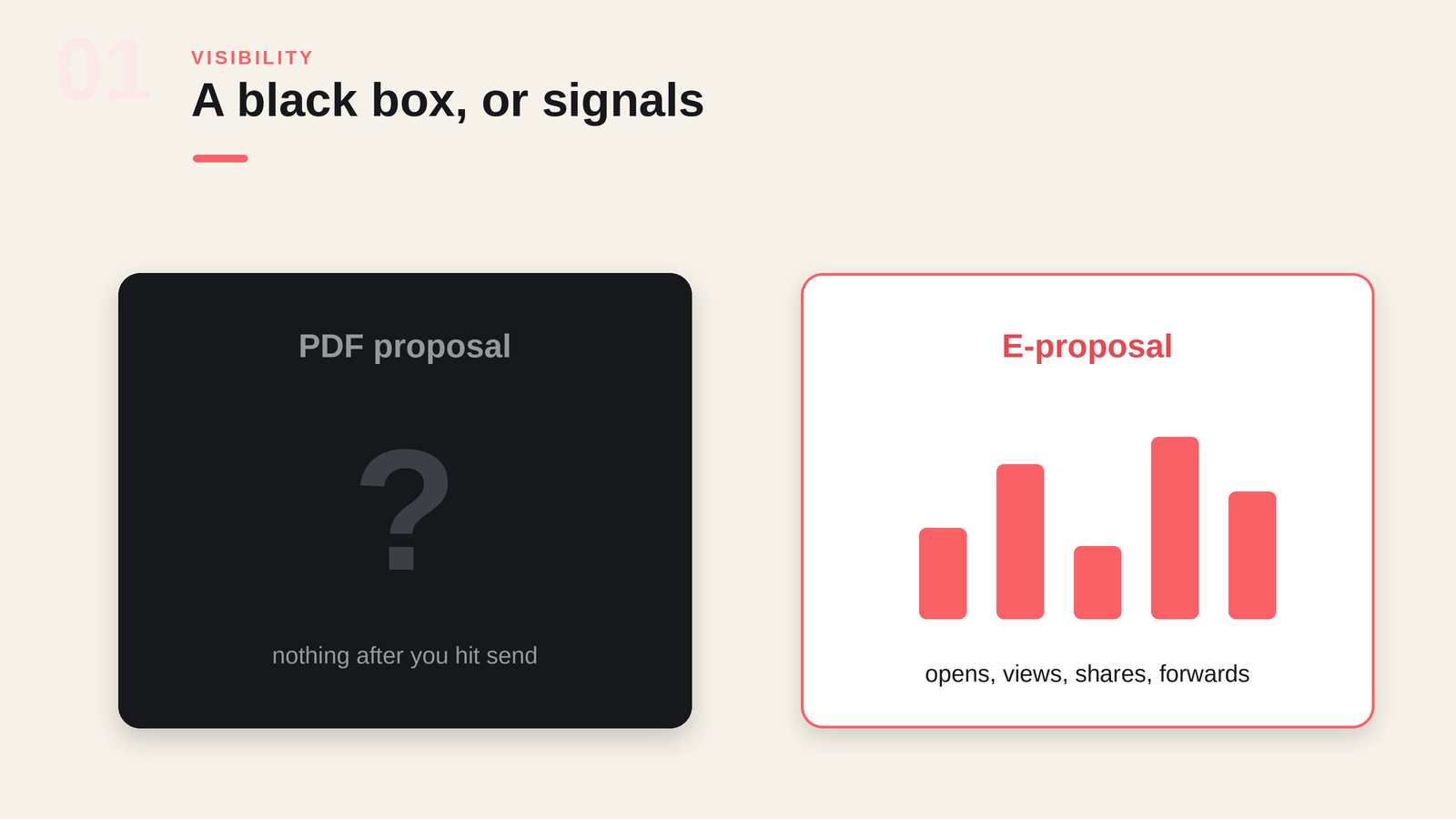
The core problem is that the PDF gives you nothing back. In every other part of the buying journey, the planner leaves signals. The proposal, the single most important document in the deal, is a black box the instant it is sent. You are flying blind at the exact moment you most need to know whether to follow up.
What do planners actually want to see in a proposal?
Proof you understand their event. Planners want capacity and flexibility, a genuine visual sense of the space, the technology and AV they will rely on, transparent pricing, and speed. Above all they want to feel the response was built for their specific event, not pulled from a folder of templates.
Planners are not asking for more pages. They are asking for relevance and clarity. A proposal that shows the actual room set for their headcount, answers their specific AV question, and arrives while their intent is high will beat a longer, prettier, generic document every time. This is the same insight behind the speed vs quality myth: to a planner, a fast, accurate, tailored response is the definition of quality.

What can an interactive e-proposal do that a PDF cannot?
It turns a document into an experience you can measure. An e-proposal embeds virtual tours and video, shows real-time availability, offers shareable links, and reports engagement analytics, so you can see when the planner opened it, what they viewed, and who they forwarded it to. That visibility tells your team exactly when and how to follow up.
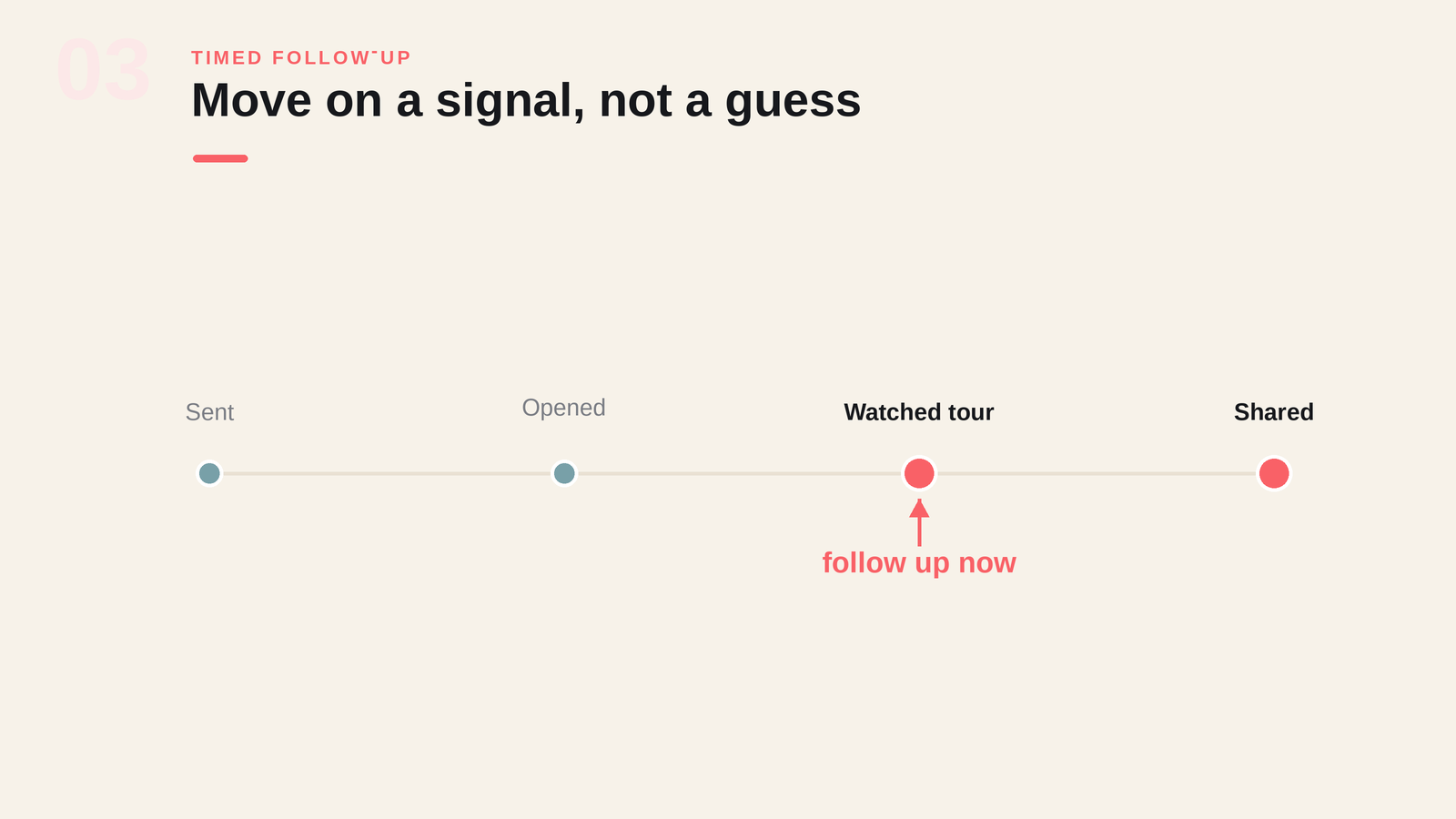
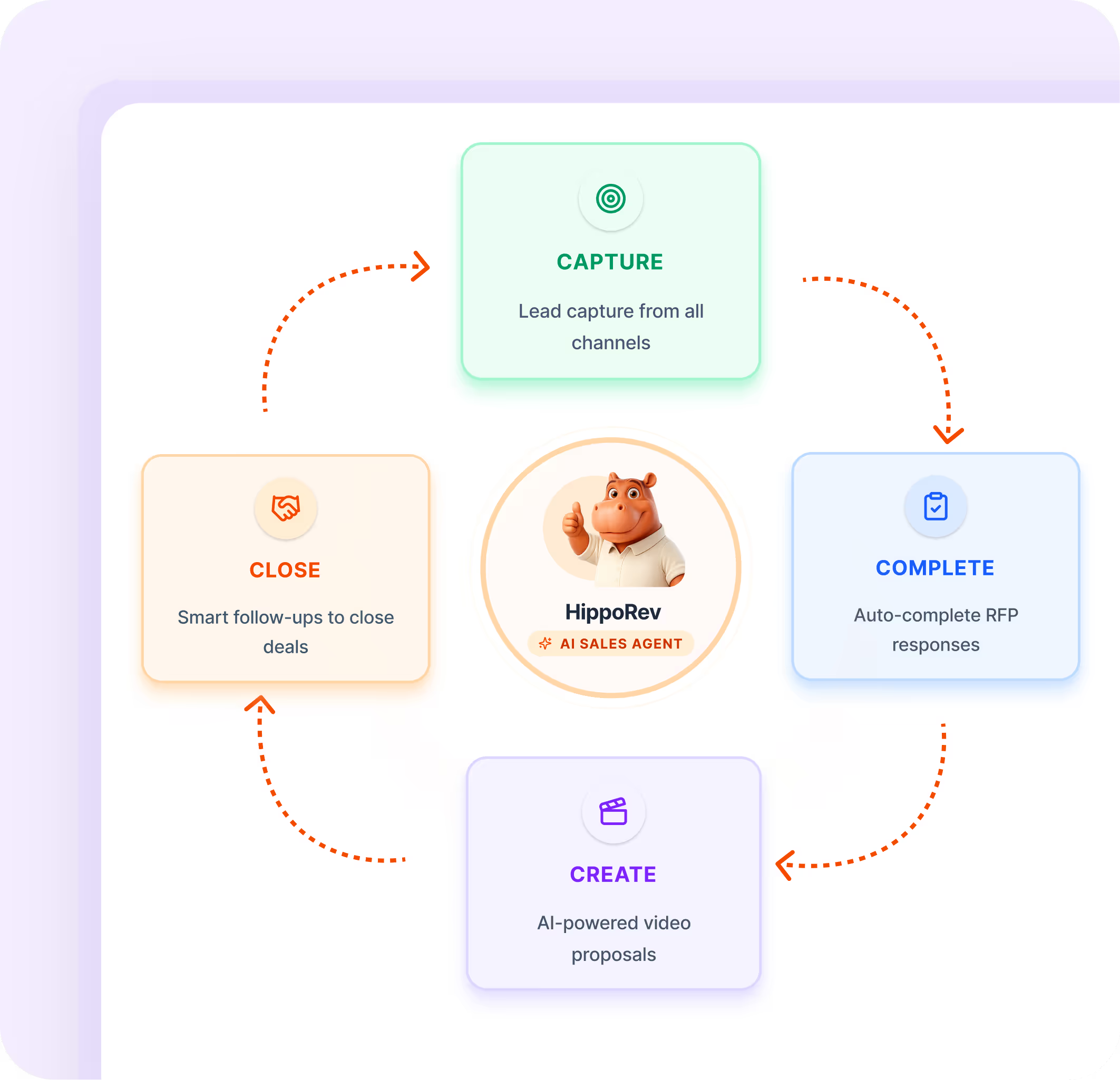
The engagement gap is the unfair advantage. When you know a proposal was opened twice this morning and the video tour was watched to the end, your follow-up stops being a guess and becomes a timed, informed move. Stakeholder detection can tell you the moment a decision-maker, not just your original contact, opens the deal. This is the logic of the Engagement Agent and the wider Convert layer.
- Embedded virtual tours and video so the planner experiences the space, not just reads about it.
- Real-time availability instead of a rate that may be stale by Thursday.
- Engagement analytics that show opens, views, and shares.
- Shareable links that survive the email thread and reach the whole buying committee.
- Branded templates per event type for corporate, wedding, and SMERF business.
How do you personalize proposals at scale without more work?
By letting AI adapt the content to the lead. AI-generated proposal content can adjust to the event type, group size, and known preferences automatically, so every planner gets a tailored proposal without a salesperson rebuilding it by hand. Personalization stops being a time cost and becomes a default.
This is the resolution to the oldest tension in proposals: personalized documents win, but personalizing every document by hand is exactly the admin drain that eats 70% of the week. Automation breaks the trade-off. The RFP Response Agent generates a complete, event-specific proposal with accurate pricing and personalized video, at speed, so tailoring no longer competes with responding first.
What about brand compliance for chain hotels?
Standards and flexibility are not opposites. Multi-brand portfolios like Marriott, Hilton, and Fairmont can lock brand rules into the template layer, formatting, logos, approved language, while still allowing property-level customization of the space, pricing, and event detail. The brand stays consistent, and the property stays relevant.
For chains, the fear is that flexible proposals mean off-brand proposals. The opposite is true when the brand system lives in the template. Reps cannot break compliance because the guardrails are built in, and they do not want to, because the personalization they need happens inside those guardrails. Consistency and conversion stop fighting each other.
As Hippo Mate would say: "Send them something they can walk through, not something they have to squint at."
See a live Hippo Rev e-proposal, and how planners actually experience it.
Frequently Asked Questions
What is an e-proposal in hotel group sales?
An e-proposal is an interactive, web-based proposal that replaces the static PDF. It can include embedded virtual tours, video, real-time availability, and engagement tracking, and it gives the sales team data on how the planner interacts with it.
Do interactive proposals actually improve conversion?
They help in two ways. They give planners a more engaging, relevant experience that stands out in a multi-property comparison, and they give sales teams engagement signals that make follow-up timing far more precise, which lifts proposal-to-close rates.
For a real-world example of both effects, see how one Indianapolis hotel pairs 5-minute proposals with live engagement tracking.
Can chain hotels use interactive proposals without breaking brand standards?
Yes. Brand rules are enforced at the template level, so formatting, logos, and approved language stay locked while properties customize the space, pricing, and event-specific detail within those guardrails.
Share this post
Ready to close more group business?
See how HippoRev can transform your hotel sales workflow in 15 minutes.

Follow us


.svg)