


Sales Productivity
Hotel Sales Ecosystem: How to Win More Direct Business
The highest-performing hotels don't wait for bookings to arrive. Learn how a proactive sales ecosystem combines AI, CRM, segmentation, and faster execution to capture demand earlier, improve conversions, and create sustainable revenue growth.



.png)
Beyond the "Book Now" Button: Building a Living Sales Ecosystem
Hotels grow faster when they shift from passive bookings to a proactive sales ecosystem.
In the modern hospitality landscape, waiting for the phone to ring is a strategy for stagnation. Real revenue growth doesn't come from passive order-taking. It comes from building a proactive Sales Ecosystem.
Successful hotel sales operations stop viewing lead generation and conversion as separate lists of chores. Instead, they view them as a continuous loop of intelligence gathering, psychological segmentation, and relationship farming.
The Market Imperative: Why "Business as Usual" Is a Risk
A living sales ecosystem is no longer an advanced tactic. It is becoming the only viable path to defend guest acquisition, protect margins, and stay relevant as the landscape tilts rapidly toward platforms with deeper pockets and faster technology.
The OTA Power Shift Is Accelerating
OTAs are capturing early guest intent and edging out hotels at the top of the funnel.
Recent data makes one fact undeniable: OTAs are outspending and out-optimizing hotels at a scale not seen before. For independent lodging properties, OTAs now account for 61% of bookings, with the direct channel holding its ground but under growing pressure as AI-powered search and metasearch increasingly funnel travelers to OTA ecosystems.
The implication for hotels is stark. If you don't build your own proactive sales ecosystem that captures, nurtures, and personalizes early interest, OTAs will own your top-of-funnel indefinitely, and reclaiming that ground later becomes financially unrealistic.
The Direct Booking Paradox Deepens
Even with heavier investments in direct booking strategy, more than half of leisure travelers still begin their research on OTAs or meta-search sites. With OTAs now attracting a growing share of longer-stay guests as well (room nights share rising from 53% to 56%), hotels risk losing not just volume but their highest-value stays.
A living sales ecosystem gives you a mechanism to intercept and convert these high-intent travelers earlier, before they become commodities in OTA search results.
The Shrinking Window Isn't Just About Timing. It's About Volatility.
Volatile booking behavior demands always-on lead generation and rapid conversion.
Duetto and Cloudbeds' 2025 Hotel Market Pulse report shows average length of stay declined every month from January to July 2025 versus 2024, as travelers opt for shorter, more frequent trips amid economic uncertainty . Demand spikes are sharper, troughs are deeper, and lead time is increasingly unstable.
You can't respond to this volatility with periodic campaigns. The only feasible response is an always-on sales engine that identifies real-time demand pockets, generates leads continuously, and converts fast.
The Corporate Travel Equation Has Reset
Corporate travel hasn't just recovered; it has reorganized. GBTA's January 2026 poll shows cautious optimism:
59% of industry professionals are optimistic about 2026,
while 84% of buyers expect travel spending to increase or stay at 2025 levels (44% expect an increase, averaging 12% growth) .
However, balancing cost control with traveler satisfaction remains the top challenge for 59% of buyers, and 74% of U.S. buyers cite program cost control as a major concern .
Employees want to travel more, with increases in linked trips, blended trips, and longer-duration stays. But procurement priorities have shifted toward cost control, predictability, and traveler well-being.
This creates a dual requirement: your sales narrative must offer transparency and efficiency for the buyer while simultaneously promising personalization and experience for the traveler.
Reputation Is Now a Core Sales Function
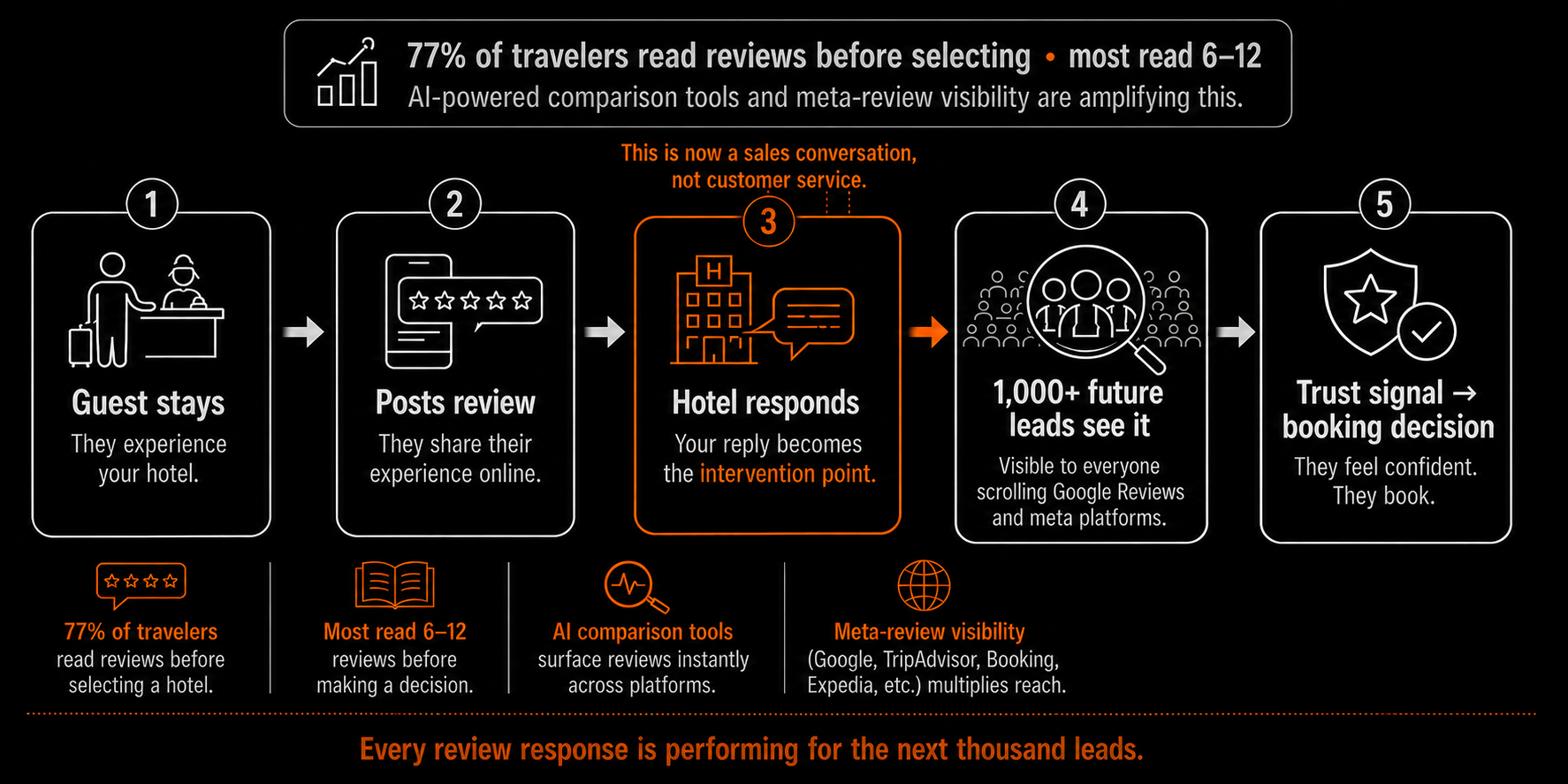
Travelers continue to treat reputation signals as a primary filter. Earlier TripAdvisor data showed 77% of travelers read reviews before selecting a hotel, and most read 6 to 12 reviews before booking. In 2026, with AI-powered comparison tools and meta-review visibility increasing across platforms, this influence has only intensified.
Every review response has become a public sales conversation. Consistent, strategic reputation management is now part of revenue generation, not a peripheral marketing task.
Technology Adoption Is No Longer Optional
HSMAI's 2025 Revenue Optimization trends highlight AI and machine learning as revolutionizing dynamic pricing and demand forecasting, while technology integration and data fragmentation remain top challenges for revenue leaders . GBTA's 2026 poll shows 65% of professionals prioritize AI-driven pricing optimization and 64% prioritize predictive analytics, with 46% citing "figuring out AI" as a top operational challenge .
Hotels that fail to build a modern, tech-enabled sales ecosystem will be outpaced by those who do. Across every segment, leisure, corporate, and group, the market is rewarding those who capture demand early and penalizing those who wait for it.
This ecosystem isn't simply a growth strategy. It's fast becoming the minimum requirement to maintain visibility, pricing power, and relevance in a market where guest acquisition is being rewritten in real time.
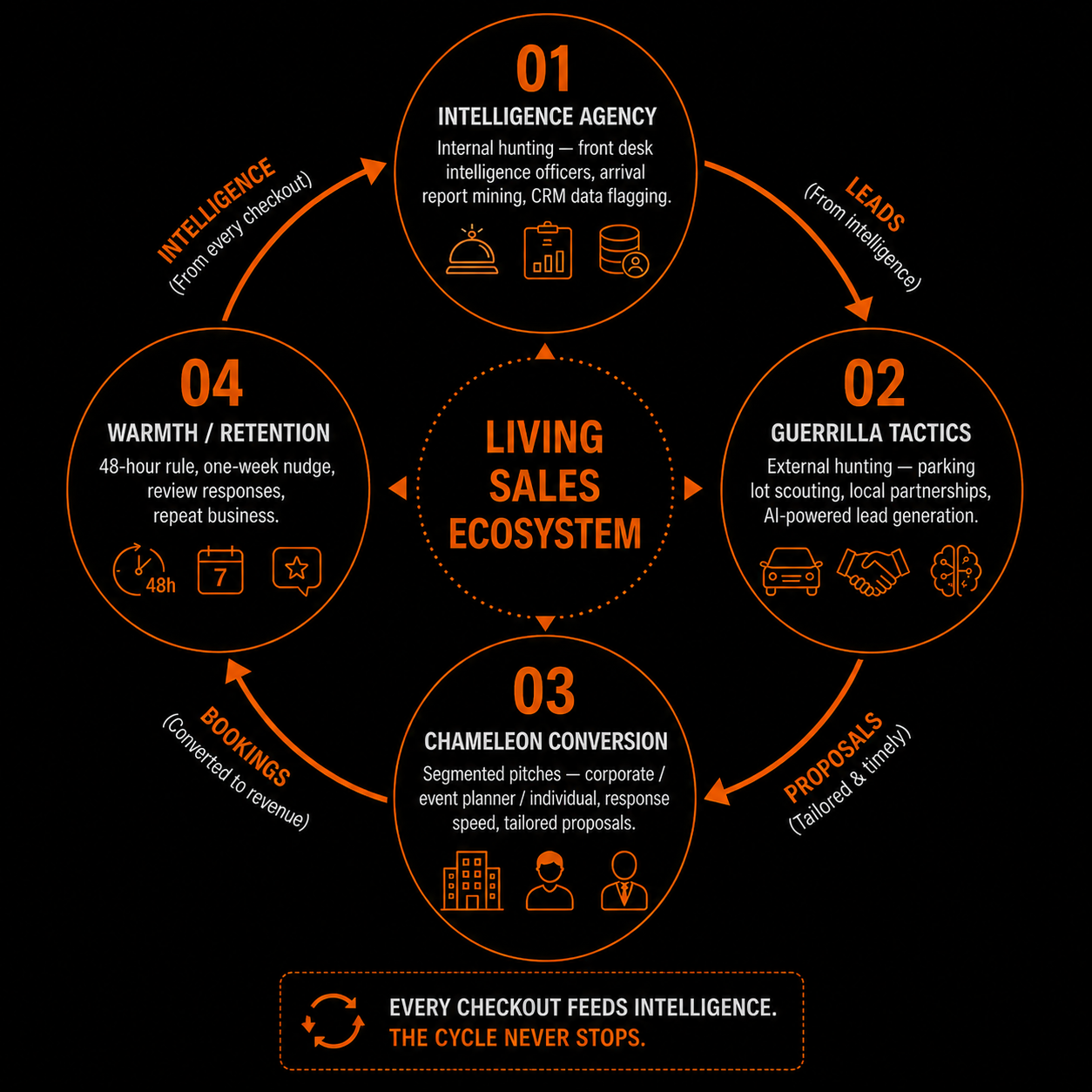
Phase 1: The Intelligence Agency (Internal Hunting)
Before you spend a dime on external advertising, look inside the building. The most undervalued asset in hotel sales is usually standing right in the lobby: the front desk.
Many sales directors view the front desk merely as operational staff. However, a strategic shift involves training these team members to act as intelligence officers. They shouldn't just hand out keys; they should be qualifying guests during check-in.
The Tactic: Train staff to ask targeted questions about the reason for travel. If a guest is booking multiple rooms or staying for an extended period, that is not just a booking. That is a potential corporate account.
The Data Mine: Similarly, your current ecosystem is hiding leads. By auditing arrival reports and guest profiles, you can spot work email addresses or patterns that indicate business travel. A CRM system shouldn't just be a database. It should be a tool to track these repeat guests and flag them for upsell opportunities.
Phase 2: Guerrilla Tactics (External Hunting)
Old-school field intelligence still uncovers leads technology can't.
While digital data is king, there is a surprising amount of value in old-school grit.
In an era of high-tech marketing, one of the most effective strategies is physical reconnaissance. Some hospitality experts suggest a tactic that requires zero software: parking lot scouting.
The Tactic: Drive through the parking lots of competitor hotels. Look for branded company vehicles. If a construction company or consulting firm has a fleet of cars parked at the hotel across the street, you have just identified a qualified corporate lead.
This boots-on-the-ground approach extends to local partnerships. Don't just ask for business; create ecosystems. Bundle your services with local venues or offer exclusive corporate rates to nearby businesses to create a steady stream of referrals.
AI-Powered Lead Generation
AI agents now transform hotel sales by automating lead qualification around the clock, analyzing inquiries for value potential and preferences to achieve higher conversion rates on group bookings.
Hotels integrating AI with PMS and CRM systems save 20 to 40 hours weekly on manual tasks while boosting conversions through real-time personalization and intent detection.
This fits seamlessly into Phases 1 and 2, enhancing internal data mining and external scouting with predictive tools that prioritize high-value corporate and event leads.
If you want a deeper breakdown of how AI will reshape hospitality in the coming years, you can explore our analysis here.
Phase 3: The Chameleon Approach (The Art of Conversion)
The best sales teams adapt their value proposition like a chameleon to each buyer.
Once you have the lead, the one-size-fits-all sales pitch must die. High conversion comes from segmentation. You must divide your leads into distinct buckets, corporate, event planners, and individuals, and become a chameleon, adapting your value proposition to their specific anxieties.
For the Corporate Client: They do not care about the view as much as they care about friction. Your pitch must emphasize efficiency: streamlined check-in and check-out, early arrival options, and free Wi-Fi.
For the Event Planner: They are selling a vision. You must help them see it. Using virtual or in-person tours is critical here, as it helps them visualize their specific wedding or conference in your space.
For the Individual: They want to feel special. This is where personalization wins. A generic email won't work, but a personalized offer based on their previous preferences will.
Remember, speed matters most in group and event segments. Industry data shows 61% of won deals go to one of the first three responders. Segmentation tells you what to say. Response speed decides whether you get to say it at all.
Hotels refining their corporate strategy will find more ideas in our piece on Maximizing MICE Leads in a Competitive Market.
Phase 4: The "Warmth" Strategy (Closing and Retention)
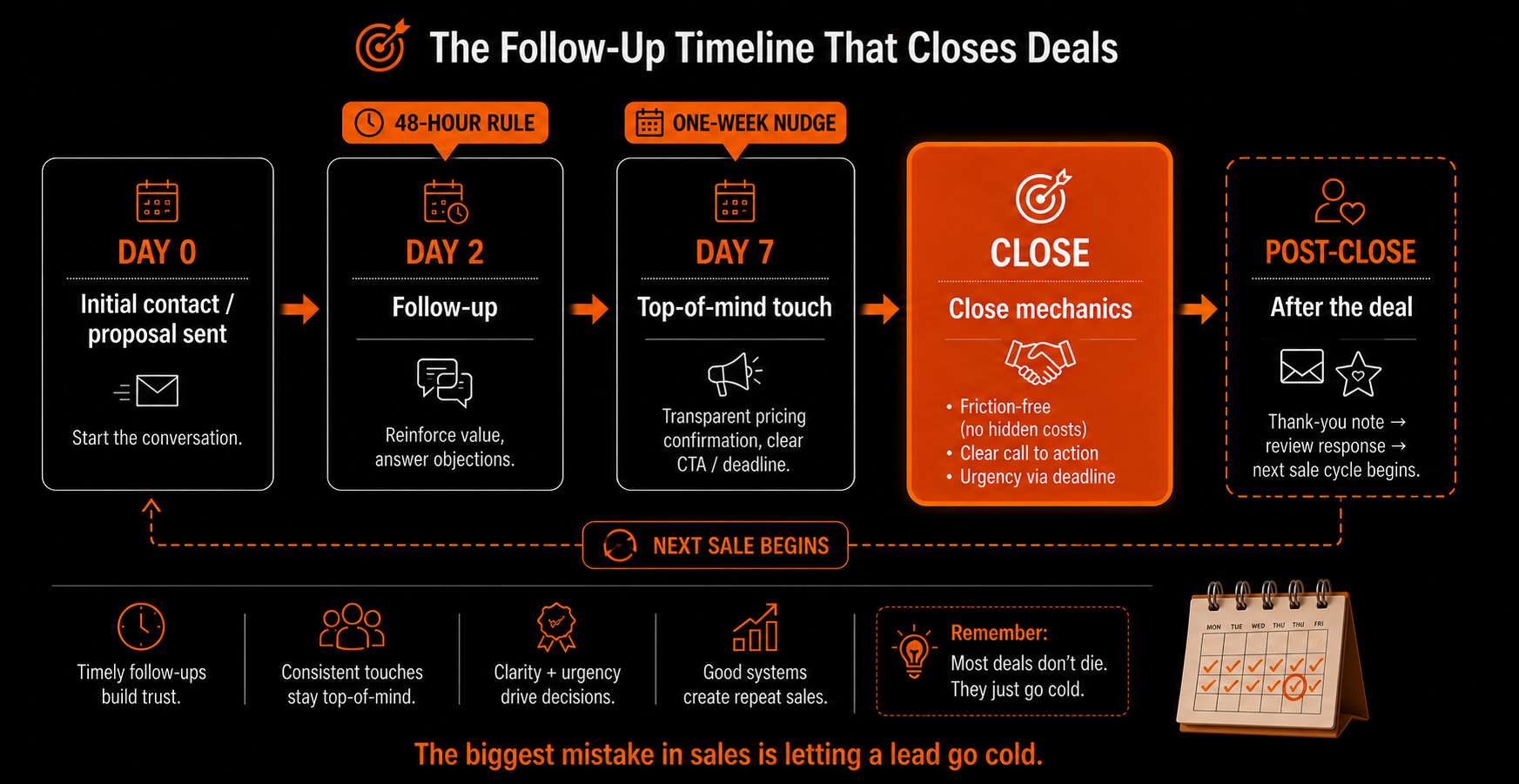
The biggest mistake in sales is letting a lead go cold. The data suggests a specific rhythm for nurturing:
The 48-Hour Rule: Send a follow-up 48 hours after the initial contact.
The One-Week Nudge: Touching base again a week later keeps the hotel top-of-mind.
However, the close must be friction-free. Be transparent about pricing immediately. Hidden costs kill trust, especially with B2B clients. Give them a clear call to action or a deadline for an offer to create urgency.
Revenue Management Trends Can Help
In 2025, integrating PMS and RMS enables real-time data sync for swift pricing adjustments amid rising costs and competitive pressures, with direct bookings prioritized to cut OTA commissions.
Personalized pricing models and AI-driven forecasting help hotels stabilize revenue, targeting the right customers with tailored offers to lift conversion rates beyond industry averages.
These tools amplify the ecosystem by turning segmented leads into profitable, repeat business through automated upselling and demand prediction.
The Cycle Continues
Every checkout is the starting point for your next revenue opportunity.
Finally, the sale doesn't end when the guest checks out. That is actually when the next sale begins.
Sending a simple thank-you note after a stay validates the guest's choice and opens the door for feedback. By responding to reviews, both positive and negative, you aren't just talking to that one guest. You are performing reputation management for the next thousand leads who are scrolling through Google Reviews looking for a reason to trust you.
The Bottom Line: Sales is not about waiting for demand; it is about capturing it. By combining the old-school tactics of competitor scouting with the modern precision of CRM data, you build a pipeline that is sustainable, diverse, and highly profitable.
How Hippo Rev Powers Your Living Sales Ecosystem
A sales ecosystem only compounds when every lead it generates actually gets worked.
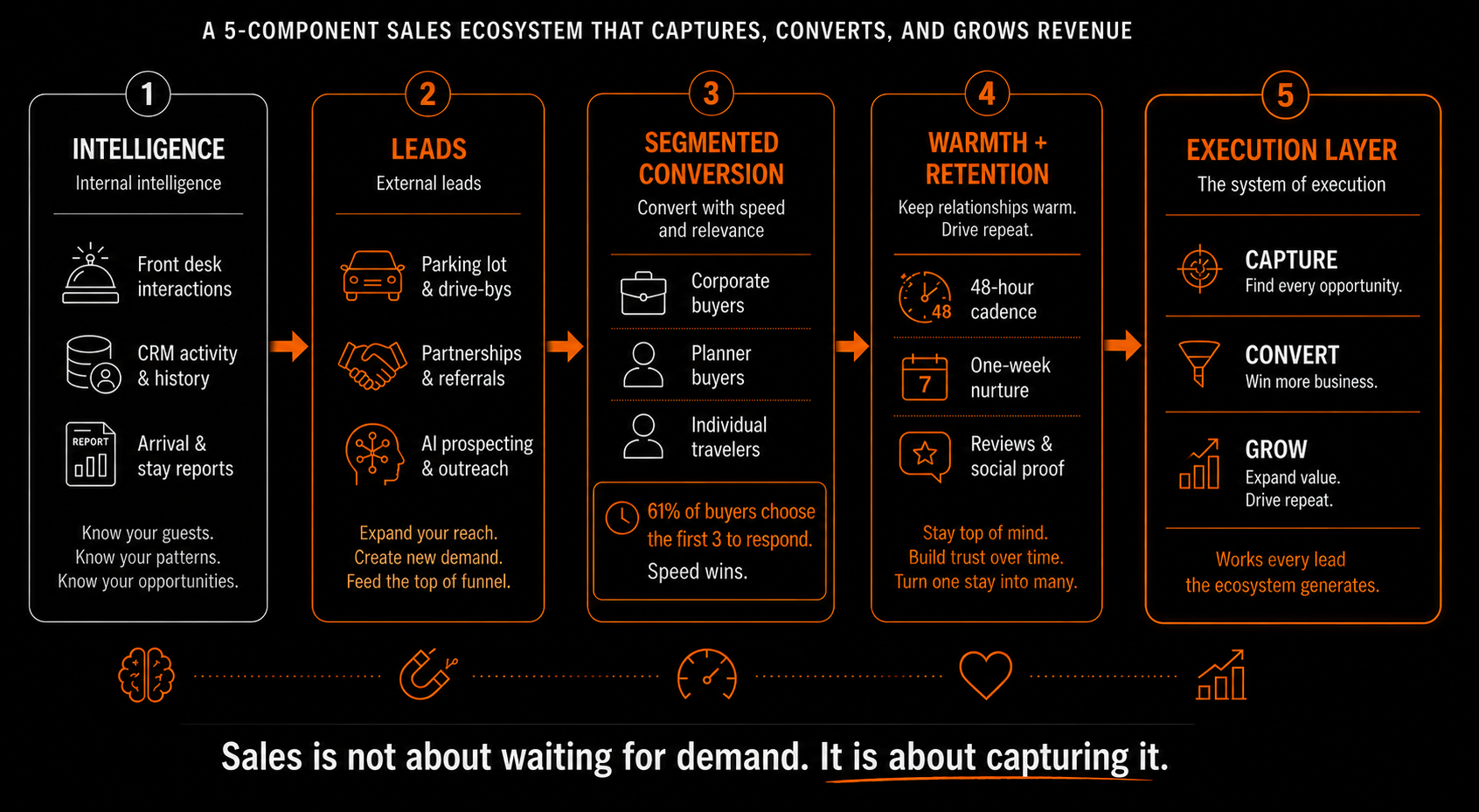
Here is the uncomfortable truth behind every strategy in this article: most hotels do not have a demand problem. They have an execution problem. Industry-wide, 36% of RFPs go unanswered, and the average salesperson leaks roughly $500K in revenue every year to slow responses, missed follow-ups, and leads that die in inboxes. Your ecosystem can generate all the intelligence in the world, but if your team can't act on it fast, the deal goes to whoever responds first.
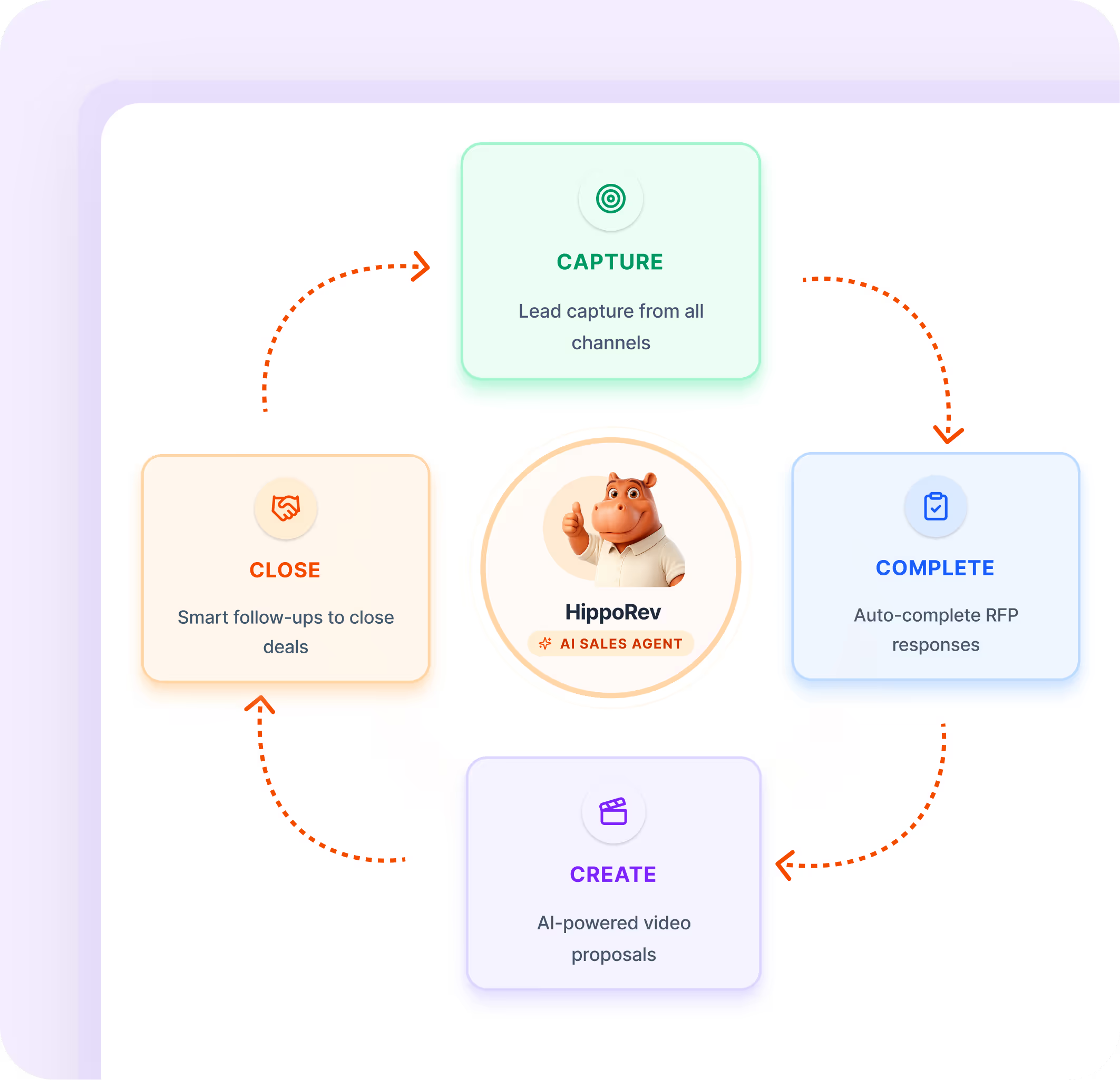
Hippo Rev is a Revenue Capture Platform built for hotel group sales teams. It is not another system of record sitting next to your CRM, PMS, and RMS. It is a system of execution that moves every deal through three stages:
Capture: Every inquiry from every channel lands in one pipeline the moment it arrives, qualified and prioritized so nothing slips through. RFPs that used to take around 37 minutes to process get done in about 4.
Convert: Your team responds first with proposals tailored to the buyer in front of them, whether that's a corporate travel manager focused on efficiency or an event planner selling a vision. That matters when speed-to-lead decides win rates .
Grow: Follow-ups run on the rhythm this article describes, as per the 48-hour touch and the one-week nudge, so no lead goes cold and won business turns into repeat business.
If you want to see what your property is actually leaking, book a Capture Audit. 20 minutes, your numbers, no deck.
Frequently Asked Questions
How can a sales team prevent losing a deal at the final closing stage?
To prevent deals from falling through at the last minute, sales teams must be transparent about pricing and terms to eliminate surprises. Transparency builds trust, which is particularly vital for long-term corporate clients. Additionally, providing a clear call to action, such as a specific deadline or booking link, encourages the lead to stop hesitating and finalize the booking.
What is the most critical step to take after attending a trade show?
While manning a booth and networking are important, the most critical step is to follow up promptly after the event. You should reach out to new contacts with a personalized message to reinforce the connection and share tailored offers to keep the hotel top of mind.
What is the best way to leverage local businesses for lead generation?
Form partnerships by offering specific corporate rates to nearby corporations that book regularly. Additionally, hotels should bundle their services with local venues to create appealing event packages, which helps increase visibility within the local market.
Share this post
Ready to close more group business?
See how HippoRev can transform your hotel sales workflow in 15 minutes.

Follow us


.svg)