


Sales Productivity
Hotel Marketing Burnout: The Real Cause and the Fix
Hotel sales and marketing leaders face record burnout, driven less by workload than by fragile, manual processes that require constant intervention. This article breaks down the data behind the crisis and outlines what a resilient, system-based approach to RFP handling and demand capture actually looks like.



.png)
Why Hotel Sales and Marketing Teams Keep Burning Out (and How the Best Ones Stop)
A director of sales and marketing at a 100-room hotel is not short on tasks. She is bidding on Google Ads, chasing OTA sponsored placement, answering reviews across six or seven platforms to stay compliant with brand standards, working the phones for group leads, and now being told to "do more with less" using AI tools she barely has time to learn. None of this is imagined. It is the daily operating reality for most hotel sales and marketing leaders in 2026, and it is producing a burnout problem that is now well documented in hospitality data.
The dominant explanation for this exhaustion is usually workload. That explanation is incomplete. The deeper issue is structural: most hotel sales and marketing operations run on fragile, manual processes that require constant human intervention to keep from breaking. The fix is not longer hours or more willpower. It is building a system that holds up on its own, so the team spends its energy on judgment and relationships instead of patching leaks.
How Widespread Is Burnout in Hotel Sales and Marketing Right Now?
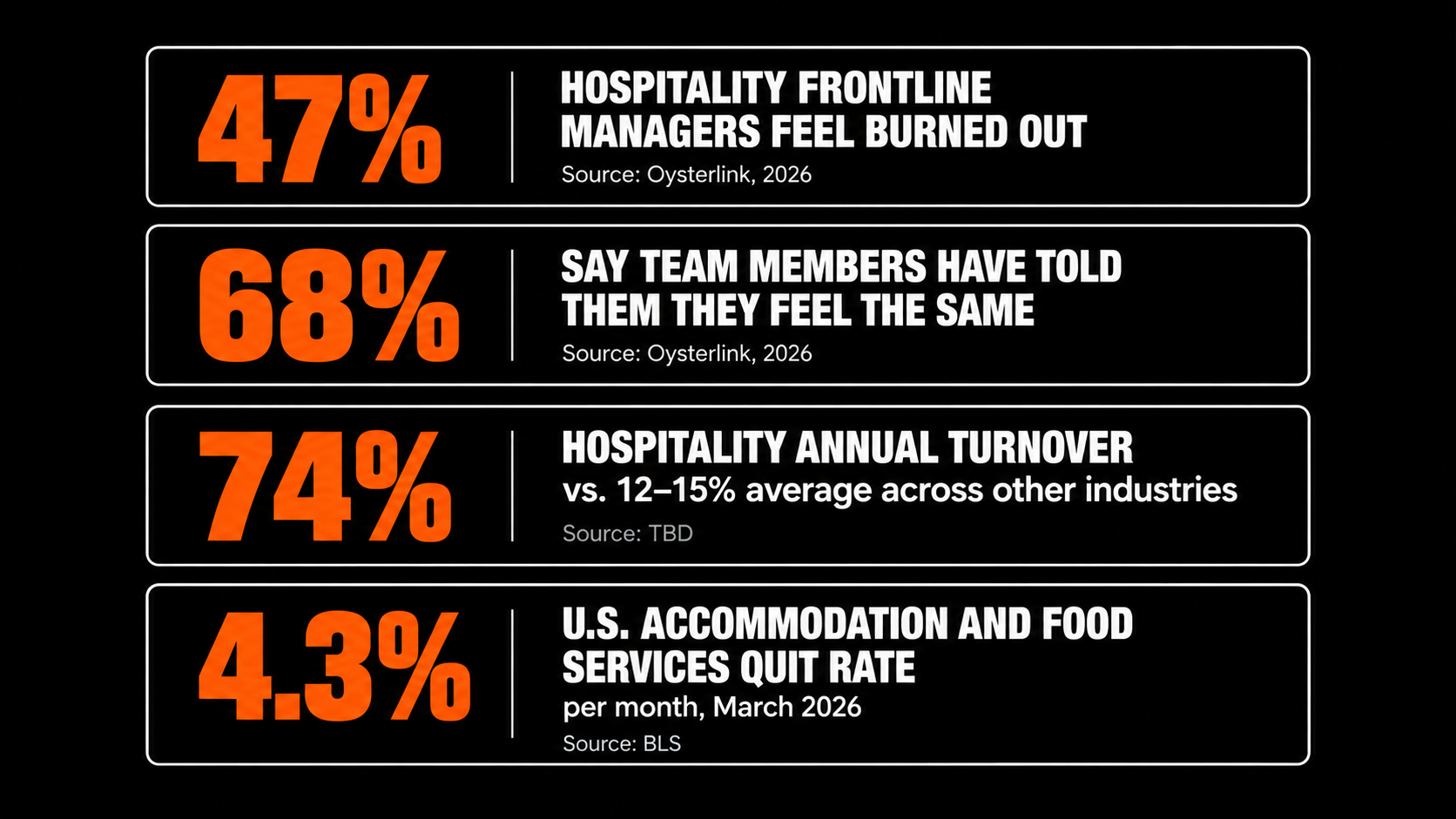
Burnout in hospitality is not anecdotal. Nearly half of hospitality frontline managers in the United States, 47%, report feeling burned out, and 68% of those managers say their own team members have told them directly that they feel the same way, according to a 2026 industry analysis from Oysterlink. The consequences show up in retention: hospitality's annual turnover rate runs around 74%, roughly five times the 12–15% average seen across most other industries, and hotels specifically face an even steeper churn rate near 105%. The U.S. Bureau of Labor Statistics tracked the accommodation and food services quit rate at 4.3% per month in March 2026, the highest of any industry it measures.
Sales and marketing roles carry a particular version of this strain. A 2025 Marketing Week survey found 58% of marketers felt overwhelmed and 50.8% reported emotional exhaustion, and earlier research cited by 11outof11 found marketers reported the highest burnout rate of any profession studied, ahead of sales, HR, and finance. Layer hotel-specific pressures on top of general marketing fatigue, such as lean staffing models that make a single director responsible for demand generation, reputation management, and revenue pacing simultaneously, and the exhaustion compounds. Industry commentary on hotel sales leadership in 2026 has flagged rejection fatigue as a growing factor: when a director of sales is already running on empty from administrative overload, every unanswered outreach attempt lands harder.
What Is Actually Driving the Exhaustion?
Most explanations for hotel marketing burnout point to workload volume. The more precise diagnosis is that the underlying systems are fragile, so every day involves patching something that broke rather than executing a plan that holds.
Consider what a typical week actually contains. A director of sales and marketing is expected to bid more aggressively on paid search and OTA placement to defend visibility, while simultaneously discounting rates to stay competitive, all in a category where every tactic is visible and copyable by the property down the street. There is no durable moat in outbidding a competitor on Google Ads this week, because they can outbid back next week. The same is true of rate cuts: they are easy to match and hard to reverse without losing the business they were meant to protect.
Reputation management adds another layer. Brand standards typically require timely responses across multiple review platforms, often six or seven at once, which means a sales and marketing leader is also functioning as a customer service and PR operation without dedicated headcount for either. And now AI tools are being introduced with an implicit expectation that "do more with less" becomes achievable through better technology alone, even though the underlying workflow the technology is bolted onto is still manual.
Group and RFP business shows this most clearly. Independent research on hotel and venue RFP handling found that manual RFP management, using email threads and spreadsheets, typically consumes 8 to 15 hours of staff time per proposal cycle across drafting, sending, chasing, and comparing responses. Meanwhile, group booking windows have compressed to as little as 30 days in 2026, according to hotel sales industry reporting, which means the margin for slow, manual handling keeps shrinking even as the manual burden stays the same.
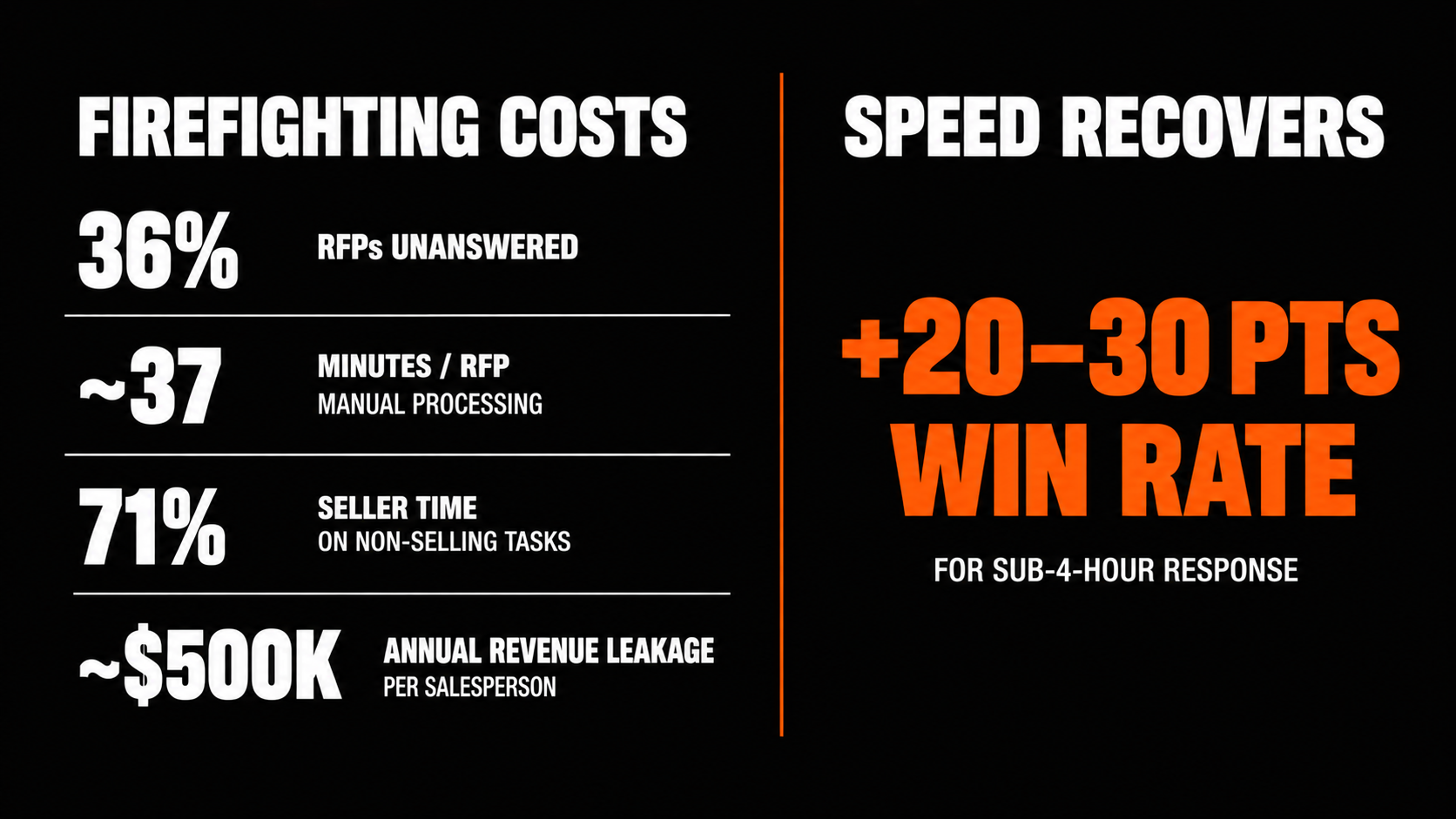
Hippo Rev's own analysis of hotel group sales operations found that roughly 36% of RFPs go completely unanswered, not lost to a competitor, simply never responded to. Among RFPs that do get a response, 61% of won deals go to whichever hotel was among the first three to reply. Response speed alone accounts for a 20 to 30 point win-rate advantage when a hotel replies within four hours versus responding later. The same analysis found that manual RFP processing takes an average of roughly 37 minutes per proposal, and that sellers spend about 71% of their time on non-selling administrative tasks rather than on the relationship-building and negotiation that actually close business. Left unaddressed, that gap in speed and follow-through was estimated to cost roughly $500,000 in annual revenue leakage per salesperson.
None of these numbers describe a team that is lazy or under-skilled. They describe a team executing a fragile process that depends entirely on constant human attention to function at all.
Why Working Harder Doesn't Fix a Fragile System
There is a pattern worth naming directly: the more comfortable a piece of work feels, the more consistently it tends to produce results, and the discomfort in hotel sales and marketing usually traces back to a decision-quality problem rather than an effort problem. Exhaustion accumulates when a team is constantly reacting to whatever broke that day. Ease comes from having already thought through the failure points in advance and built something that does not require daily rescue.
This distinction matters because the instinct under pressure is almost always to add more effort to the existing process: answer faster, work later, respond to more channels. That approach can hold a fragile system together for a while, but it does not change its fragility. The moment the person holding it together is out sick, on vacation, or simply reaches capacity, the system breaks, and whatever revenue depended on it disappears with it. A manually chased RFP that only gets answered because a director of sales happened to notice the email that day is not a repeatable process. It is a single point of failure wearing the appearance of a process.
From Firefighter to Architect: What Building a System Actually Means
The alternative to constant firefighting is not doing less. It is redesigning the underlying workflow so that fewer things require manual intervention to happen correctly in the first place. This is a shift in role as much as tactics: from firefighter, who responds to whatever is currently on fire, to architect, who designs a structure that rarely catches fire to begin with.
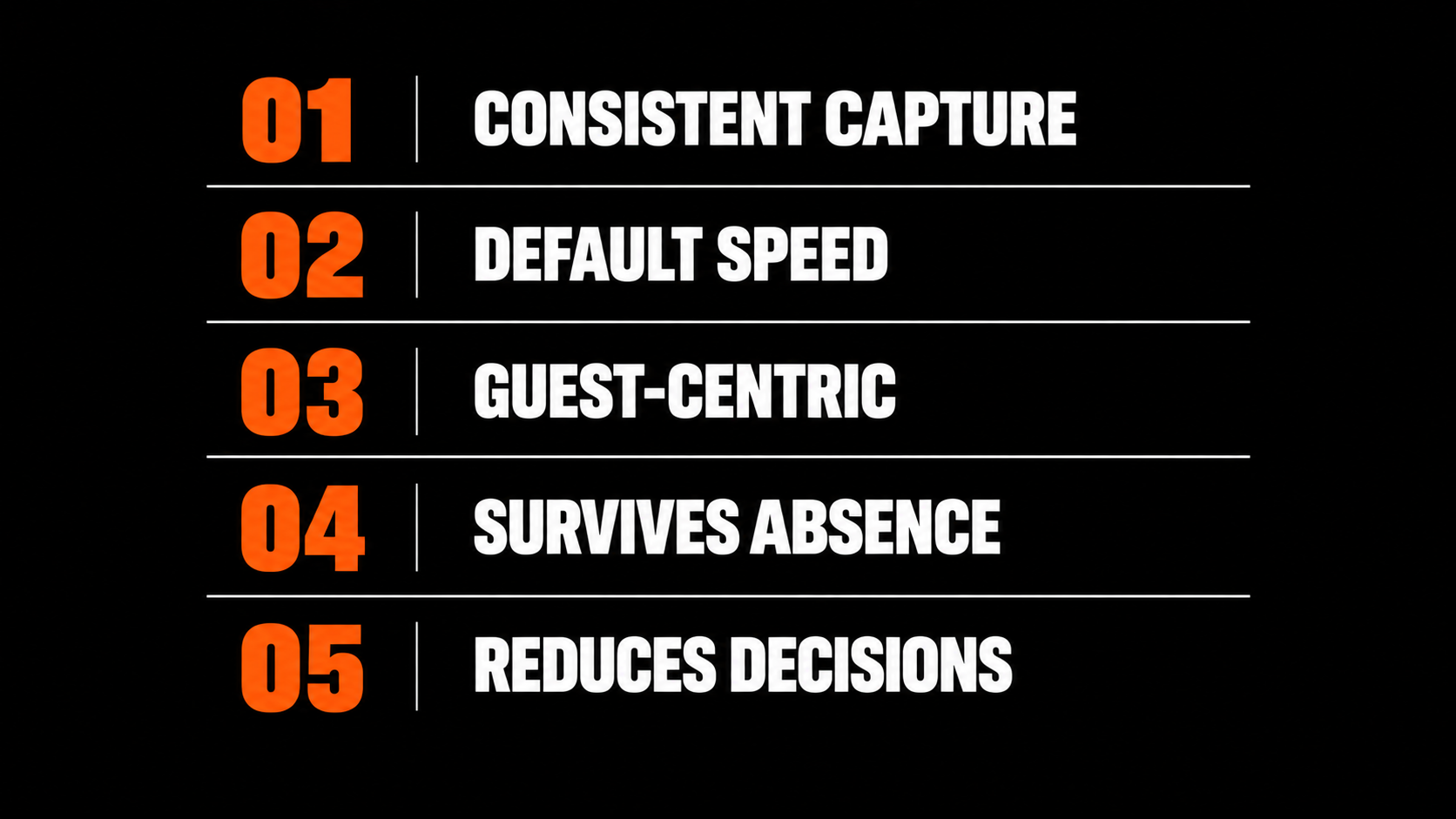
A genuinely durable system in hotel sales and marketing tends to share a few characteristics regardless of which specific tools support it:
It captures demand consistently, not opportunistically. Every inbound RFP, web inquiry, or phone lead gets logged and triaged the same way every time, regardless of who is on shift or how busy the property is that week. When capture depends on a specific person noticing a specific email, the system has already failed before anyone responds.
It responds fast enough to matter, by default. Given that first-three-responder status determines the majority of won group deals, and that sub-four-hour response correlates with a 20 to 30 point swing in win rate, speed cannot be a matter of individual hustle on a good day. It has to be structurally guaranteed, which typically means some form of automated intake and triage sits ahead of the human follow-up.
It is guest-centric rather than channel-centric. Instead of treating paid search, OTA placement, review management, and group sales as separate fire hydrants to be manned individually, a system-based approach treats them as inputs into a single flywheel: better guest experience drives better reviews, better reviews reduce dependence on paid acquisition, and freed-up budget and staff time go toward higher-margin group and direct business. Each part reinforces the others instead of competing for the same exhausted person's attention.
It survives the absence of any single person. The clearest test of whether a process is actually a system, rather than a habit one employee has developed, is whether it keeps functioning when that employee is out of the building. If group RFP follow-up stops the moment the director of sales takes a day off, that is not a system. It is dependency dressed up as a workflow.
It reduces decision fatigue instead of adding to it. Adding an AI tool on top of a broken manual process usually creates a new form of exhaustion: the tool produces a recommendation, but the human still owns the outcome and often does not fully understand the reasoning behind the suggestion. Research on marketing burnout in 2026 has identified this "decision anxiety" as a distinct and underdiscussed stressor. A well-designed system reduces the number of judgment calls a person has to make under time pressure, rather than simply reducing the number of clicks.
What This Looks Like Applied to Group Sales
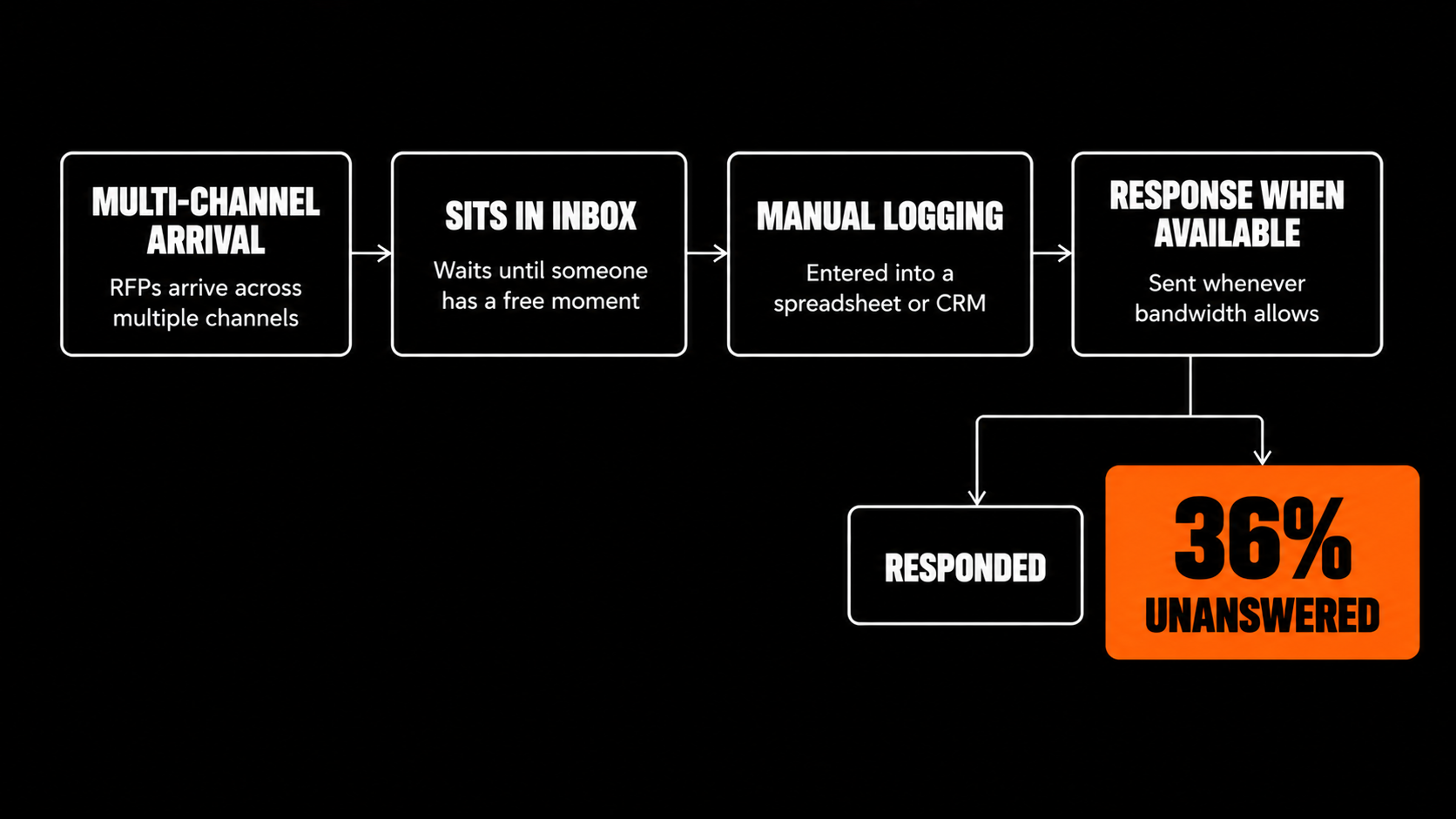
Group and RFP business is a useful place to see the difference between firefighting and system design, because the financial stakes are explicit and the timeline pressure is unforgiving. In a firefighting model, RFPs arrive across multiple channels, sit in an inbox until someone has a free moment, get manually logged into a spreadsheet or CRM, and receive a response whenever bandwidth allows, which explains why over a third go unanswered entirely.
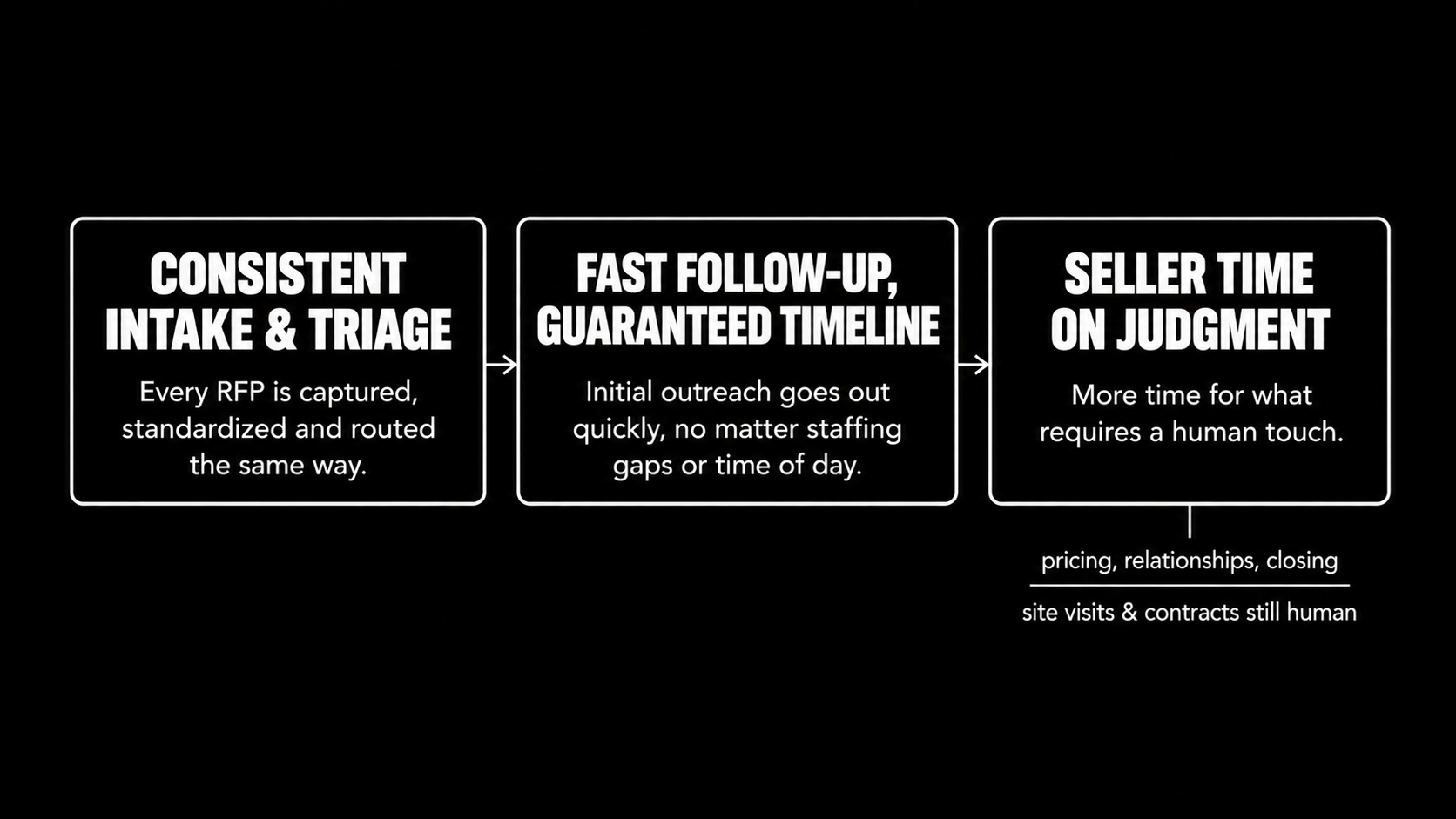
In a system-based model, RFP intake, triage, and initial follow-up happen on a consistent, fast timeline regardless of staffing gaps, so the sales team's time is spent on the parts of the job that actually require judgment: pricing strategy, relationship building, and closing. This is not a claim that technology replaces the salesperson. The site visit, the contract review, and the relationship with the meeting planner still matter, and no system replaces that expertise. What a system changes is how much of a seller's day gets consumed by the administrative work sitting in front of those higher-value activities.
Building a System That Doesn't Break When You're Not in the Room
The strongest hotel sales and marketing operations in 2026 are not the ones working the hardest. They are the ones that have stopped treating every day as a series of separate emergencies and instead built a structure that catches most of what would otherwise become an emergency. That shift starts with an honest audit of where a property's current process depends entirely on one person's memory, attention, or willingness to work late, and then closing those gaps one at a time: consistent capture, guaranteed response speed, centralized visibility, and a workflow that keeps functioning whether or not any specific person is at their desk.
None of this requires abandoning the channels a property already relies on for demand, whether that is paid search, OTA distribution, or direct group outreach. It requires making the follow-through on that demand structurally reliable instead of personally exhausting.
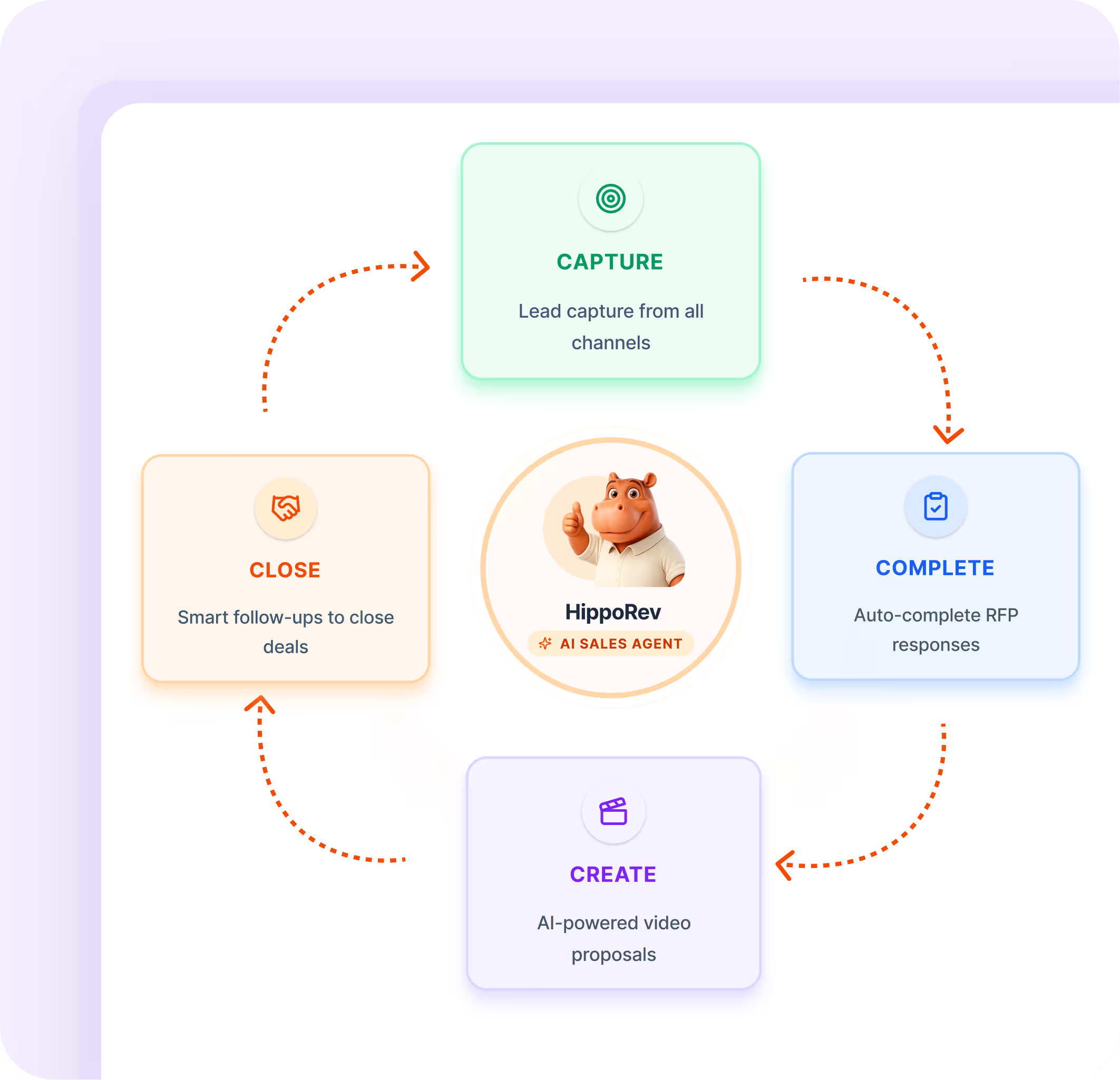
Sustainable performance in hotel sales and marketing is less about finding more hours in the day and more about building a system that makes most of those hours unnecessary in the first place. RFP response speed and follow-through consistency are where that difference between firefighting and system design shows up most directly in group sales, since roughly 36% of RFPs go unanswered altogether and the majority of won deals go to whichever property responded first. Hippo Rev is built specifically to close that gap: it functions as a system of execution that sits alongside a hotel group sales team's existing CRM and PMS tools, capturing and triaging incoming RFPs consistently and helping teams respond fast enough to compete for the first-mover advantage, without adding another manual layer on top of an already stretched team. If slow or inconsistent RFP follow-through is a pattern your team recognizes, you can see how Hippo Rev approaches it by booking a Capture Audit, a free 20-minute review of your own numbers, no deck required.
Frequently Asked Questions
What is the main cause of burnout among hotel sales and marketing directors?
The primary driver is not workload volume alone but process fragility: manual, single-person-dependent workflows for RFP handling, review response, and demand generation that require constant intervention to avoid breaking, rather than the workload itself being unmanageable.
How much time does manual RFP handling actually take?
Independent research on hotel and venue RFP management found manual processes, using email and spreadsheets, typically take 8 to 15 hours of staff time per proposal cycle, and Hippo Rev's analysis of group sales operations found average manual RFP processing time runs approximately 37 minutes per response when accounting for the full intake-to-reply workflow.
Why does response speed matter so much in hotel group sales?
61% of won group deals go to one of the first three hotels to respond, and a response delivered within four hours correlates with a 20 to 30 point higher win rate compared to slower responses. Speed functions as a structural advantage independent of price or property quality.
Can AI tools alone solve hotel marketing burnout?
Not by themselves. Adding automation on top of an already broken manual process can introduce a new stressor known as decision anxiety, where a team owns the outcome of an AI recommendation without fully understanding its reasoning. Reducing burnout requires redesigning the underlying workflow, not just layering a tool onto it.
What does a "system" mean in the context of hotel sales and marketing?
A system is a workflow that continues to function correctly without requiring one specific person's constant attention. In practice, this means consistent lead capture, guaranteed response speed, centralized visibility across channels, and a structure that does not collapse when a key team member is unavailable.
Share this post
Ready to close more group business?
See how HippoRev can transform your hotel sales workflow in 15 minutes.

Follow us


.svg)