


Hotel Revenue Management
Hotel Group Revenue Management: Why It Still Lags
Hotel group revenue management continues to rely heavily on manual pricing, fragmented RFP workflows, and static rate floors while transient pricing has become increasingly automated. The article explains how faster proposal turnaround, shared data, structured RFP intake, and market-responsive pricing can help hotels improve group sales win rates and reduce revenue leakage.



.jpg)
Why Hotel Group Revenue Management Still Lags Behind the Rest of the Business
Transient pricing at most hotels now runs on real-time demand signals, automated rate shopping, and forecasting models that adjust several times a day. Group business does not get the same treatment. Group rates are still set largely by hand, group RFPs still move through the same multi-department approval chain they did a decade ago, and the sales team fielding those RFPs is still buried in email.
That gap matters more now than it used to, because group demand has recovered and competition for it has intensified. Hotels are chasing the same event and meeting budgets with a process that was never built for speed.
This is the core problem in hotel group revenue management: the discipline that governs transient pricing has industrialized, while the discipline that governs group pricing and group sales response has not. The result shows up directly in win rates, in leaked revenue, and in how much of a sales team's day gets spent on administrative work instead of selling.
What Group Revenue Management Actually Covers
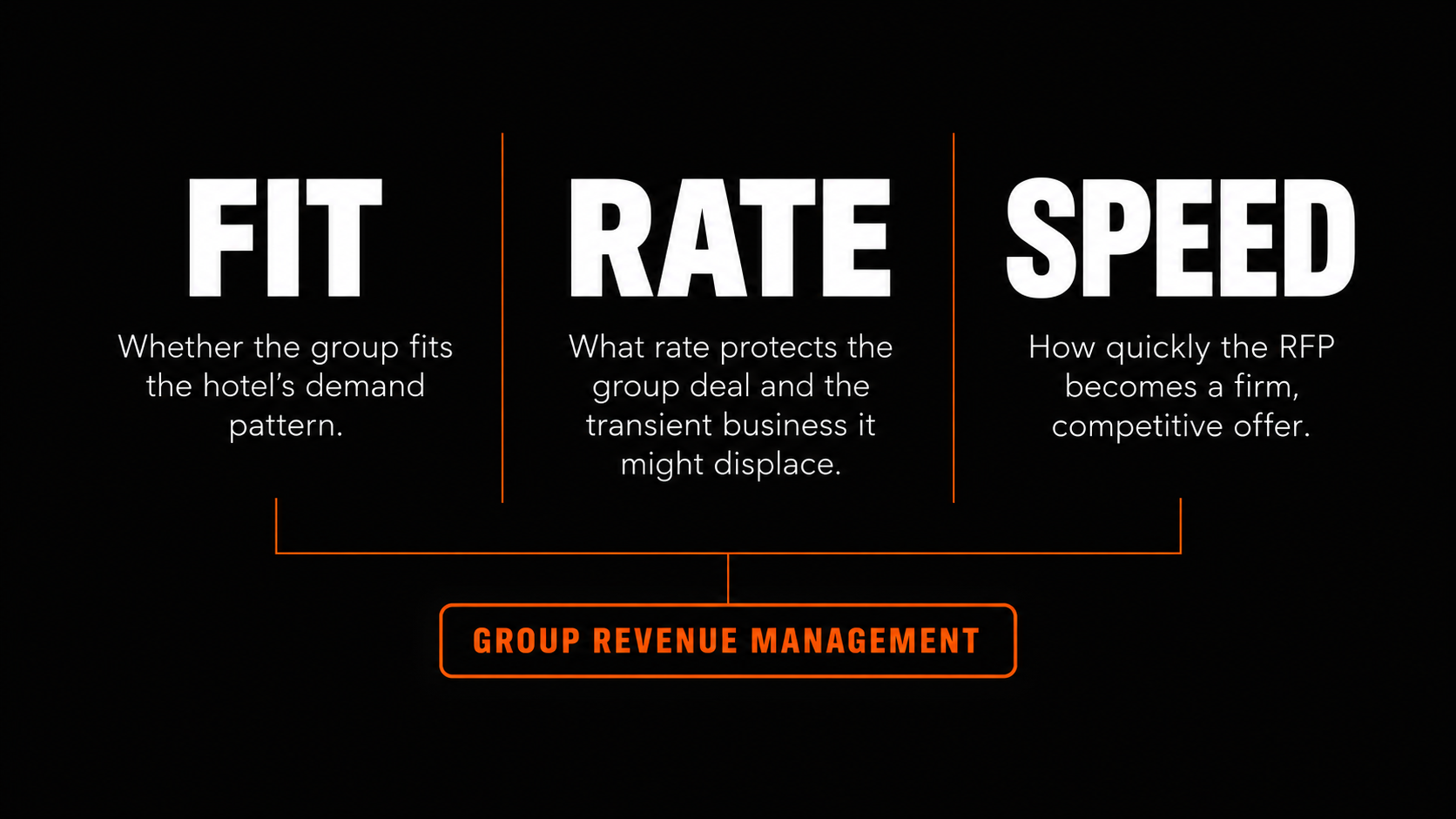
Group revenue management is the set of decisions a hotel makes about which group and meeting business to pursue, at what rate, and with how much room and function space displacement. It sits between sales, catering/events, and revenue management, and it typically involves three interlocking judgments: whether the group fits the hotel's demand pattern, what rate protects both the group deal and the transient business it might displace, and how quickly the hotel can turn a request for proposal (RFP) into a firm, competitive offer.
That last piece is where group revenue management most visibly breaks down. Transient pricing decisions happen inside a revenue management system in seconds. Group pricing decisions still typically require a human to check room availability, model transient displacement, price catering and food and beverage, and route the response through sales leadership — often across several email threads and spreadsheets.
Why Group RFPs Move Slower Than the Market Around Them
A group RFP response is a coordination problem before it is a pricing problem. Sales has to confirm the request is a fit. Revenue management has to model what the group would displace in transient revenue on the dates requested. Catering has to price meeting space, food and beverage, and any packages. Someone has to reconcile all of it into a single proposal before it goes back to the planner. Every one of those handoffs is a place where a request can sit in an inbox.
That coordination tax is showing up in industry research. Hotel News Resource's 2026 coverage of The State of Group, Event, and Corporate Sales found that 63.1% of hotels cite finding qualified leads as their top challenge in attracting group demand, while nearly 30% say quickly qualifying those leads is the part of the RFP process most in need of improvement. In other words, before a hotel even gets to pricing a group correctly, it is often struggling just to triage and move the request forward.
The volume problem compounds the coordination problem. Meeting planners today submit RFPs through hotel websites, third-party sourcing platforms, brand.com channels, and direct email — often to the same property simultaneously. Easy RFP, a sourcing-side resource for meeting planners, puts the average hotel RFP response rate at only 40–50%, and notes that hotels effectively triage incoming requests by fit, perceived probability of winning, and how much effort a clear response will take. Poorly formatted or ambiguous requests — a meaningful share of the volume most sales inboxes receive — get pushed to the bottom of the pile or dropped entirely.
Hippo Rev's own research into hotel group sales teams puts a number on how much of this volume goes unanswered altogether: roughly 36% of group RFPs never get a response. When a hotel is losing more than a third of its incoming opportunities before a rate is ever quoted, the problem isn't demand. It's throughput.
That problem becomes even more visible when you look at the four stages where hotel RFP revenue can leak from the sales process. Check out the full blog here.
The Real Cost of a Slow Response
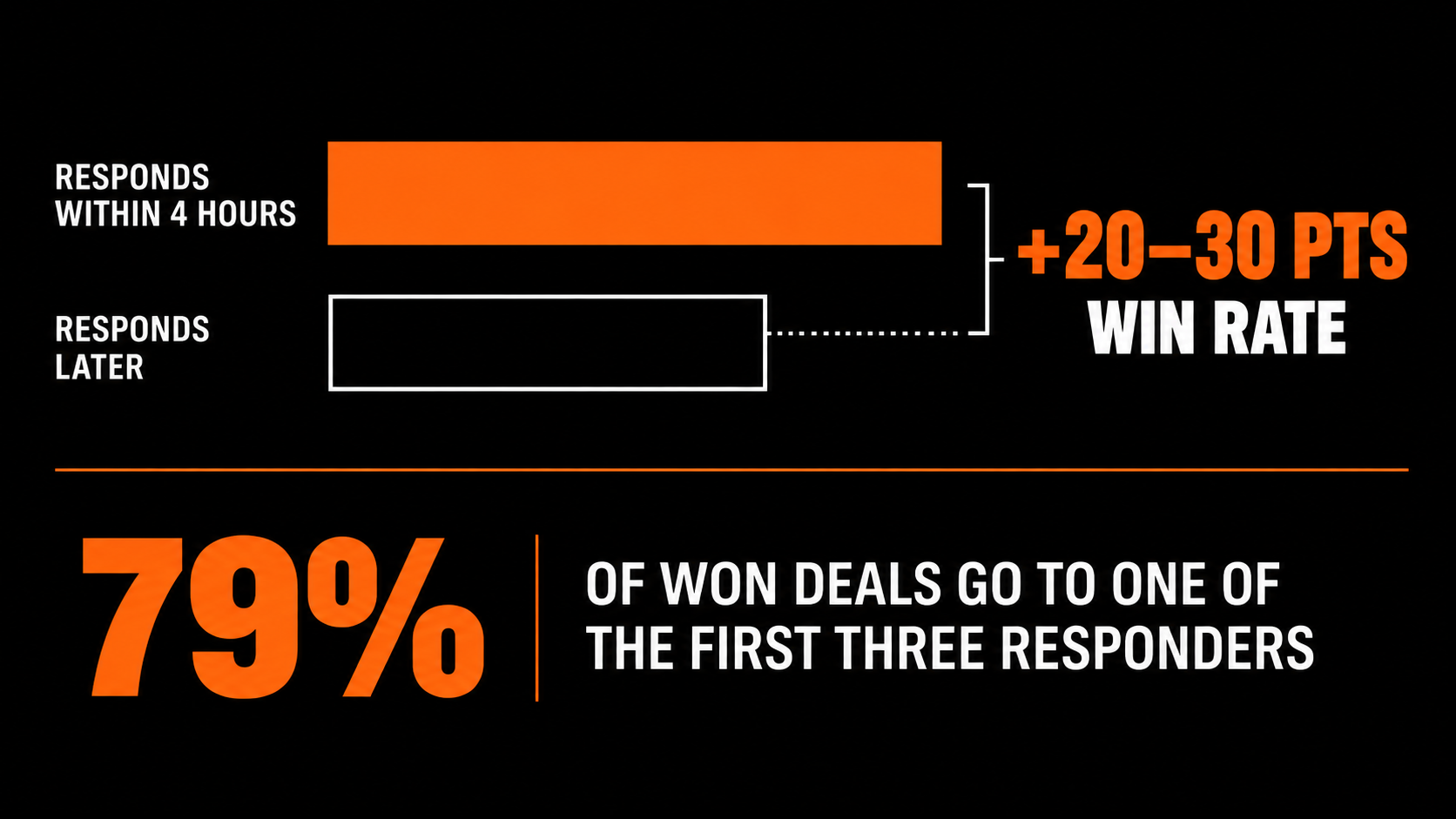
Speed is not a soft advantage in group sales — it is close to the whole game. Research on group sales response patterns has found that 75-79% of won group deals go to one of the first three hotels to respond, regardless of whether that hotel offered the lowest rate. Planners working multiple RFPs simultaneously tend to build their shortlist from whoever answers first and answers clearly, then negotiate from there. A hotel that responds fifth or sixth is often negotiating for a spot on a list that's already been narrowed.
The relationship between speed and win rate isn't marginal, either. Hotels that respond to a group RFP within four hours see a 20–30 percentage point win-rate advantage over slower responders. That is a large enough swing to change how a sales leader should think about staffing and process — a hotel that fixes response time is, in effect, fixing win rate without changing a single rate strategy.
The time cost behind that slow response is concrete, too. Manually processing a single group RFP — checking availability, modeling displacement, assembling a proposal — takes a hotel sales team roughly 37 minutes on average. Multiply that by dozens of weekly RFPs across property types, discounted concessions, and the peak-season crunch, and the disruption caused when people change roles or leave the team, and the arithmetic gets brutal: Hippo Rev estimates the resulting inefficiency costs a hotel salesperson approximately $500,000 in annual revenue leakage, largely from RFPs that arrive too slowly, get deprioritized, or never get a response at all.
That leakage is consistent with what broader proposal-management research shows about how sales teams spend their time. Loopio's 2026 RFP benchmarking work, compiled from proposal teams across industries, put average response time at 25 hours and found that AI-assisted response generation has roughly doubled in adoption over the past two years — evidence that speed has become a competitive lever organizations are actively trying to pull, not an incidental byproduct of a well-run team.
Sellers spend an estimated 71% of their time on non-selling tasks — chasing paperwork, re-keying the same information across systems, and manually assembling proposals — rather than on the qualifying, negotiating, and relationship work that actually wins group business.
Group Pricing Still Runs on a Static Number
The pricing side of group revenue management has its own version of the same problem. Most hotels set a minimum acceptable rate (MAR) for group business — a floor below which a rate should not be quoted — and then leave that number largely static across a booking window, adjusting it only occasionally as market conditions shift. That approach made sense when group rates were negotiated slowly and infrequently. It makes less sense now, when the transient side of the same hotel is repricing multiple times a day.
Current revenue management guidance treats this gap explicitly. Recent hotel revenue strategy analysis recommends defining rate floors tied directly to cost-per-occupied-room and reviewing pricing recommendations at least daily, on the logic that "rate decisions made on yesterday's data are already behind the market."
That standard is now routine on the transient side — PwC's 2026 outlook projects U.S. hotel RevPAR growth of 2.9% year over year, with demand growth of 3.2% outpacing supply growth of 2.3%, a gap that dynamic, frequently-updated pricing is built to capture.
A group MAR that gets set once at the start of a booking period and revisited only occasionally can't respond to that same movement, which means hotels are either underpricing group business relative to what the market would bear, or holding a rate so rigidly that they lose winnable deals to a competitor with more pricing flexibility.
The deeper issue is that group pricing and group response speed are not actually separate problems — they're the same problem viewed from two angles. A hotel that can't quickly model transient displacement also can't quickly and confidently defend a group rate in negotiation. A hotel that takes 37 minutes to assemble one proposal doesn't have the bandwidth to revisit its MAR daily. Fixing the coordination bottleneck is largely what makes more responsive, more accurate group pricing possible in the first place.
What an Effective Group Revenue Management Process Looks Like
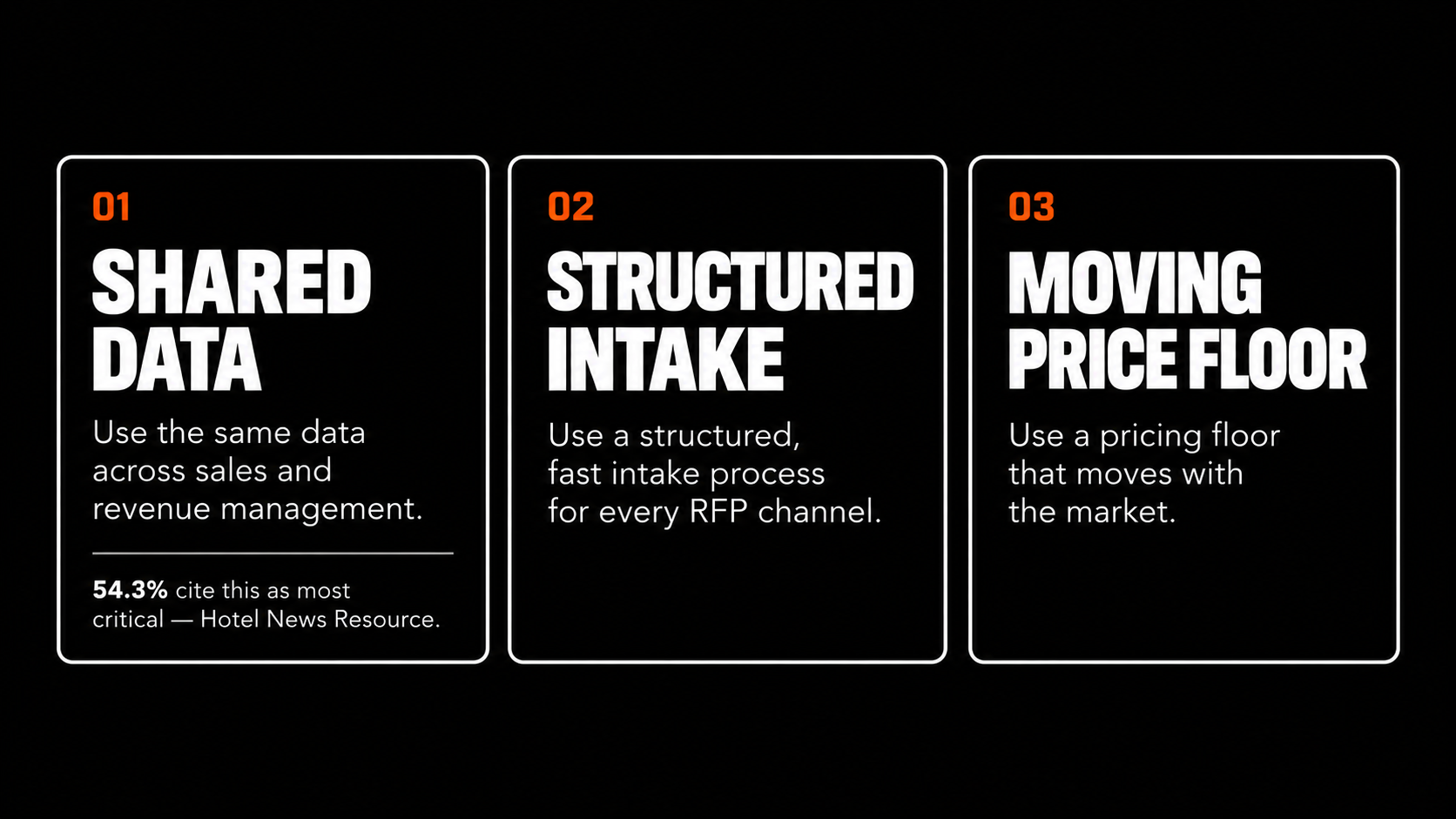
Hotels that manage group business well tend to share three characteristics, based on both current industry research and the operational logic of the problem itself:
- Shared data between sales and revenue management. Hotel News Resource's 2026 research found that 54.3% of hotels say sharing data and account intelligence is the single most critical factor for revenue management and sales working effectively together.
When both functions are working from the same view of demand, displacement, and account history, pricing decisions and proposal turnaround both get faster. - A structured, fast intake process for every RFP channel. Because RFPs arrive through multiple channels at once — direct email, hotel website forms, sourcing platforms — hotels that respond consistently tend to route every request through one intake process rather than triaging by channel or by whoever happens to see it first.
- A pricing floor that moves with the market. Rather than a MAR set once and left alone, stronger group pricing processes revisit the floor regularly, using the same demand signals that already drive transient pricing.
None of these are exotic requirements. They're closer to operational discipline than new technology in the abstract — but they are genuinely difficult to sustain by hand once RFP volume passes a certain point, which is exactly where most group sales teams already are.
Group RFPs vs. Transient Bookings: Why the Comparison Matters
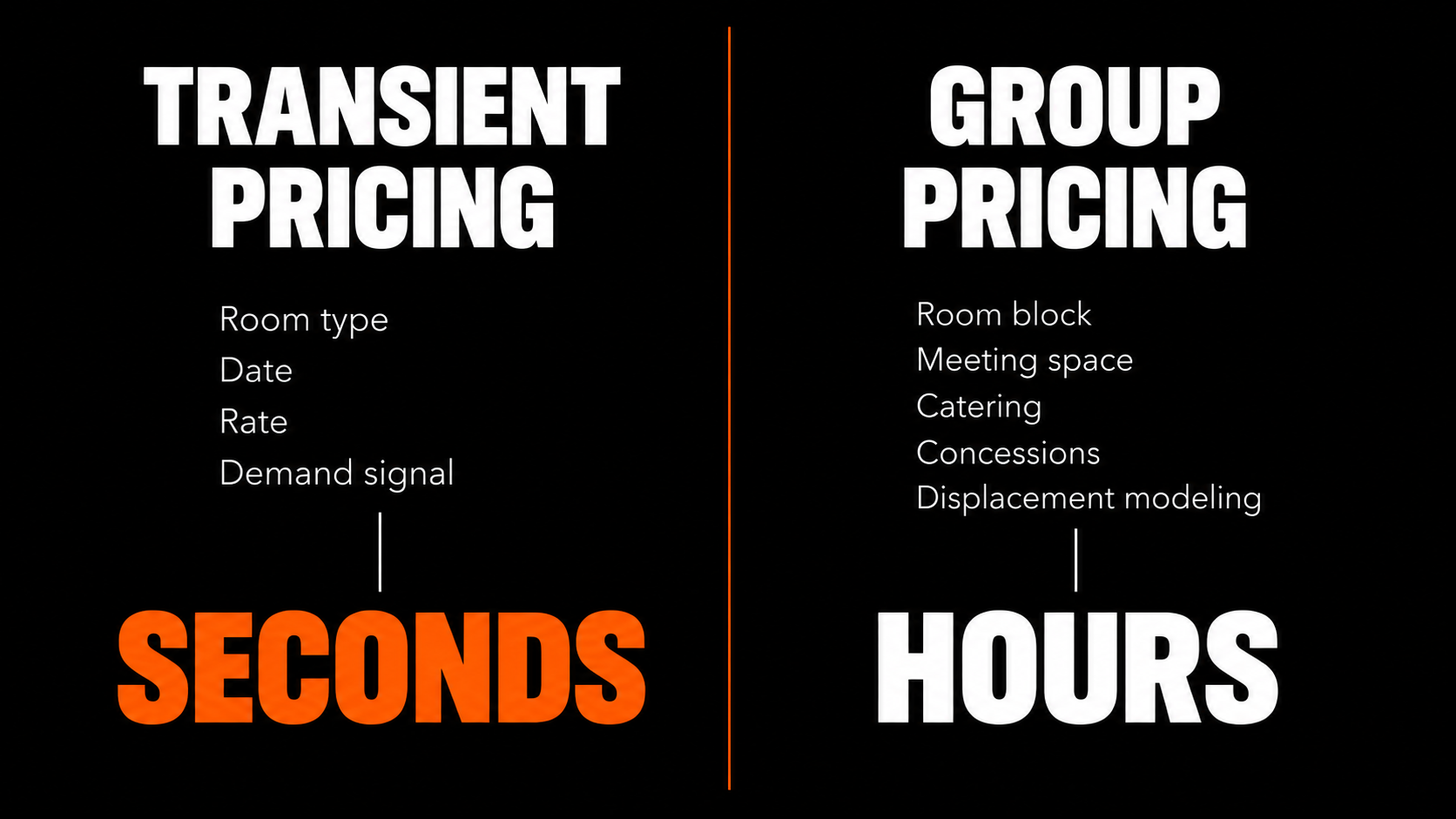
It's worth being precise about why transient pricing outpaced group pricing in the first place, because it explains what actually needs to change. Transient revenue management became automated because the decision structure is simple and repeatable: one room type, one date, one rate, adjusted against demand signals a system can ingest continuously. Group revenue management involves a proposal, not a rate — room block, meeting space, catering, concessions, and displacement modeling all bundled into one document that has to go back to a planner who is comparing it against several other hotels' proposals on the same timeline.
That complexity is real, but it isn't a reason group RM has to stay manual — it's a reason the coordination and data-assembly work around it is worth automating, even if the final judgment call on a group deal still belongs to a person. The hotels narrowing the gap between group and transient sophistication aren't necessarily negotiating differently. They're removing the 37 minutes of manual assembly work between "RFP received" and "proposal sent," so that the humans on the sales and revenue management side spend their time on judgment calls instead of data entry.
Check out our detailed blog on how the traditional hotel group sales proposal process is increasingly showing its limitations.
The Bottom Line
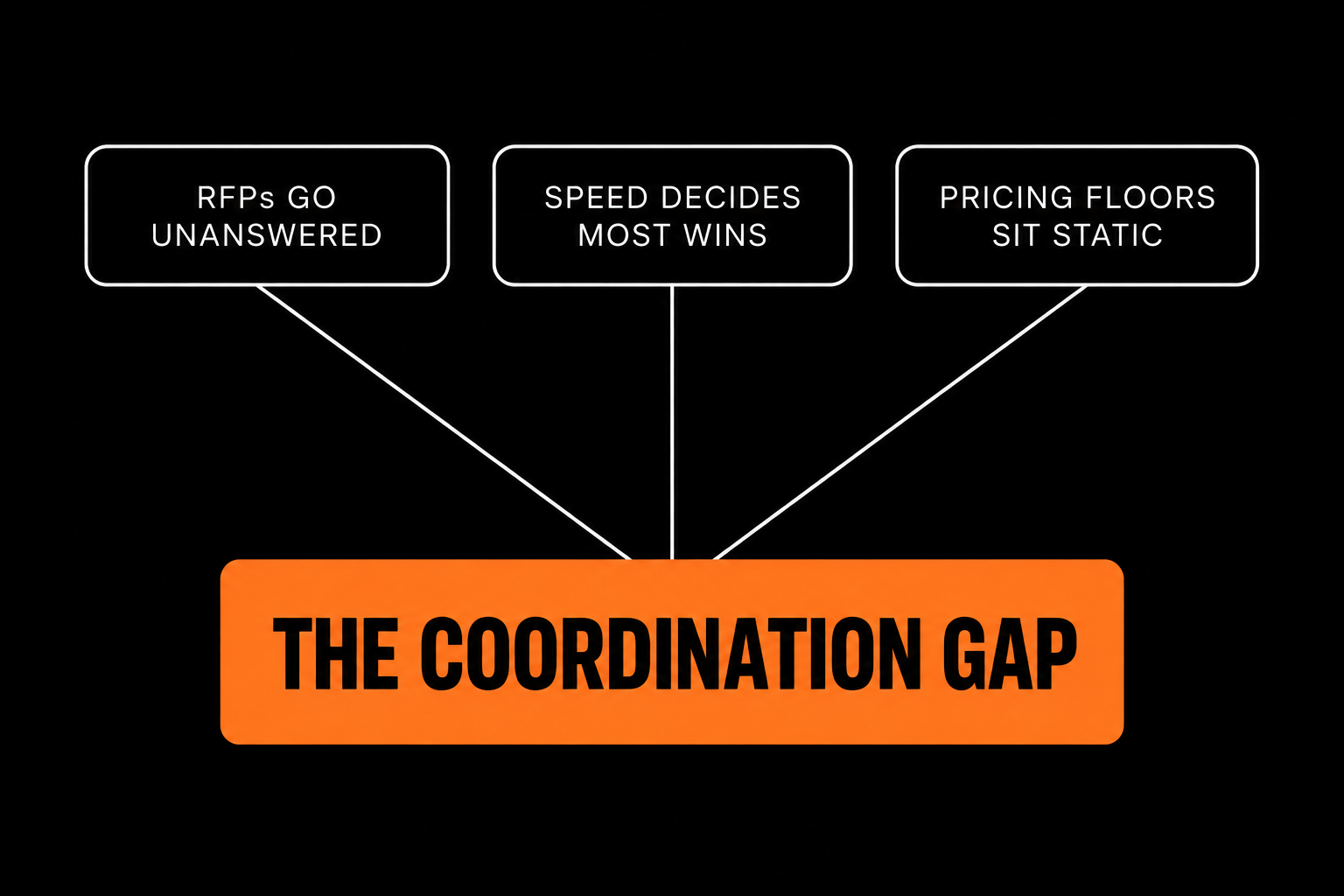
Group business hasn't gotten less important — meeting and event budgets have recovered, and the hotels winning that business are increasingly the ones that show up first with a clear, well-priced proposal rather than the ones with the lowest rate. But the process most hotels use to get from RFP to proposal hasn't changed nearly as much as the market around it. Roughly a third of group RFPs go unanswered, the majority of won deals go to whichever hotel responds fastest, and group pricing floors often sit untouched while transient rates move daily. Those aren't three separate problems. They're symptoms of the same coordination gap, and closing it is now one of the more direct ways a hotel group sales team can improve its win rate without changing anything about the property itself.
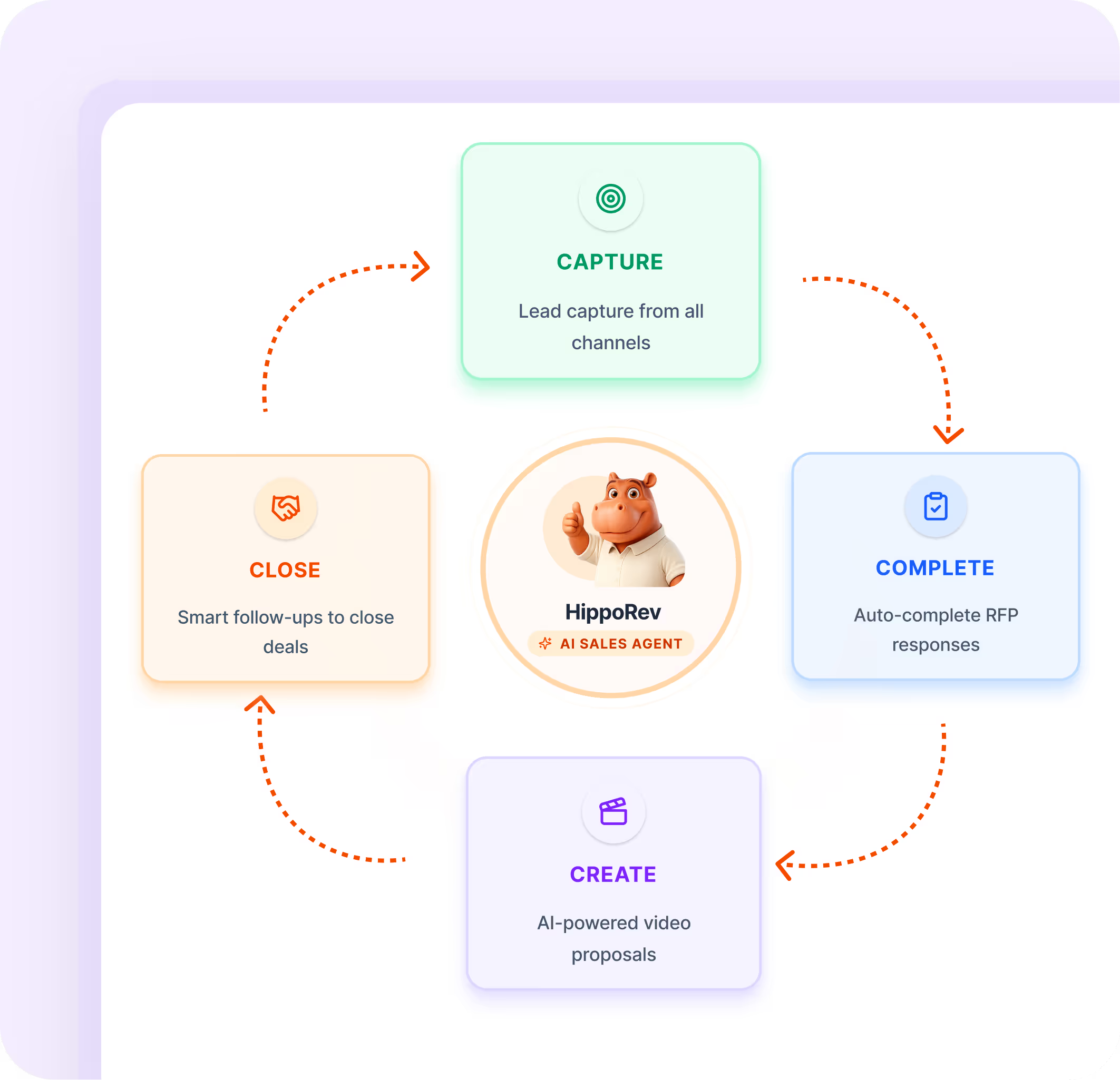
If slow RFP turnaround and a rigid group pricing floor sound like your team's current bottleneck, that's exactly the gap Hippo Rev is built to close. It's designed to move a group RFP from intake to a priced, ready-to-send proposal in minutes instead of the better part of an hour, so sales teams can respond inside that first-mover window instead of losing deals to whoever answered first. You can see how it works against your own numbers with a free, 20-minute Capture Audit — no deck, just your team's current RFP and response data — by booking one here.
Frequently Asked Questions
What is the difference between group revenue management and transient revenue management?
Transient revenue management prices individual room nights against real-time demand signals, usually inside an automated system. Group revenue management prices a bundled proposal — room block, meeting space, and catering — against a request for proposal, and historically has relied on manual coordination between sales, catering, and revenue management rather than an automated pricing engine.
Why do hotels lose group business even when they quote a competitive rate?
Because speed, not just price, determines a large share of group wins. Data on group sales response patterns shows the majority of won deals go to one of the first three hotels to respond to an RFP, and hotels that respond within four hours see a significantly higher win rate than slower responders — meaning a competitive rate delivered late can still lose to a merely adequate rate delivered fast.
What is a minimum acceptable rate (MAR) in group sales?
A minimum acceptable rate is the floor a hotel sets for group business, below which a sales team should not quote a rate without additional approval. Many hotels set this rate once for a booking period and adjust it infrequently, which can leave group pricing out of step with the demand conditions that are simultaneously moving transient rates.
How much revenue do hotels typically lose to slow or missed group RFP responses?
Estimates vary by property and market, but Hippo Rev's analysis of hotel group sales performance puts the figure at roughly $500,000 in annual revenue leakage per salesperson, driven primarily by RFPs that are answered too slowly or not answered at all.
Can group pricing be automated the way transient pricing is?
The final decision on a group deal typically still involves human judgment about relationship value, event fit, and negotiation. What can be automated is the data assembly around that decision — availability checks, displacement modeling, and proposal generation — which is usually the slowest part of the process and the biggest driver of missed or delayed responses.
Share this post
Ready to close more group business?
See how HippoRev can transform your hotel sales workflow in 15 minutes.

Follow us


.svg)