


Pipeline Recovery
The 4-Day Delay That Kills Hotel Sales
Four days of invisible RFP response chaos can quietly kill the deal. It's not laziness or lack of effort; it's a chain of compounding bottlenecks that most sales leaders have never mapped, measured, or even named.



.jpeg)
What Happens in the 4 Days Before You Respond
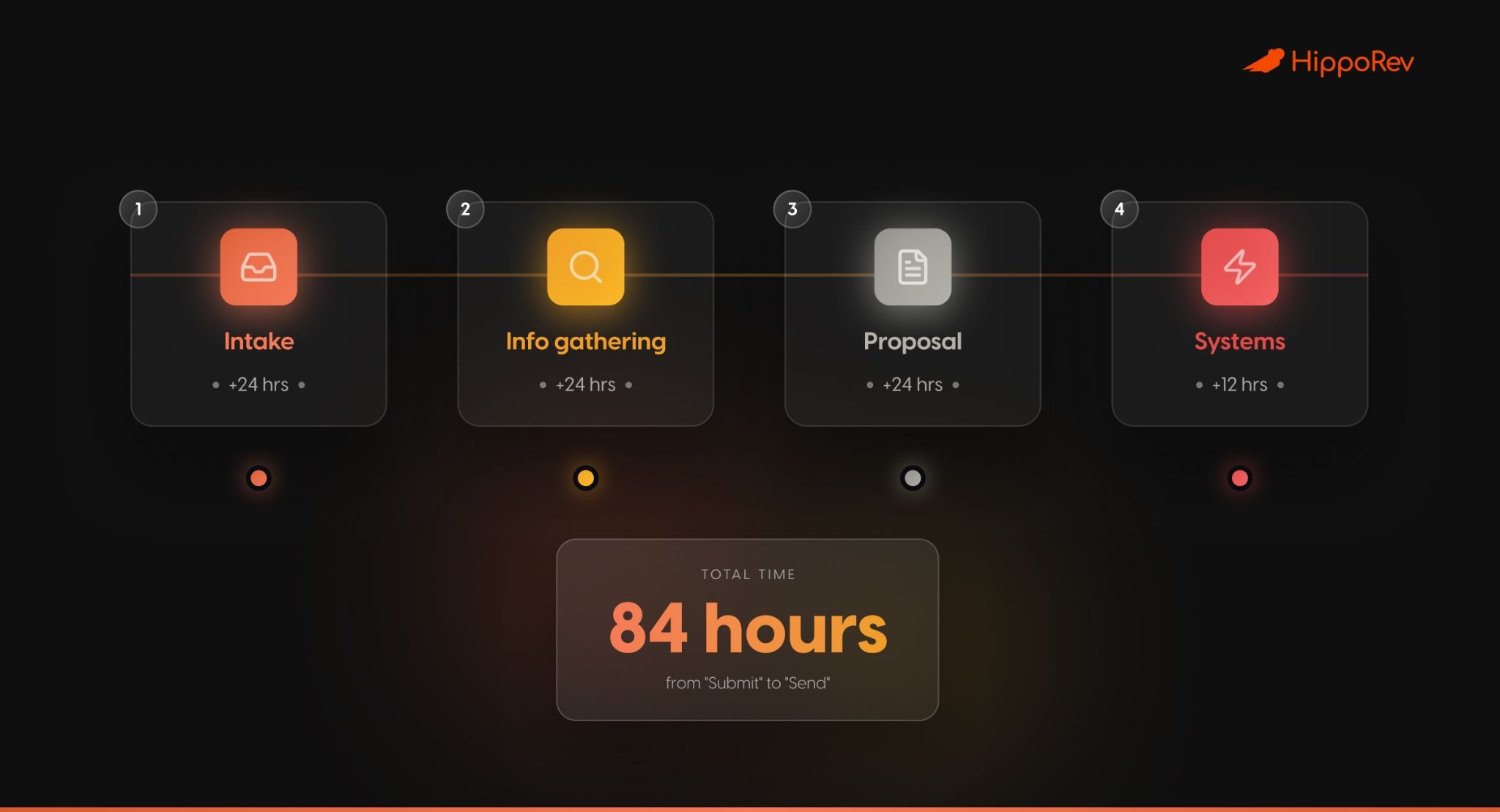
It is 9:00 AM on a Tuesday. A highly qualified event planner, managing a lucrative corporate summit with a 300-room block and a massive food and beverage budget, hits "Submit" on a Request for Proposal (RFP).
The digital inquiry flies through the ether and lands in your hotel’s system. For the event planner, their work is done, and the waiting game begins. In fact, research shows that 80% of planners expect an RFP response within four business days.
For your hotel, however, the clock has just started ticking on a chaotic, disjointed race against time.
If you ask the average hotel sales director how long it takes their team to respond to an RFP, they will likely tell you they are "pretty fast" and usually get back to prospects within a day or two. But the data tells a vastly different, more alarming story. A comprehensive Harvard Business Review audit analyzing 1.25 million sales leads across 2,241 U.S. companies revealed that the average B2B response time to a new inquiry is a staggering 42 hours. Even worse, the study found that 24% of companies took more than 24 hours to respond, and a shocking 23% never responded at all.
In the hospitality sector specifically, the numbers are actually worse. Platform data from Groups360 reveals that 55% of hotel RFPs go completely unanswered. They aren't declined; they are simply ignored.
How does this happen? How does a multi-thousand-dollar piece of business sit languishing in an inbox while sales teams genuinely believe they are working as fast as possible?
The answer lies in the anatomy of a slow response. Response time is not a single, isolated problem; it is a chain of compounding bottlenecks. Revenue loss happens through a chain of execution gaps that compound across the deal lifecycle. When we analyze the lifecycle of an inbound lead, we see what is known as the 4-Stage Leak Analysis. Time does not just disappear—it leaks at four distinct stages of the process.
To truly understand why you are losing deals to faster competitors, let’s break down exactly what happens inside the hotel sales office during those crucial four days before a response is finally sent.
Day 1: The Black Hole of Intake and Routing (Stage 1 Leak)
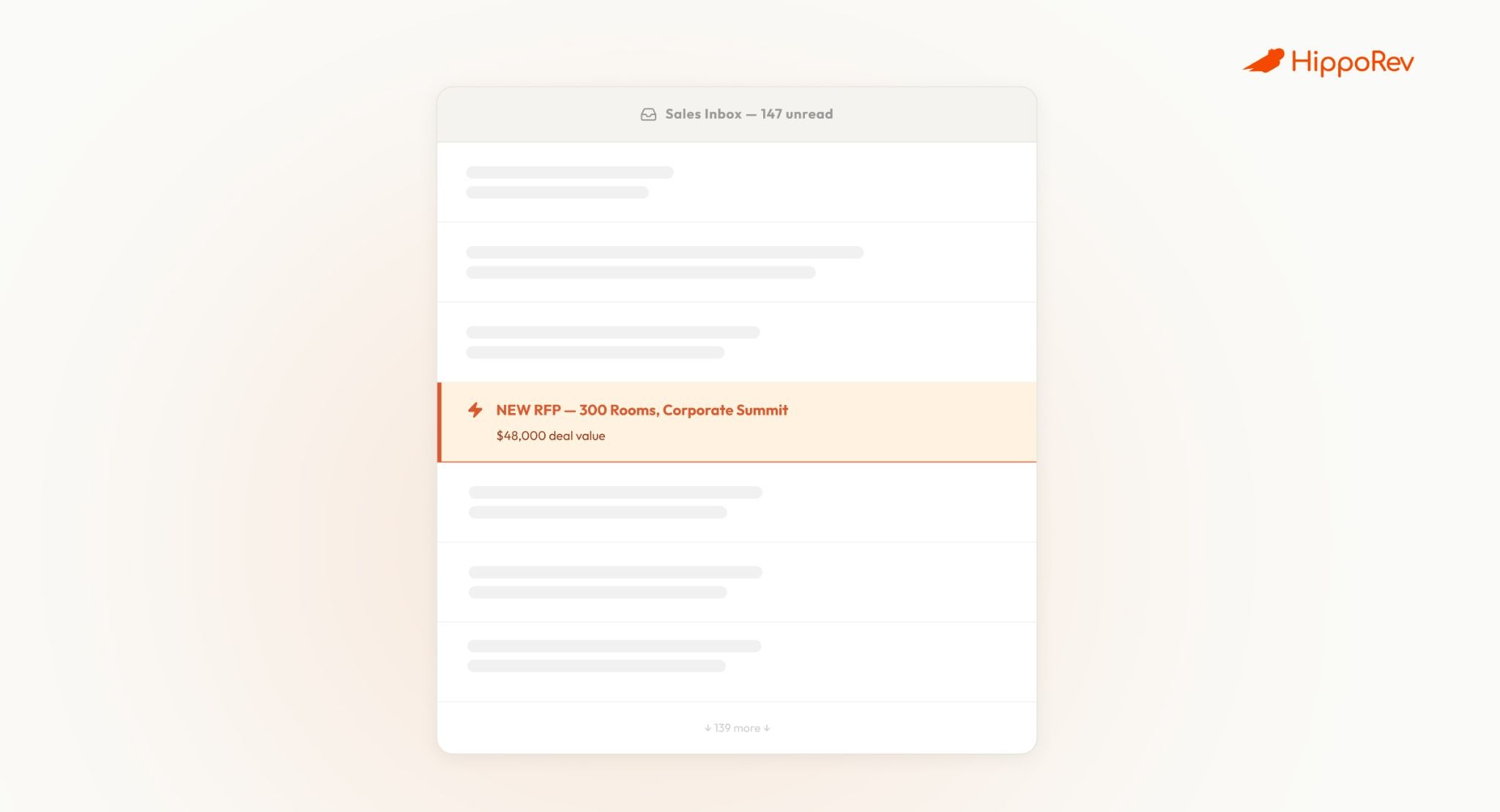
The Planner’s View: "I sent the RFP. The hotel is probably reviewing my event requirements right now." The Hotel's Reality: The RFP is buried in a shared inbox, and no one knows it exists.
The first major time leak happens at Stage 1: Lead Intake & Routing. In a modern hotel environment, RFPs do not neatly arrive in a single, organized queue. They arrive from multiple, fragmented sources: Cvent, direct emails, website forms, phone calls, and direct outreach.
On Day 1, your sales team is busy. The Director of Sales is in a two-hour revenue strategy meeting. Your top sales managers are conducting property site tours, putting out fires from a group currently in-house, or stuck in a lengthy Banquet Event Order (BEO) review.
Because the hotel relies on the manual monitoring of multiple inboxes and platforms, there is no automated routing system in place. This means that prioritization and assignment rely entirely on a human being having the free time to log in, read the inquiries, evaluate the size and scope of each lead, and manually forward it to the appropriate sales manager.
Often, sales and catering systems fail to capture the exact timestamp of when the RFP was received versus when the work actually began. As a result, hours—or even an entire business day—are lost simply noticing that the RFP has arrived. The prospect’s buying intent is currently at its absolute highest, but your team has not even opened the email.
By the end of Day 1, the lead has finally been spotted and assigned to a sales manager. But 24 hours have already burned off the clock.
Read: The 72% Rule and Why Being Second Means Losing
Day 2: The Scavenger Hunt for Information (Stage 2 Leak)
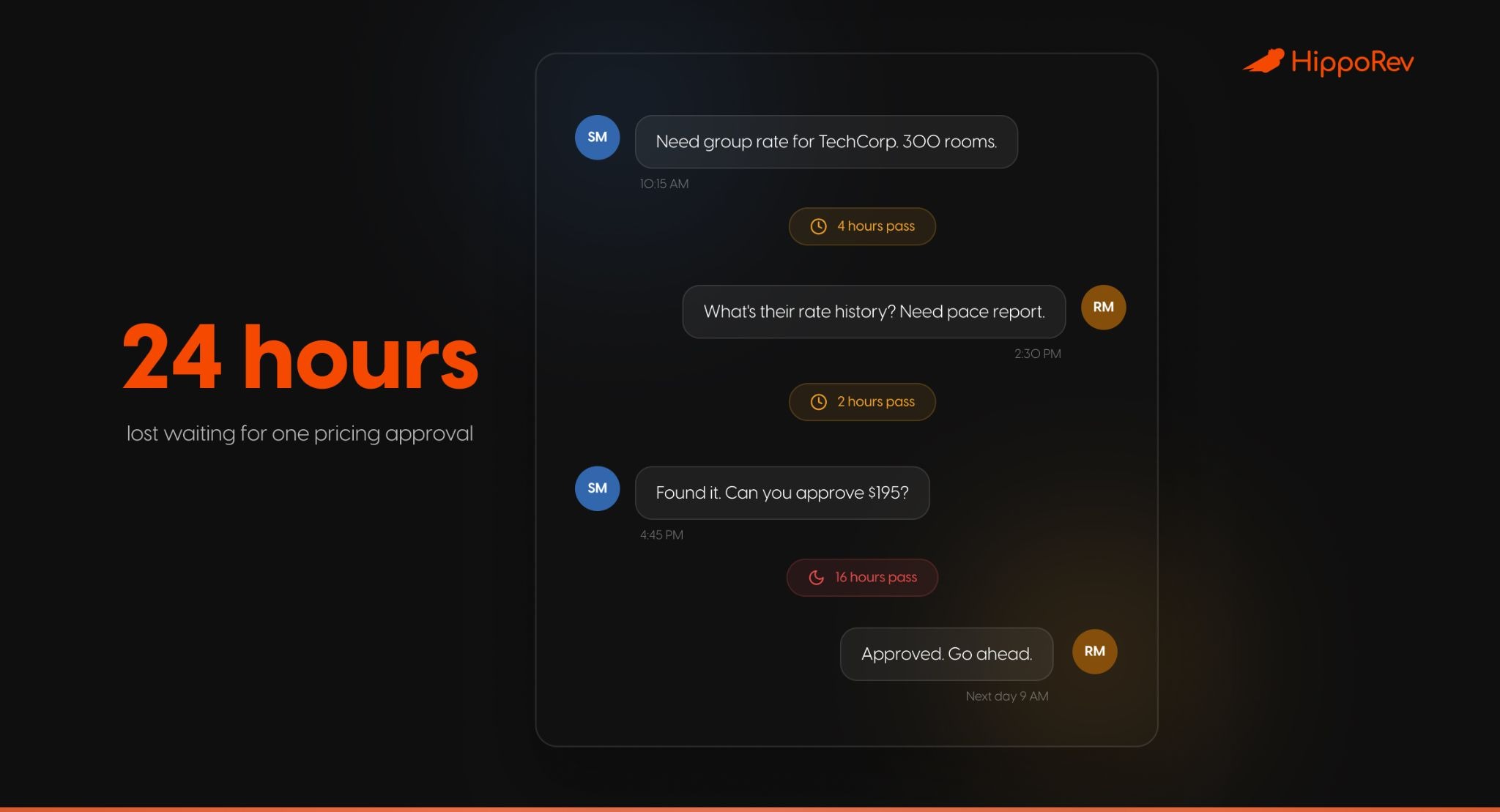
The Planner’s View: "The hotel is probably checking their availability and crunching numbers to get me the best possible rate." The Hotel's Reality: The sales rep is waiting for Revenue Management to reply to an email.
Now that the RFP is in the hands of the assigned sales manager, the real work begins. Or, more accurately, the waiting begins. Welcome to Stage 2: Information Gathering.
Before the sales manager can even begin to craft a compelling proposal, they need facts. They spend hours manually searching for rates and availability across disconnected systems. They need to manually research the prospect's account history to see if the group has stayed at the property or a sister property in the past.
Most importantly, they need pricing. Because dynamic pricing and group rate guidelines are often tightly controlled, the sales manager cannot simply quote a rate. They must draft an email to the Revenue Management team requesting approval for a specific rate block and concessions.
But Revenue Management is also busy. They are analyzing pace reports, adjusting transient rates, and sitting in their own meetings. The sales manager's pricing request sits in the Revenue Manager's inbox.
This represents massive hours lost waiting for information that, with the right technology, should be instant. The sales manager is essentially acting as a human router, chasing down internal details rather than selling the value of the property.
This is where revenue stalls—waiting on internal systems instead of moving toward conversion.
As Hippo Mate brilliantly puts it: "Why chase disjointed details for days when they can be gathered in minutes?".
By the end of Day 2, the Revenue Manager finally approves the group rate. But another 24 hours are gone. Meanwhile, data from Cvent shows that 61% of RFPs are ultimately awarded to one of the first three responders. At the 48-hour mark, it is highly likely that one of your competitors has already submitted a polished proposal and secured their place as the psychological anchor for this deal.
Day 3: The Copy-Paste Proposal Grind (Stage 3 Leak)
The Planner’s View: "The hotel must be customizing a beautiful, highly tailored proposal specifically for my group." The Hotel's Reality: The sales rep is fighting with formatting errors in a fragmented Excel spreadsheet.
On Day 3, the sales manager finally has all the raw ingredients required to respond: the dates are clear, the space is held, and the rates are approved. Now comes Stage 3: Proposal Creation.
In a hotel lacking sales automation, this stage is an agonizing exercise in administrative data entry. Time is heavily lost rebuilding what should be an automated process. The sales manager opens up a fragmented spreadsheet or an outdated Word document version of a proposal template.
They begin the repetitive data entry required to move information from the RFP into the hotel's property systems, and then from the systems into the proposal document. They manually customize the template for the prospect, copying and pasting the group name, the event dates, the room block matrix, and the F&B minimums.
Because this is a highly manual process, it is inherently prone to human error. A single copy-paste mistake from a previous proposal can result in sending the wrong group name or an incorrect rate—a mistake that instantly signals a lack of professionalism to the planner. The sales manager spends an extra hour meticulously proofreading the document to ensure the formatting hasn't broken and the math adds up.
A task that an AI-powered system could generate flawlessly in a matter of seconds has just eaten up half of the sales manager's afternoon.
Day 4: Fighting with the Systems (Stage 4 Leak)
The Planner’s View: "I really hope I hear back today. If not, I'm moving forward with the properties that already replied." The Hotel's Reality: The sales rep is trying to force three different software platforms to talk to each other.
It is now Day 4. The proposal is finally ready to send. But there is one final hurdle: Stage 4: System Integration Issues.
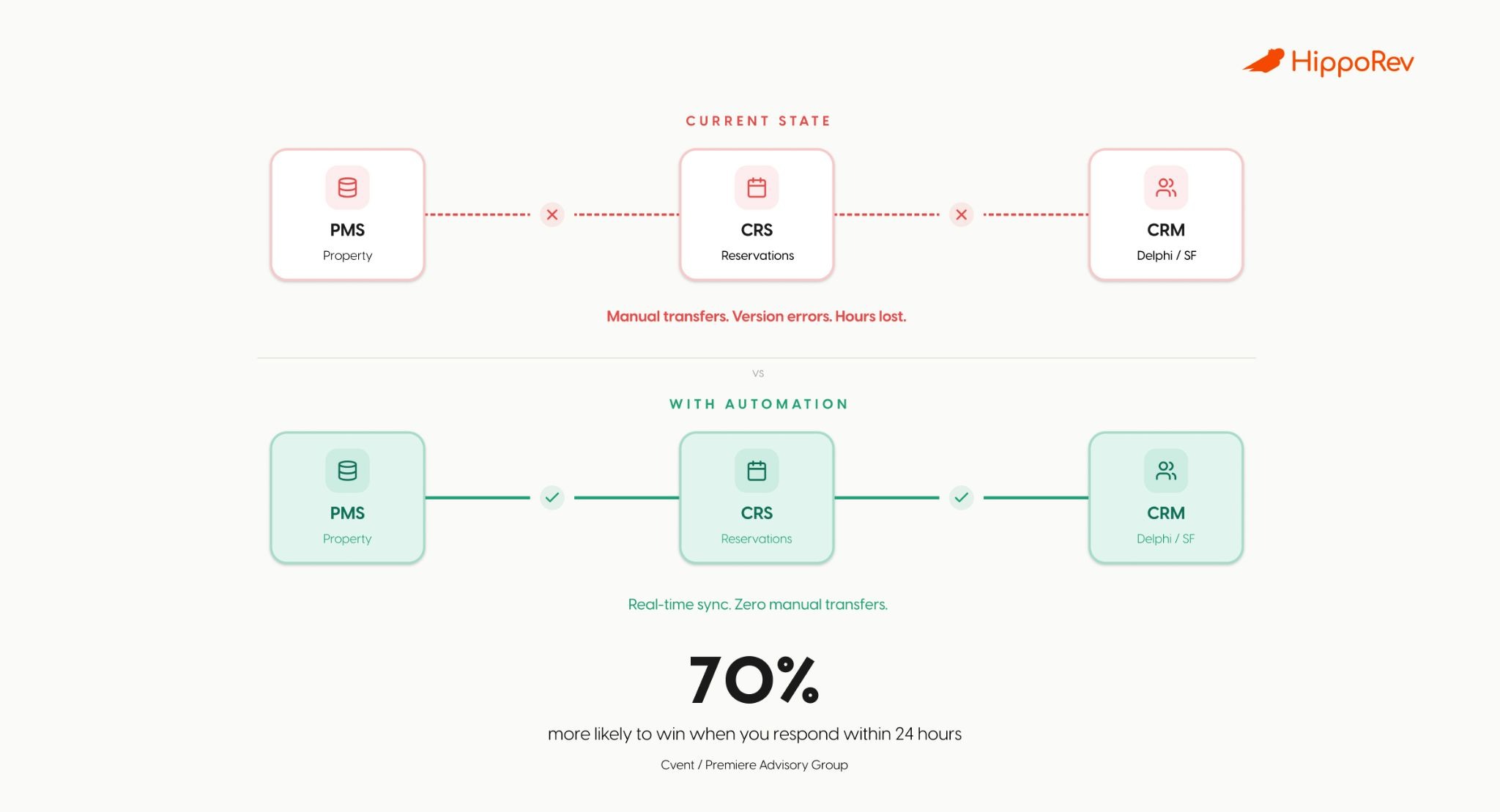
Because the hotel operates on disconnected Property Management Systems (PMS), Central Reservation Systems (CRS), and Customer Relationship Management (CRM) platforms, nothing syncs automatically. Manual data transfers between these systems cause version errors and severe administrative friction.
The lack of open API connections between platforms means the sales manager loses hours doing the administrative heavy lifting that technology was specifically designed to handle. They must manually log the activity in the CRM, manually update the status in the sales and catering system, and manually send the final PDF to the client via email or the Cvent portal.
Finally, 84 hours after the prospect hit "Submit", your sales manager hits "Send"—long after the revenue opportunity has shifted elsewhere.
The sales team breathes a sigh of relief. From their perspective, they successfully navigated a complex internal process and got a proposal out the door. They feel productive.
But out in the real world, the math tells a brutal story. According to data from Premiere Advisory Group and Cvent, hotels that respond within 24 hours are 70% more likely to win the bid. By waiting four days, your hotel has drastically slashed its own win probability. You have essentially done four days of administrative labor for the privilege of losing the deal.
The Compounding Effect of Administrative Delay
What becomes painfully obvious when looking at this day-by-day breakdown is the compounding effect of these time leaks.
Response time is not a single, massive delay; it is four distinct problems stacked on top of each other. A delay at Stage 1 (Intake) pushes back everything that follows. When a sales manager is balancing an active pipeline, conducting site tours, and managing 50 to 100 incoming RFPs per month, these small, seemingly insignificant delays multiply into a massive aggregate loss of time.
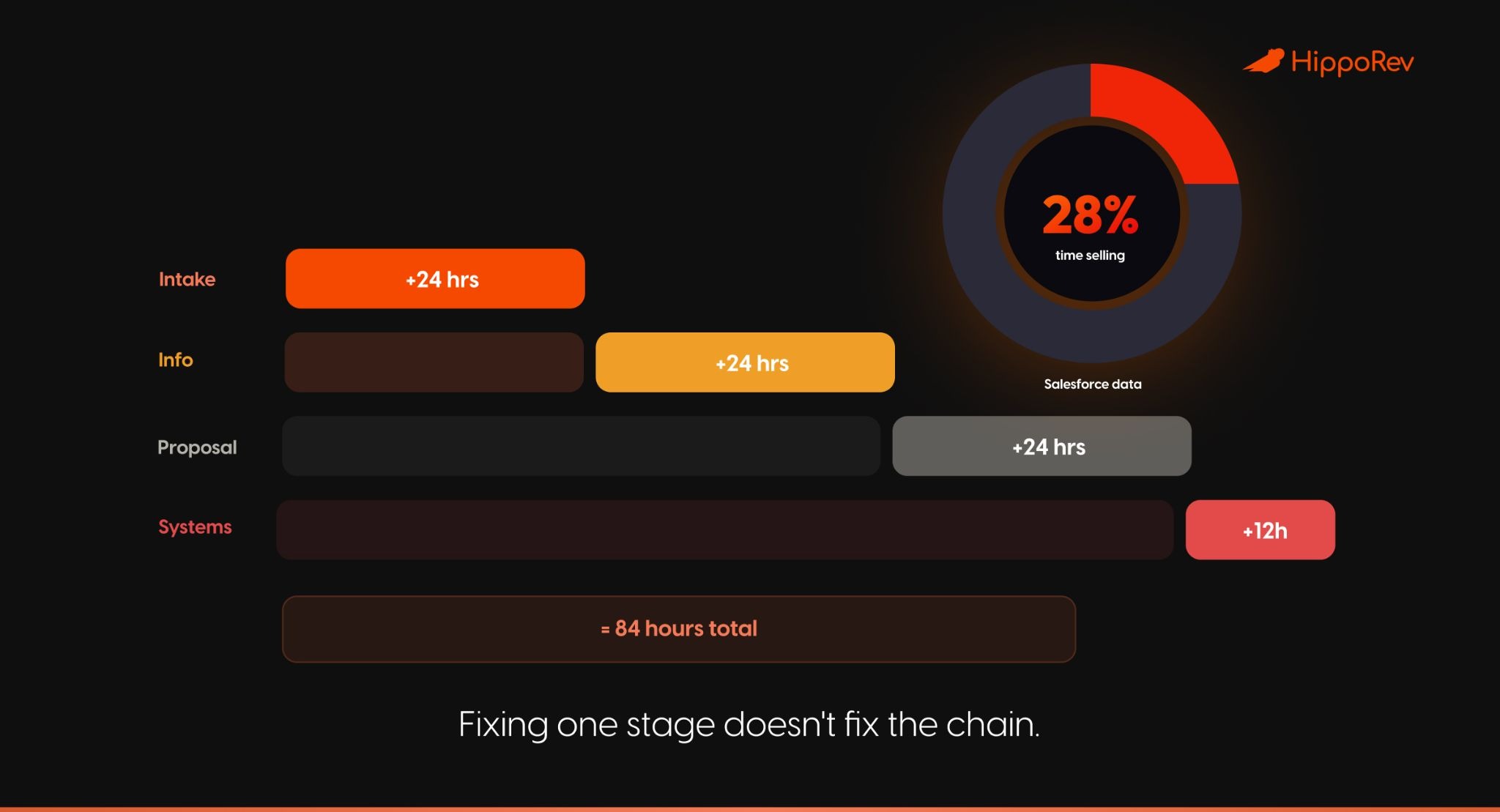
Fixing just one stage without addressing the others still leaves you slow. If you fix proposal generation but ignore lead routing, the lead still sits unseen for 24 hours. If you fix system integrations but your reps still have to wait a day for Revenue Management to approve pricing, you still lose the speed advantage.
[[Our Speed Wins Revenue Playbook is your guide to closing the gap between a 4-day delay and a same-day response. Built on verified research from top hospitality platforms and academic studies, this playbook provides the framework you need to overhaul your sales process & capture more reveue.]]
The Harsh Truth: Why 23% Never Respond At All
When you view the RFP process through the lens of this 4-Stage Leak Analysis, it suddenly becomes very clear why the Harvard Business Review found that 23% of B2B companies never respond to inquiries at all.
It also explains the staggering Groups360 data showing that 55% of hotel RFPs go completely unanswered.
When the administrative burden of responding to an RFP takes four days of chasing, copying, pasting, and navigating disconnected systems, sales reps naturally begin to filter their own pipelines. If a lead looks "too small" or "too difficult," or if the sales rep is simply having a busy week, the psychological weight of the 4-stage process causes them to abandon the lead entirely.
This represents a purely lost revenue opportunity. If your marketing and distribution teams are spending money to drive visibility and generate RFPs, letting 55% of them vanish into the ether is a catastrophic failure of ROI.
You Cannot Hire Your Way Out of a Structural Problem
When hotel leadership finally realizes that their response times are costing them millions in group revenue, the knee-jerk reaction is often to demand that the team "work faster" or to request budget to hire more sales coordinators.
But the staffing reality check proves this is an unwinnable battle. Currently, 65% of U.S. hotels still report staffing shortages, according to the AHLA. Hotel employment remains nearly 10% below pre-pandemic levels. Furthermore, the hospitality industry suffers from the highest turnover of any U.S. industry, churning through staff at a rate of 70-80% annually.
Even if you could fully staff your office, human beings have physical limitations. Salesforce data shows that salespeople spend only 28% of their actual time selling. The other 71% is eaten up by the exact administrative leaks detailed in the 4-stage breakdown.
The math simply does not support adding more humans to solve a structural, technology-based process problem.
The Ultimate Cost of Days vs. Minutes
Event planners are professional buyers. They know that how a hotel handles the sales process is a direct preview of how they will handle the actual event.
When a response takes four days, it can unintentionally give event planners the impression that your team might be stretched too thin to fully prioritize their event. 24% of event professionals cite slow replies as a top frustration, and 37% of planners cite bad communication as the primary reason they choose another property.
Non-responsiveness and slow replies do not just cost you the current deal—they remove you from future consideration. Planners have long memories, and 93% of them are willing to pay more to book with hotels where they have established, reliable relationships.
If you trace your RFPs and find that they are languishing in the 4-day cycle of Intake, Information Gathering, Proposal Creation, and System Integration, you are bleeding pipeline & you are losing revenue before it even enters your pipeline.
Technology is the only scalable solution. With an AI-powered system, lead routing is instantaneous. Information gathering takes seconds. Proposal generation is automated. System integrations are seamless.
Ready to stop leaking pipeline?
When you break down the anatomy of a slow response, it becomes clear that the problem isn’t effort—it’s process.
Increasingly, hotels are addressing these structural bottlenecks with workflow automation that removes the manual friction between each stage. Hippo Rev is built around this exact idea:
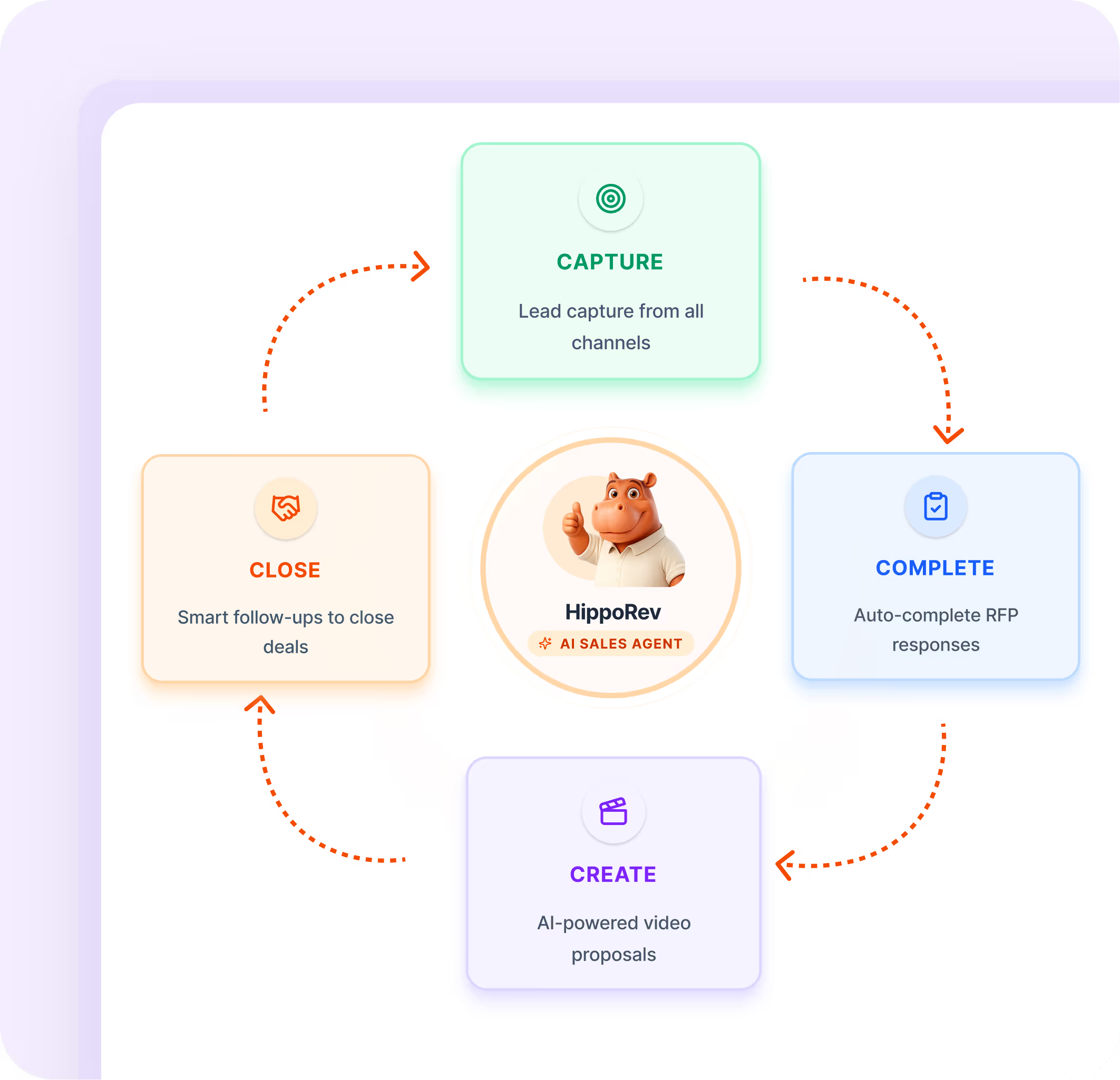
It works as a revenue capture platform that runs deal execution across your systems—automatically capturing RFPs from multiple channels, gathering missing event details, generating proposal drafts, syncing information across systems, and moving deals forward without delay, so sales teams can focus on the client instead of the paperwork.
Instead of compressing four days of manual work into one stressful afternoon, automation restructures the workflow so the response can happen in minutes. If you’re exploring ways to fix the structural leaks in your sales process, seeing how these AI-driven workflows operate in a live demo can be surprisingly eye-opening.
Frequently Asked Questions
Question: How can hotels reduce their RFP response time?
Answer: Improving response time requires redesigning the workflow rather than simply asking sales teams to work faster. This includes automated lead routing, instant pricing access, and standardized proposal generation. AI-powered systems like Hippo Rev automate these steps so responses can be generated much faster.
Question: Why is responding within 24 hours important for hotel RFPs?
Answer: Studies show hotels that respond within 24 hours are significantly more likely to win the bid. Fast responses signal professionalism and responsiveness to planners. They also allow the property to establish the first psychological anchor.
Question: Can automation replace hotel sales managers?
Answer: Automation doesn’t replace the salesperson—it removes repetitive administrative work. This allows sales managers to spend more time building relationships with planners and negotiating deals. The human role becomes more strategic.
Question: What happens if hotels ignore process improvements in RFP response?
Answer: Slow response processes can lead to lost revenue, frustrated planners, and lower conversion rates. Over time, planners may stop including the property in RFP invitations altogether. Improving the response workflow helps protect long-term pipeline health.
Share this post
Ready to close more group business?
See how HippoRev can transform your hotel sales workflow in 15 minutes.

Follow us


.svg)