


AI & Sales Technology
Hotel RFP Management Software: How to Choose
Hotel RFP software can mean very different things: inquiry capture, faster proposals, approvals, or a full workflow. This blog shows how to find your real bottleneck, evaluate AI, integrations, and data accuracy, score vendors with weighted criteria, pilot with real RFPs, and build an ROI case on revenue.



How to Choose the Right Hotel RFP Management Software
Hotel RFP management software can solve very different problems.
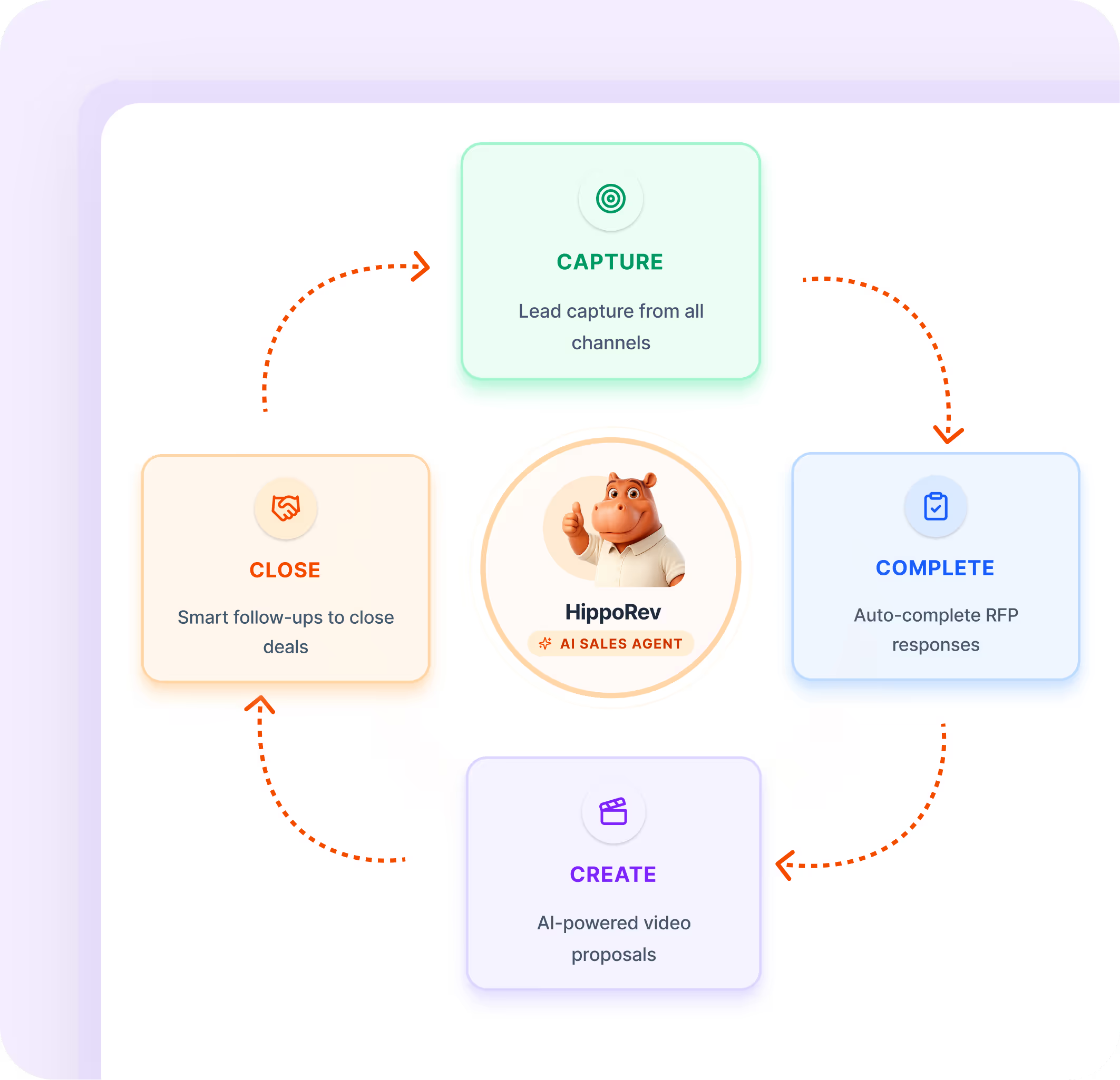
One platform may help centralize incoming inquiries. Another may speed up proposal creation. Another may improve collaboration and approvals. More advanced systems may connect inquiry capture, pricing, proposal creation, follow-up, and reporting into one workflow.
That makes choosing RFP software less about finding the platform with the longest feature list and more about identifying where your current RFP process actually breaks down.
This guide explains how to evaluate hotel RFP management software, which capabilities matter most, and how to determine whether a platform will meaningfully improve your group sales process.
Start With the Problem, Not the Software
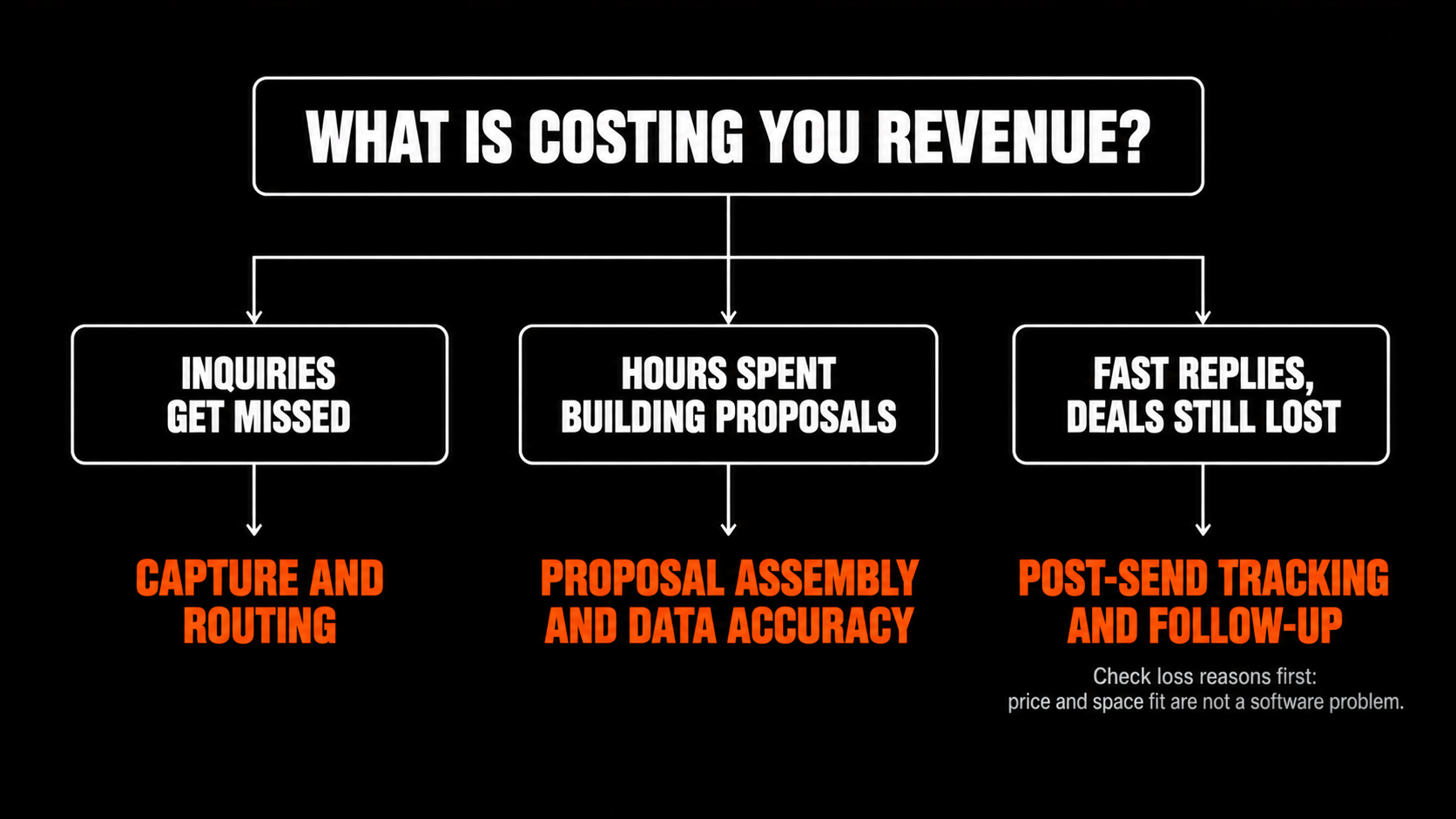
Before evaluating platforms, map what happens from the moment an RFP reaches your hotel to the moment the opportunity is won or lost.
Ask:
- Where do inquiries arrive?
- How quickly does someone see them?
- Who decides whether an opportunity should be pursued?
- How much information must sellers manually collect?
- How long does it take to prepare a proposal?
- Where do rates and availability come from?
- Who needs to approve the response?
- How are open proposals followed up?
- Can managers see why opportunities are being won or lost?
This exercise matters because "RFP management" can refer to several different jobs.
A hotel struggling with missed inquiries has a different problem from one whose sellers spend hours assembling proposals. A team responding quickly but losing deals after sending proposals has yet another problem.
Your software should address the bottleneck that is actually costing you revenue.
1. Evaluate What the AI Actually Does
"AI-powered" is no longer a useful differentiator on its own.
The more important question is:
What work does the AI actually perform?
There is a significant difference between software that suggests text and software that can execute parts of the RFP workflow.
For example, AI may be able to:
- Extract information from incoming inquiries
- Identify missing information
- Classify and prioritize opportunities
- Retrieve approved property information
- Generate proposal drafts
- Retrieve pricing or availability
- Route questions or approvals
- Detect conflicting information
- Recommend follow-up actions
When evaluating a platform, separate assistance from execution.
An AI writing assistant may save a few minutes drafting an answer. A system that removes several manual steps from every RFP can change the economics of the entire sales workflow.
Also determine where human judgment remains.
Pricing strategy, negotiation, relationship management, exceptions, and competitive positioning often require seller judgment. Good automation should remove repetitive work without removing the decisions where experienced salespeople create value.
2. Check How the Platform Handles Incoming RFPs
Hotel inquiries rarely arrive through one channel.
They can come through email, website forms, sourcing platforms, phone calls, referrals, or other sales channels.
That creates an important evaluation question:
Does the platform manage RFPs after someone enters them, or does it also help capture incoming demand?
Look at whether the system can:
- Consolidate inquiries from multiple sources
- Convert unstructured inquiries into usable opportunity data
- Identify duplicate inquiries
- Route opportunities to the appropriate seller
- Prioritize opportunities based on predefined criteria
- Track whether an inquiry has received a response
A sophisticated proposal tool can still leave a major operational gap if opportunities are being missed before they enter the system.
3. Examine the Content and Knowledge System
RFP responses repeatedly use the same underlying information: property details, amenities, policies, meeting-space information, service descriptions, standard terms, and approved brand messaging.
The software should make this knowledge reusable without allowing outdated information to spread across proposals.
Look for:
- A centralized content library
- Version control
- Approval status
- Content ownership
- Expiration or freshness tracking
- Search based on meaning rather than exact keywords
- Usage analytics
- Controls over what AI can and cannot use
This becomes especially important for hotel groups.
Information that is correct for one property, brand, market, or customer segment may be incorrect for another. The platform needs enough context to know which information belongs in which response.
4. Test Data Accuracy, Not Just Writing Quality
A polished proposal containing the wrong information is worse than an ordinary proposal containing the right information.
During evaluation, test how the platform handles facts such as:
- Rates
- Availability
- Room inventory
- Meeting-space capacity
- Policies
- Contract terms
- Amenities
- Dates
- Property-specific information
Ask where each piece of information comes from.
Ideally, frequently changing information should come from the systems where that information is maintained rather than from manually copied records.
Also check whether the software can identify contradictory information before a proposal is sent.
The objective is not simply faster proposal generation. It is faster generation of proposals that sellers can trust.
5. Evaluate Workflow Automation
RFP work frequently crosses multiple people and departments.
A seller may need pricing approval, operational confirmation, contract input, or information from another team before responding.
Without workflow automation, sellers become project managers: forwarding messages, checking statuses, reminding colleagues, and assembling responses.
Evaluate whether the platform can:
- Assign tasks automatically
- Route approvals based on predefined rules
- Escalate overdue actions
- Show ownership clearly
- Maintain an audit trail
- Notify only the people who need to act
- Prevent proposals from progressing without required information or approvals
The goal should be to reduce coordination work rather than simply move that coordination into another interface.
6. Look at Integration Depth
RFP software does not operate in isolation.
Important information may already live in your property management, sales, revenue management, CRM, email, document storage, or other hotel systems.
An integration logo on a vendor's website does not tell you how useful that integration actually is.
Ask what data moves between systems, in which direction, and how frequently.
For example:
Can the platform retrieve current information automatically?
Can actions taken in the RFP workflow update another system?
Does the integration eliminate manual entry, or merely provide a link to another application?
The best integration is not necessarily the platform that connects to the greatest number of systems. It is the one that removes the most unnecessary handoffs from your workflow.
7. Assess Proposal Creation and Personalization
Proposal automation should do more than fill a standard template.
Group business varies significantly by event type, customer, account importance, dates, space requirements, and commercial value.
Evaluate whether proposals can adapt to this context.
Useful capabilities may include:
- Dynamic proposal content
- Property-specific information
- Customer-specific messaging
- Relevant images and media
- Interactive proposal experiences
- Event-specific recommendations
- Brand controls
- Seller editing and approval before sending
Personalization should not require sellers to rebuild every proposal manually.
The ideal system creates a strong first version automatically while preserving the seller's ability to apply judgment where it matters.
8. Evaluate What Happens After the Proposal Is Sent
Many RFP evaluations focus almost entirely on producing the proposal.
But sending the proposal is not the end of the sales process.
Ask what happens next.
Can the platform tell sellers whether a proposal was opened?
Can it identify engagement?
Can it remind sellers when an opportunity has stalled?
Can it trigger follow-up workflows?
Can managers see which opportunities are receiving attention and which are going cold?
A platform that reduces proposal creation from hours to minutes creates operational value. A platform that also helps convert more of those proposals into business creates revenue value.
This distinction is important when calculating ROI.
9. Check Scalability Across Properties and Brands
A workflow that works for one hotel may become difficult to manage across dozens or hundreds of properties.
Hotel groups should evaluate:
- Multi-property management
- Brand-level and property-level permissions
- Shared versus local content
- Regional workflows
- Multiple languages
- Central reporting
- User roles
- Property-specific rules and policies
The platform should allow standardization where useful without forcing every property into exactly the same workflow.
10. Review Security, Governance, and Auditability
RFP workflows can contain customer information, commercial terms, negotiated pricing, contracts, and other sensitive business data.
Security therefore needs to be part of the buying decision.
Evaluate:
- Role-based access
- Encryption
- Audit logs
- Data retention controls
- Authentication
- Relevant security certifications
- AI data handling
- Permission controls
If AI generates or retrieves proposal content, also ask what sources it is allowed to use and whether administrators can restrict generation to approved information.
Build a Weighted Evaluation Scorecard
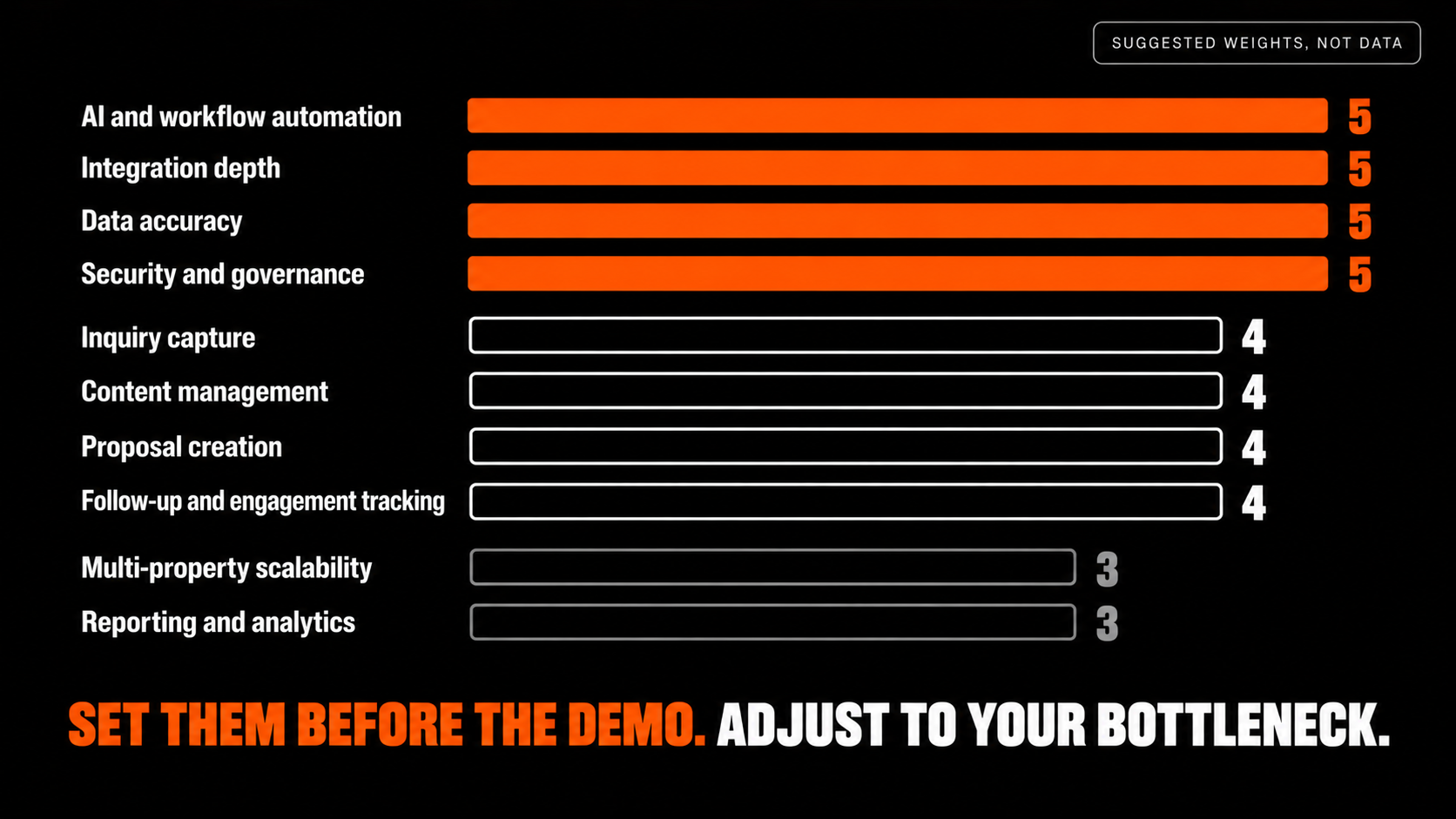
Not every capability deserves equal weight.
A hotel struggling with response speed may prioritize workflow automation and integrations. A management company operating many properties may place greater weight on governance and multi-property controls.
A simple scorecard could look like this:
Adjust the weights based on your operation before evaluating vendors.
Otherwise, impressive demonstrations can cause teams to overweight features that have little relationship to their actual problems.
Also read: Hotel RFP Automation: An 8-Point Buyer's Checklist
Pilot the Software Using Real RFPs
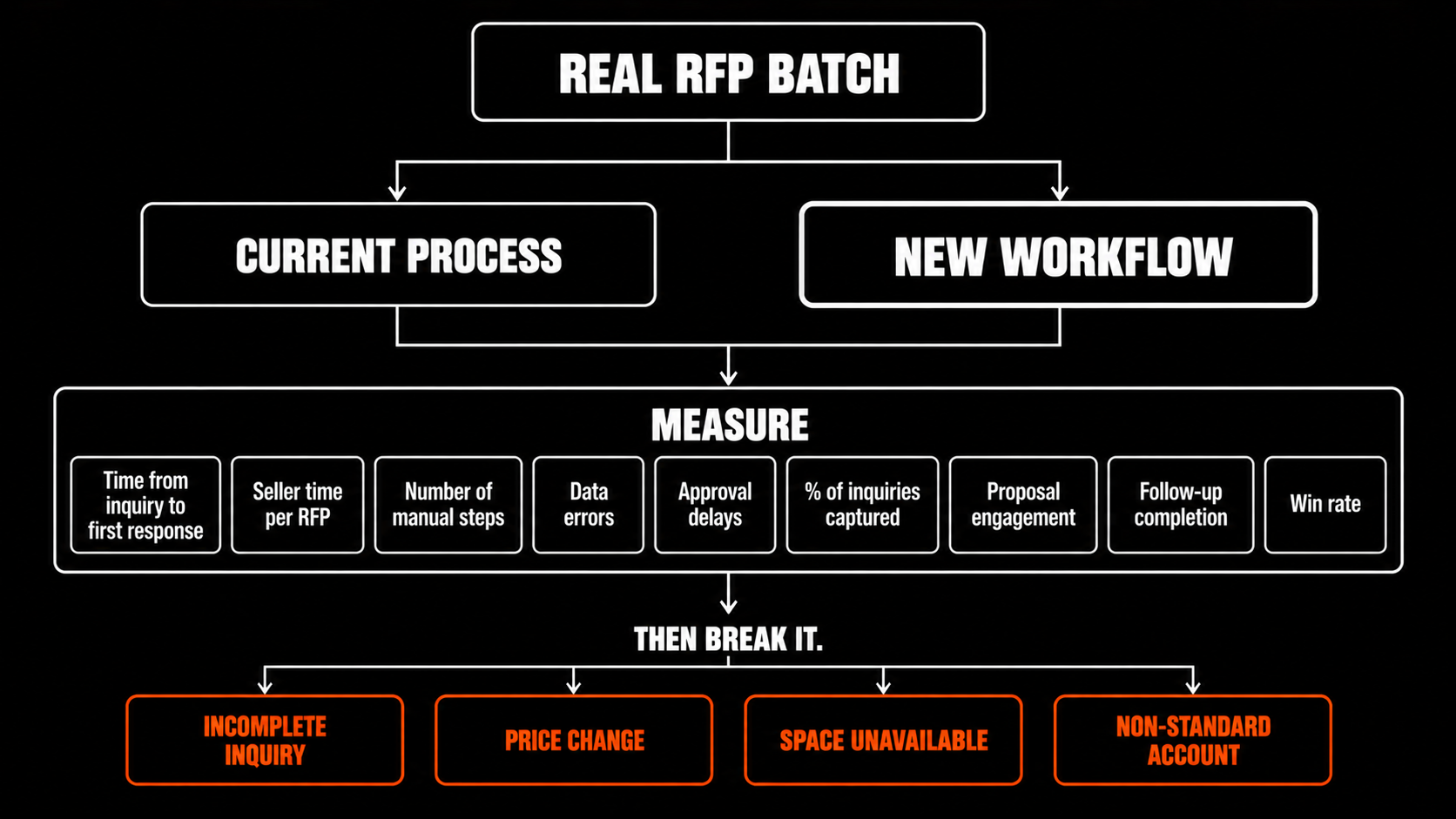
A product demonstration shows you how software performs under ideal conditions.
A pilot shows you how it performs inside your hotel.
Select a representative batch of real RFPs and compare the new workflow against your existing process.
Measure:
- Time from inquiry to first response
- Seller time required per RFP
- Number of manual steps
- Data errors
- Approval delays
- Percentage of inquiries successfully captured
- Proposal engagement
- Follow-up completion
- Win rate
Also measure exceptions.
What happens when an inquiry is incomplete? What happens when pricing changes? What happens when the requested space is unavailable? What happens when an important account requires a non-standard response?
These edge cases often reveal more about a platform than the standard workflow.
Calculate ROI Using Revenue Metrics
Time saved matters, but it should not be the only measure of value.
For hotel sales teams, RFP software can potentially affect several parts of the revenue equation:
More inquiries captured × faster responses × higher conversion × greater seller capacity
A useful business case should therefore examine:
- Seller hours recovered
- Additional RFP capacity
- Reduction in missed inquiries
- Change in response time
- Change in conversion rate
- Incremental group revenue
- Software and implementation cost
This gives you a much stronger evaluation framework than asking whether sellers "like the interface."
How to Choose the Right RFP Management Software
The best hotel RFP management software is not necessarily the platform with the most AI features, integrations, or proposal templates.
It is the platform that removes the most important constraints between receiving demand and converting it into revenue.
Start by identifying where your current process loses time, information, or opportunities. Then evaluate how effectively each platform closes those gaps.
Test the system using real RFPs. Measure operational and revenue outcomes. Examine how it behaves when the workflow becomes complicated.
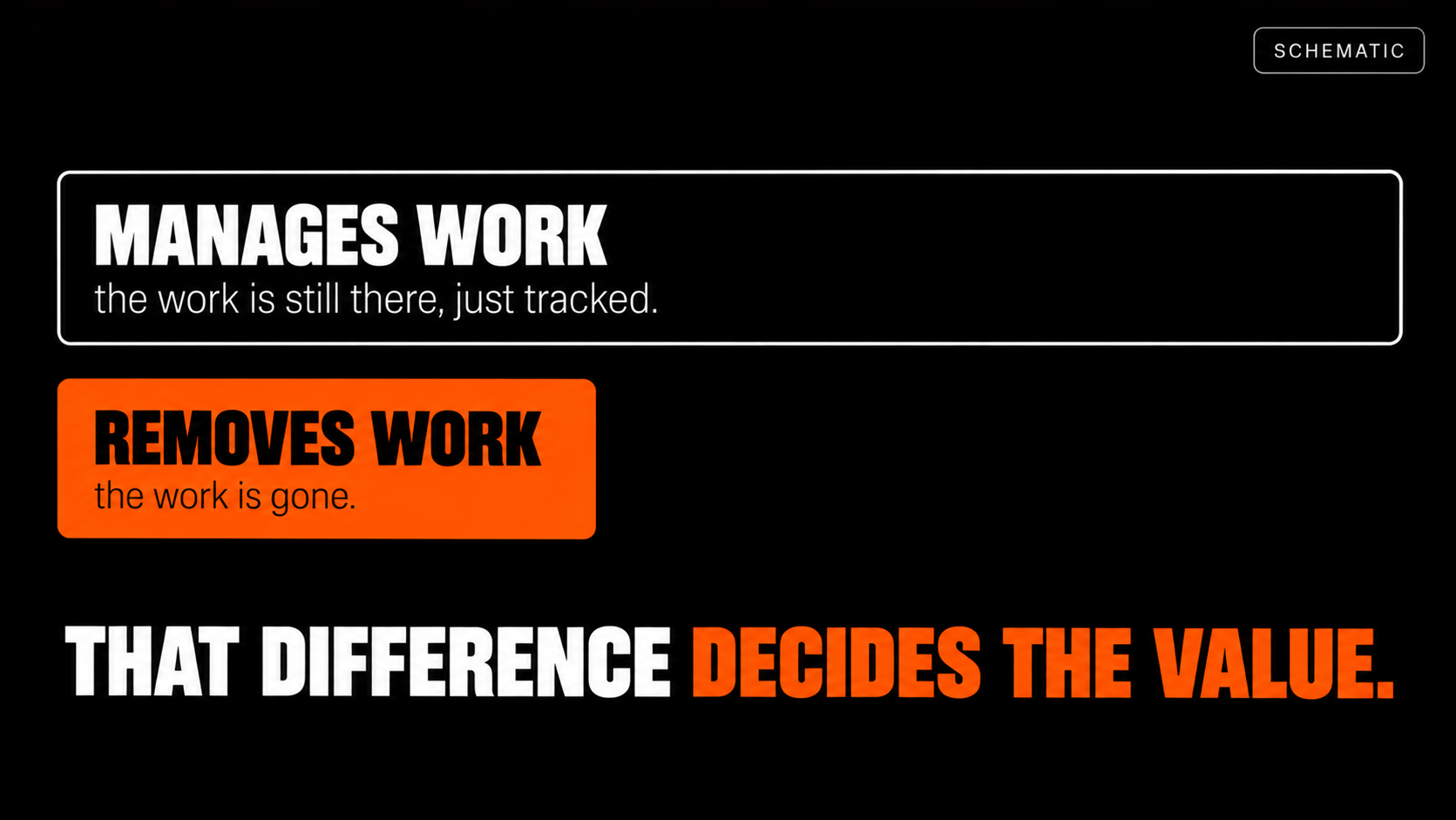
Most importantly, distinguish between software that helps your team manage work and software that actually removes work.
That difference will increasingly determine which RFP platforms create measurable value for hotel sales teams.
Frequently Asked Questions
Our team replies fast but still loses deals after sending proposals. Is RFP software even the fix?
Maybe. Speed is not your bottleneck, so a drafting tool adds little. Look for post-send features: open tracking, engagement signals, stalled-deal reminders, follow-up triggers. Also check loss reasons first. If losses come from price or space fit, software will not fix that.
What is a fair way to test accuracy in a vendor demo?
Feed facts that change: rates, availability, room inventory, meeting-space capacity, dates, contract terms. Ask where each number comes from. Best would be pulled live from the source system, not copied. Also check if the tool flags contradictions before send.
Vendor shows 40 integration logos. What do I ask to know if they are real?
Ask per integration: what data moves, which direction, how often, and does it remove manual entry or just link to another app. Fewer deep integrations beat many shallow ones. Score by handoffs removed.
How do I build an ROI case beyond "hours saved"?
Use revenue chain: more inquiries captured × faster response × higher conversion × more seller capacity. Track seller hours recovered, extra RFP capacity, missed inquiries cut, response time change, conversion change, incremental group revenue, minus software and implementation cost.
How do I weigh criteria so a slick demo does not sway my team?
Set weights before any demo, based on your bottleneck. Example scale (1 to 5): AI/workflow, integrations, data accuracy, security at 5; inquiry capture, content, proposals, follow-up at 4; multi-property, reporting at 3. Slow response team: raise workflow and integrations. Big portfolio: raise governance and multi-property. Lock the scorecard, then assess the demo based on all of that.
Share this post
Ready to close more group business?
See how HippoRev can transform your hotel sales workflow in 15 minutes.
Follow us


