


Boutique & Independent Hotels
Boutique Hotel Group Sales: Close the Capacity Gap in 2026
Corporate travel budgets and planner preference are shifting toward boutique and independent hotels in 2026, but most aren't equipped to capture that demand. This article breaks down the sales-capacity gap behind lost group business and what independents need: speed, RFP qualification, stall visibility, and a record that survives staff turnover.



What Boutique Hotels Need to Win More Group Business
Group business for boutique hotels comes down to three things most independent properties currently lack: a fast, consistent RFP response process, a way to qualify which group leads are actually worth chasing, and a system that survives a sales manager also handling front desk, revenue, and marketing on the same day. Boutique and independent properties are not losing group business because planners prefer chain hotels. They're losing it because chain competitors have sales infrastructure that most independents were never built with.
That gap matters more in 2026 than it has in years. Corporate travel budgets are projected to rise by around 5% in 2026, according to Morgan Stanley research cited in Cloudbeds' 2026 hotel group business guide, and small and mid-sized companies are increasingly choosing boutique or independent properties over brand-flag hotels for the more personal experience they offer. The demand is shifting in boutique hotels' favor. The question is whether the sales process behind the front desk can actually capture it.
Why Boutique Hotels Are Positioned to Win More Group Business Right Now
Group travel fully recovered to 2019 levels by 2023 and has kept growing since, and several trends in 2026 specifically favor independent and boutique properties over large chains. Corporate clients increasingly choose independents on purpose: they want distinctive food and beverage, design, and personalized service rather than a standardized experience, and smaller companies in particular are more likely to select boutique properties for that reason. Meeting and event demand is also spreading into secondary markets, smaller cities, and outer-borough or regional destinations that previously couldn't compete for group business against major convention hubs, opening the door for boutique properties in markets that used to be overlooked entirely.
This is a real structural shift, not a marketing narrative. But demand shifting toward a category of hotel doesn't automatically mean any individual property captures its share of it. That depends on what happens after the RFP lands in the inbox.
The Real Obstacle Isn't Charm, It's Sales Capacity
The advantages boutique hotels bring to group sales conversations (distinctive space, flexible service, a story planners can sell to their own stakeholders) are real. What's usually missing is the operational infrastructure that turns those advantages into won business.
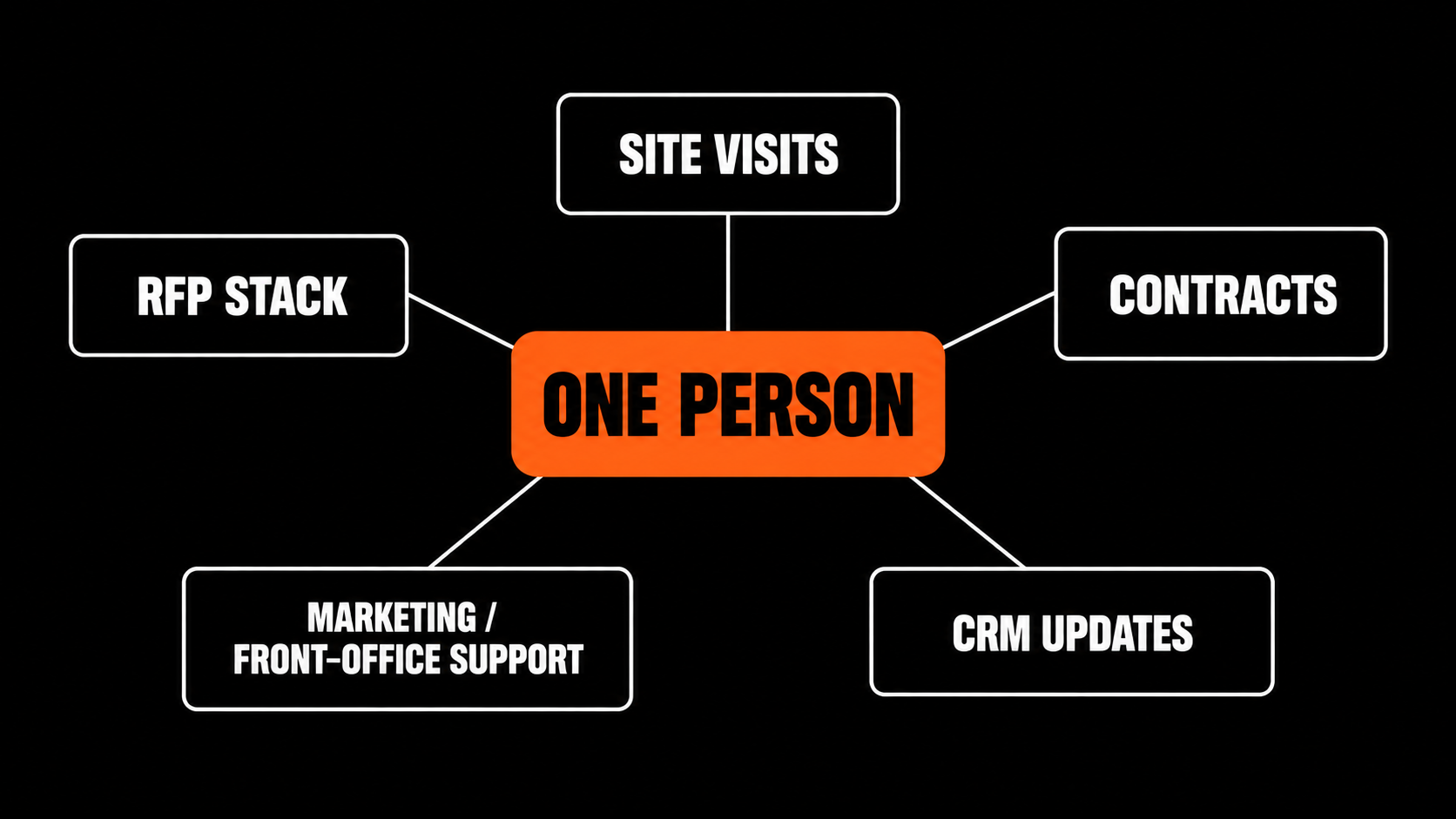
Independent hotels compete without a brand sales team, brand RFP tools, or the shared systems that chain properties draw on by default. A group sales manager at a boutique property is frequently the same person handling site visits, contract negotiation, CRM updates, and often marketing or front-office support, all while trying to work through a stack of inbound RFPs. Industry research on independent hotel revenue strategy has flagged this directly: without a brand sales team and the tools that come with it, independent hotels have to be deliberate about which channels and processes they invest in, because there's no larger system compensating for gaps.
That capacity gap shows up most clearly in RFP volume. A single group RFP is typically sent to around ten competing properties at once, according to Cvent's hospitality RFP research, which means every incoming request is already a competitive race before a boutique property's one-person sales team has even opened the email. Across the industry, roughly 36% of group RFPs go unanswered by hotels altogether, not because those hotels don't want the business, but because manual RFP processing, industry estimates put at roughly 37 minutes per response when done by hand, consumes time that a stretched sales team doesn't have. Hotel sales teams lose an estimated $500,000 in annual revenue per salesperson to process gaps like this, and sellers spend roughly 71% of their time on non-selling administrative tasks rather than the relationship-building and negotiation that actually wins group deals. For a boutique property with one or two people covering group sales, that ratio is often worse, not better, than the industry average.
What Boutique Hotels Actually Need to Compete for Group RFPs
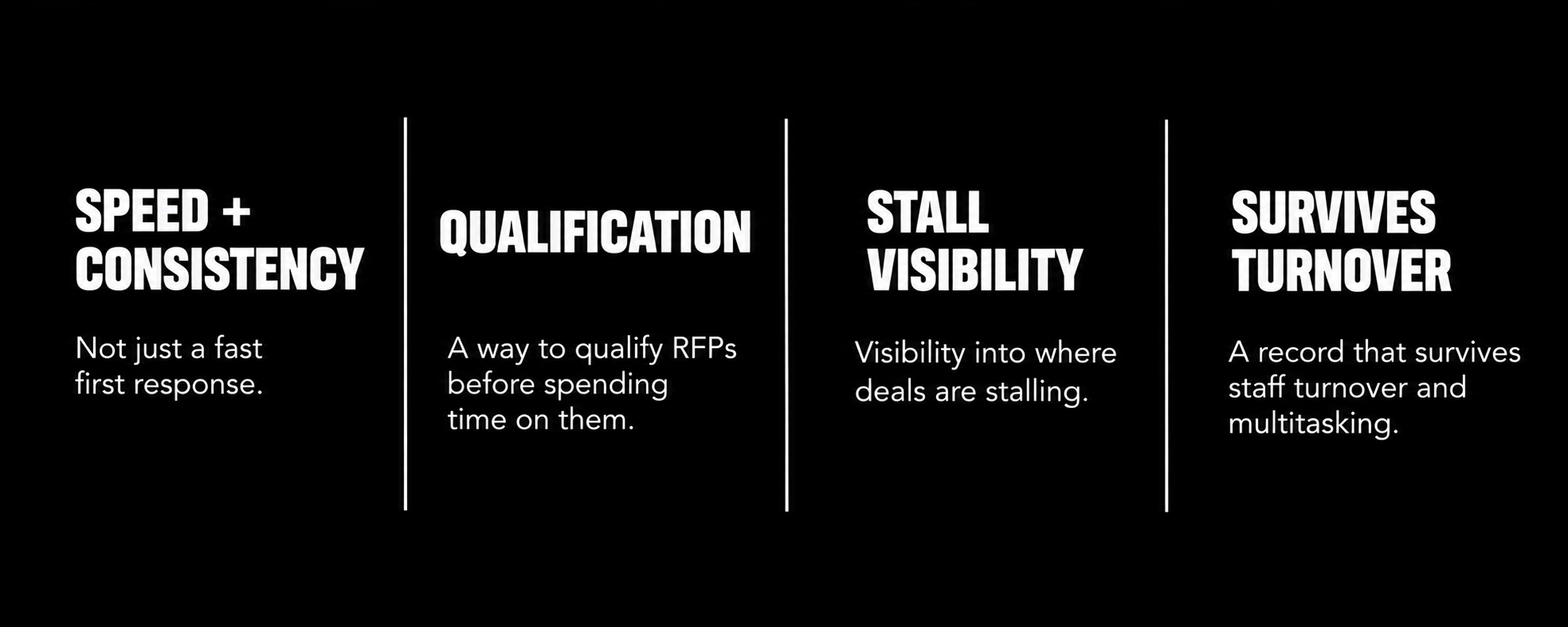
Speed and consistency, not just a fast first response
Planners equate responsiveness with the quality of service they'll get once the group actually arrives, and 80% of planners expect a response within four days, according to hospitality RFP research on response benchmarks. But speed on its own isn't the full requirement. Consistency matters just as much: a property that responds quickly to some RFPs and misses others looks less reliable than one that responds a little slower but always responds. Boutique properties without dedicated RFP software are more prone to inconsistency simply because response quality depends entirely on whichever team member happens to be free that day.
A way to qualify RFPs before spending time on them
Not every inbound group RFP is worth a boutique property's limited sales hours. Larger hotels can afford to triage aggressively and still respond to enough volume to hit their numbers; a boutique property usually can't. That makes qualification, deciding quickly whether an RFP's dates, group size, and budget genuinely fit the property, more important for independents than for chain competitors with bigger teams. Sales teams that lack a fast qualification step tend to spend proposal-writing time on RFPs that were never a realistic fit, which is time taken directly away from the RFPs that are.
Visibility into where deals are stalling
Group sales cycles don't fail in one dramatic moment. They fail in small stalls: a proposal that goes unanswered for a week, a rate hold that expires without follow-up, a site visit that never gets scheduled. Proposals that sit unanswered for 5 to 7 days need a follow-up touch, and most hotel sales teams, including boutique ones, under-follow-up on group proposals rather than over-follow-up, according to hotel sales pipeline research. Without a system that surfaces which proposals have gone quiet, a solo or two-person sales team has to remember every stalled deal manually, on top of everything else on their desk.
A record that survives staff turnover and multitasking
Because boutique hotel group sales roles are frequently combined with other responsibilities, and turnover in these roles is common, deal history often lives in one person's inbox and memory rather than in a shared system. When that person is out, or leaves, the details of an in-progress group negotiation, what was quoted, what was promised, what the planner's real deadline is, can disappear with them. A rooms-to-space ratio, a negotiated F&B minimum, or a planner's stated internal approval timeline are the kind of details that matter enormously to closing a deal and are easy to lose without a shared record.
Common Mistakes Boutique Properties Make in Group Sales
Independent hotels often default to treating every RFP the same way, applying the same effort to a 10-room social block and a 200-room corporate conference, rather than triaging by fit and probability of winning. Many also under-invest in follow-up discipline specifically because the team is stretched thin on new inbound requests, when in reality a proposal that's already 80% negotiated is usually a better use of an hour than a brand-new RFP that hasn't been qualified yet. And because boutique properties often lack a CRM built for group sales specifically, account history and past group relationships (the kind of repeat business that compounds over time for independents) frequently isn't tracked well enough to be reused for the next RFP from the same company.
Building a Repeatable Group Sales Process Without a Brand Behind You
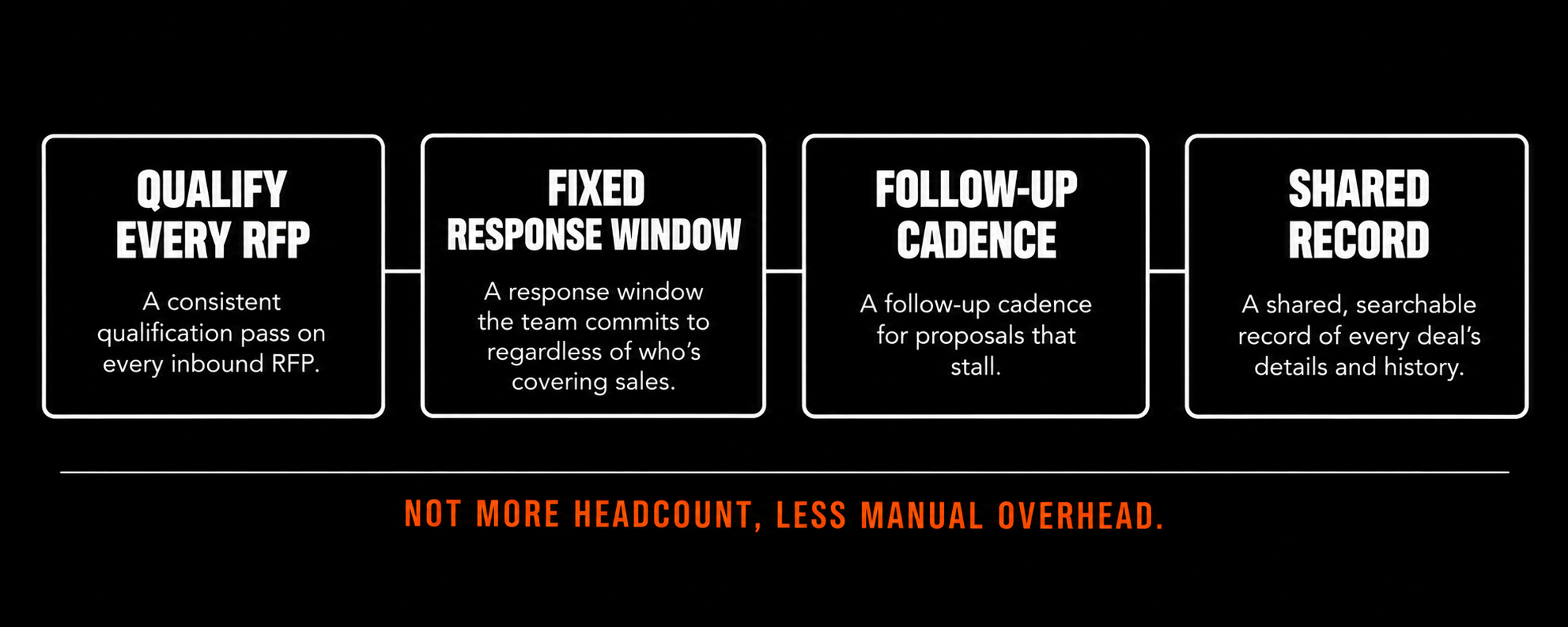
None of this requires a boutique property to imitate a large chain's sales department. It requires treating group sales as a process with defined steps, rather than a set of tasks one person handles reactively as RFPs arrive. That means a consistent qualification pass on every inbound RFP before proposal time gets spent, a fixed response window the team commits to regardless of who's covering sales that week, a follow-up cadence for proposals that stalls, and a shared, searchable record of every deal's details and history that doesn't live only in one person's head or inbox.
Properties that build this structure deliberately tend to compete for group business closer to how larger hotels do, not because they've added headcount, but because they've removed the manual overhead that was consuming the sales capacity they already had.
What This Means for Boutique Hotel Revenue
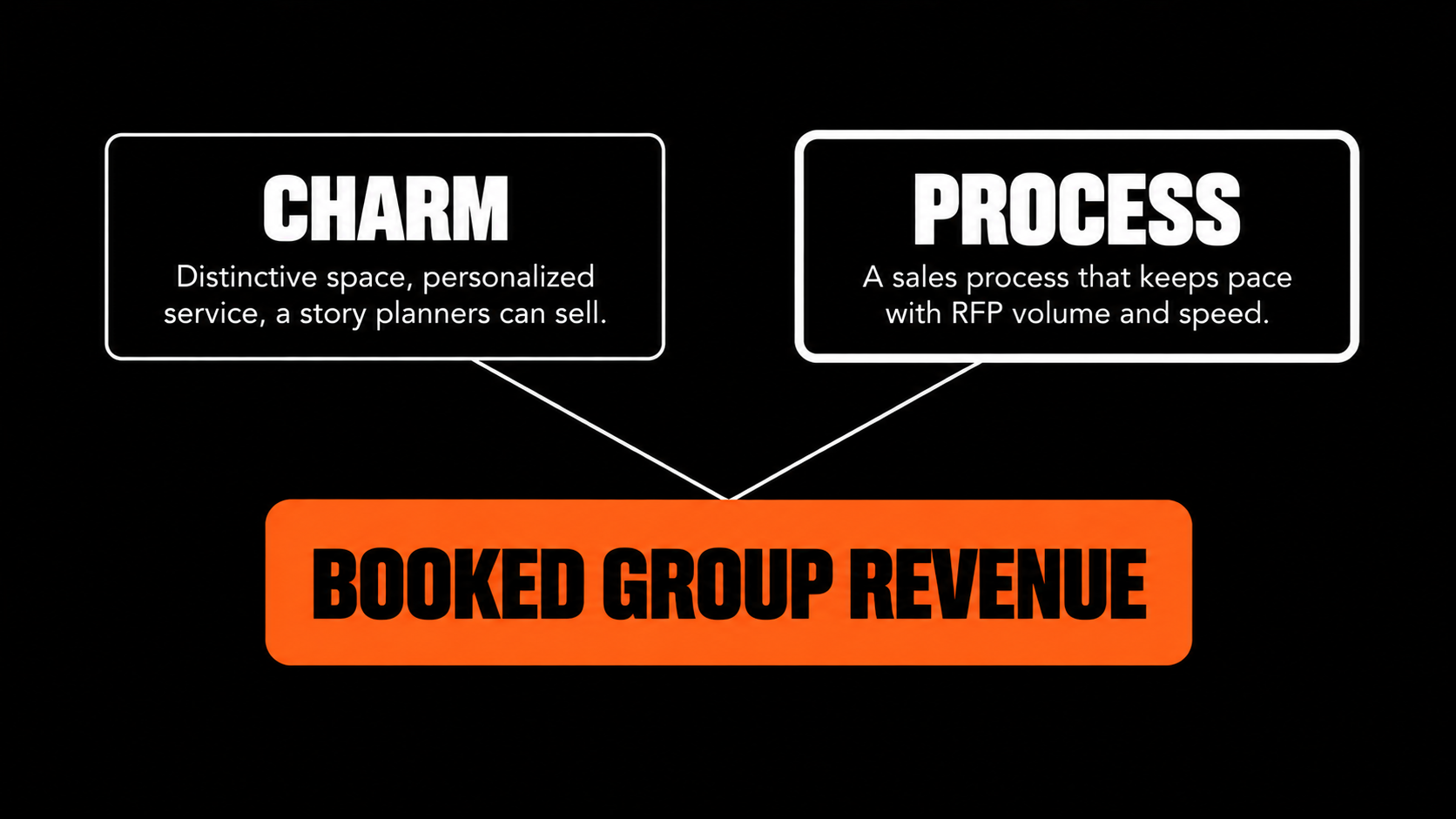
The demand-side conditions favoring boutique and independent hotels in 2026 (rising corporate travel budgets, a preference for personalized experiences, and growth in secondary markets) create a real opportunity. But opportunity only converts into booked group revenue when the property's sales process can actually keep pace with the volume and speed the RFP process demands. For most boutique hotels, the constraint isn't the property's appeal to planners. It's the hours in the day available to qualify, respond to, and follow up on group business consistently, without a brand sales team behind the effort.
The boutique hotels that win more group business in the years ahead won't be the ones with the most charm. They'll be the ones whose sales process can keep up with an RFP cycle built for teams with far more headcount, without losing the personalized service that made planners consider them in the first place.
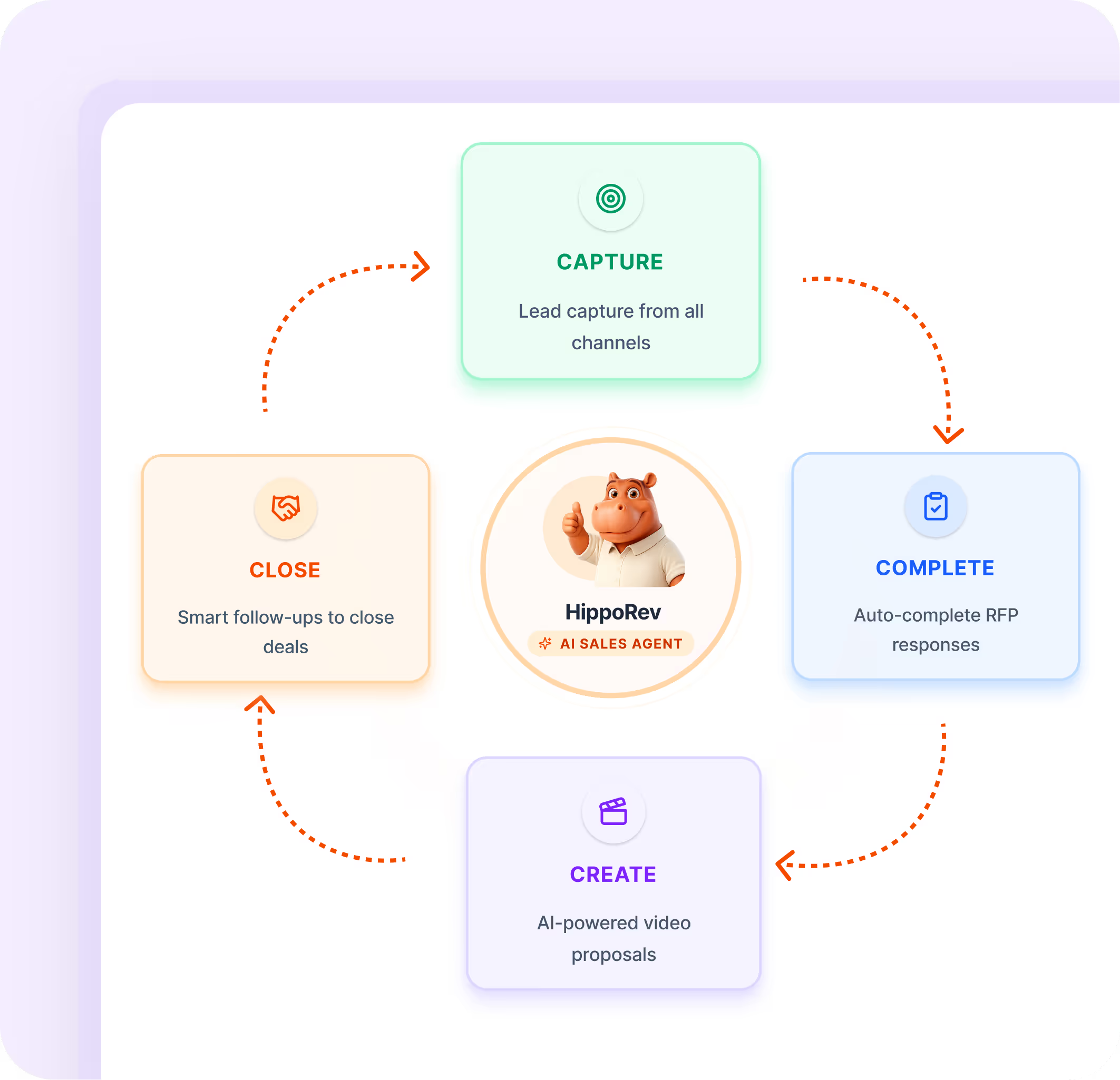
If limited sales capacity is the bottleneck between your boutique property and more group business, Hippo Rev is built around that exact problem: it helps surface and qualify incoming RFPs, keeps deal details in a shared record so nothing depends on one person's inbox, and flags proposals that have gone quiet so follow-up doesn't fall through the cracks on a busy week. You can see how it works by booking a Capture Audit with us here.
Frequently Asked Questions
Why are boutique hotels losing group business to chain properties?
Usually not because planners prefer chain properties, but because chain hotels have dedicated sales teams, RFP tools, and brand-level systems that most boutique properties don't, which shows up as slower or less consistent RFP response.
How fast should a boutique hotel respond to a group RFP?
Industry benchmarks put planner expectations at a response within four days, though faster, same-day acknowledgment followed by a complete proposal within 24 to 48 hours performs best when a property can manage it.
Should a boutique hotel respond to every group RFP it receives?
No. Qualifying RFPs by fit, group size, dates, and realistic probability of winning before committing proposal time is more important for a resource-constrained boutique sales team than for a larger chain property that can afford to respond broadly.
What tools do independent hotels need for group sales if they don't have brand systems?
At minimum, a CRM or sales and catering system that tracks account history and deal details, a defined RFP qualification and response workflow, and a way to see which proposals have gone quiet so follow-up doesn't depend entirely on one person's memory.
Is group business actually growing for boutique hotels in 2026?
Yes. Group travel has fully recovered from pandemic-era declines, corporate travel budgets are projected to rise roughly 5% in 2026, and small and mid-sized companies are increasingly choosing boutique and independent properties over brand-flag hotels.
Share this post
Ready to close more group business?
See how HippoRev can transform your hotel sales workflow in 15 minutes.

Follow us


.svg)