


Sales Productivity
AI in Hotel Group Sales: Reshape the Sales Team
Hotel sales teams are spending too much time on administrative work and too little on selling. This article explains how AI can shift group-sales teams from manual processing toward execution, while keeping human judgment in the loop.



Hotel Sales Team Structure: From Admin to Execution
Ask a director of sales what their job is, and they will say winning group business. Then watch a normal Tuesday, and you will see something else: chasing missing RFP details, hunting for rates across systems, formatting proposals, re-keying data between the PMS and the CRM. Salesforce data puts the average seller at just 29% of the week actually selling. The rest, more than 700 hours a year per person, goes to work that does not close business.
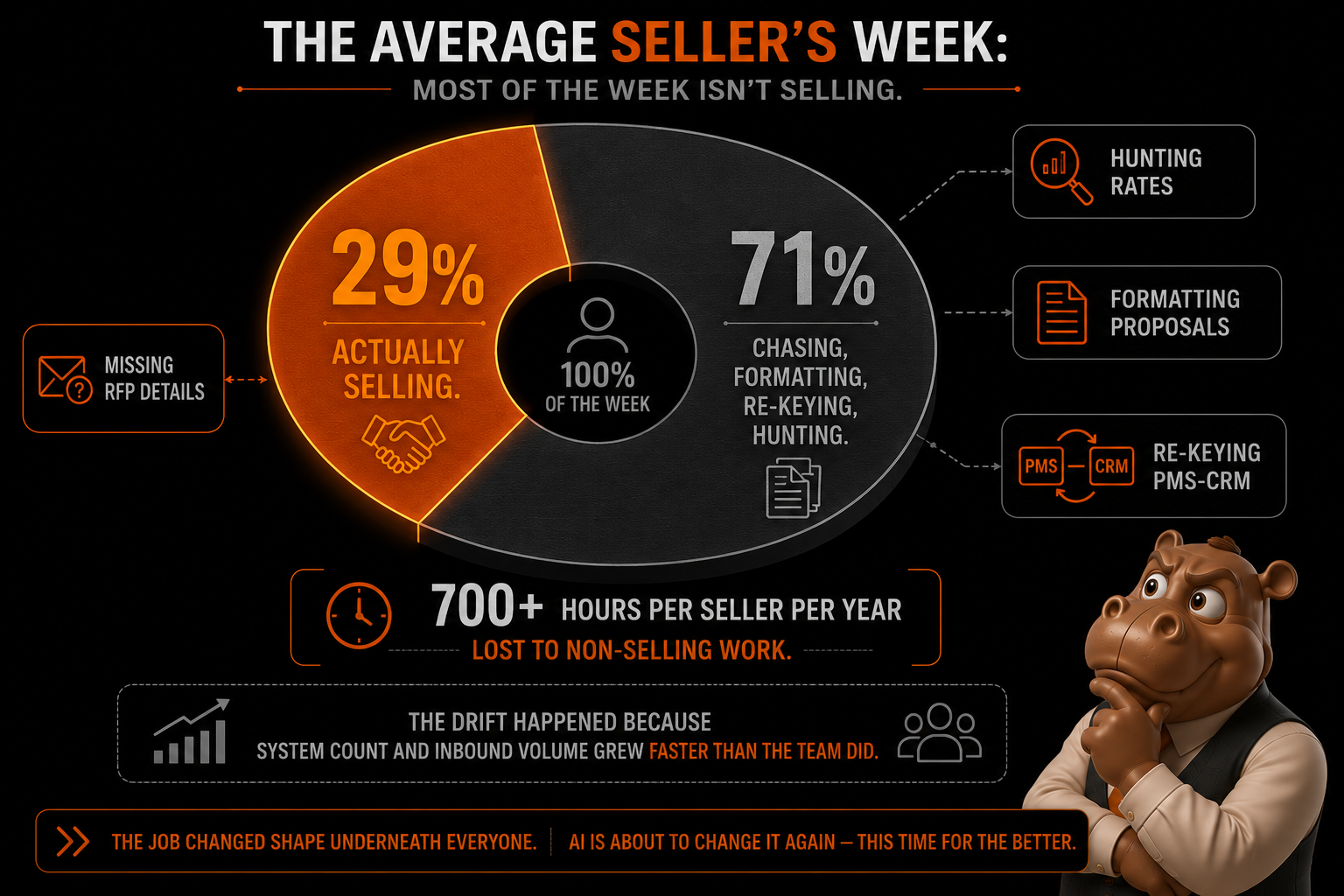
That drift did not happen because sellers got worse. It happened because the number of systems and the volume of inbound grew faster than the team did. The job changed shape underneath everyone. And now, with AI moving into hotel sales, it is about to change shape again, this time for the better.
The pressure the desk is already under
The instinct, when response times slip, is to hire. But the math does not support it. 65% of US hotels report staffing shortages, and hospitality turnover runs 70 to 80% a year, the highest of any US industry. Hiring is slow and expensive, and if the week is already going to admin, another hire mostly buys you more admin.
Meanwhile the buyer changed too. Most B2B buying decisions are now made by people who grew up with instant, self-service digital experiences and expect the same at work. They do not wait three days for a callback. If you are not first, you are usually not in the conversation.
Where the week actually goes
Revenue rarely leaks in one dramatic failure. It leaks across four quiet stages. At intake, RFPs arrive from many channels with no single inbox, and some die before a seller even sees them. At information-gathering, sellers hunt for rates, availability, and account history across disconnected systems. At proposal, they do repetitive manual data entry into templates. And at the systems layer, weak links between PMS, CRS, and CRM force re-keying and delay.
A delay at the first stage pushes back everything after it. Multiply that by 50 to 100 RFPs a month and you have a team that is busy all week and still losing deals it never had time to reach.
Also Read: Hotel Sales Productivity Crisis: Where a DOSM's Time Really Goes
The shift: machines take the mechanical, humans keep the human
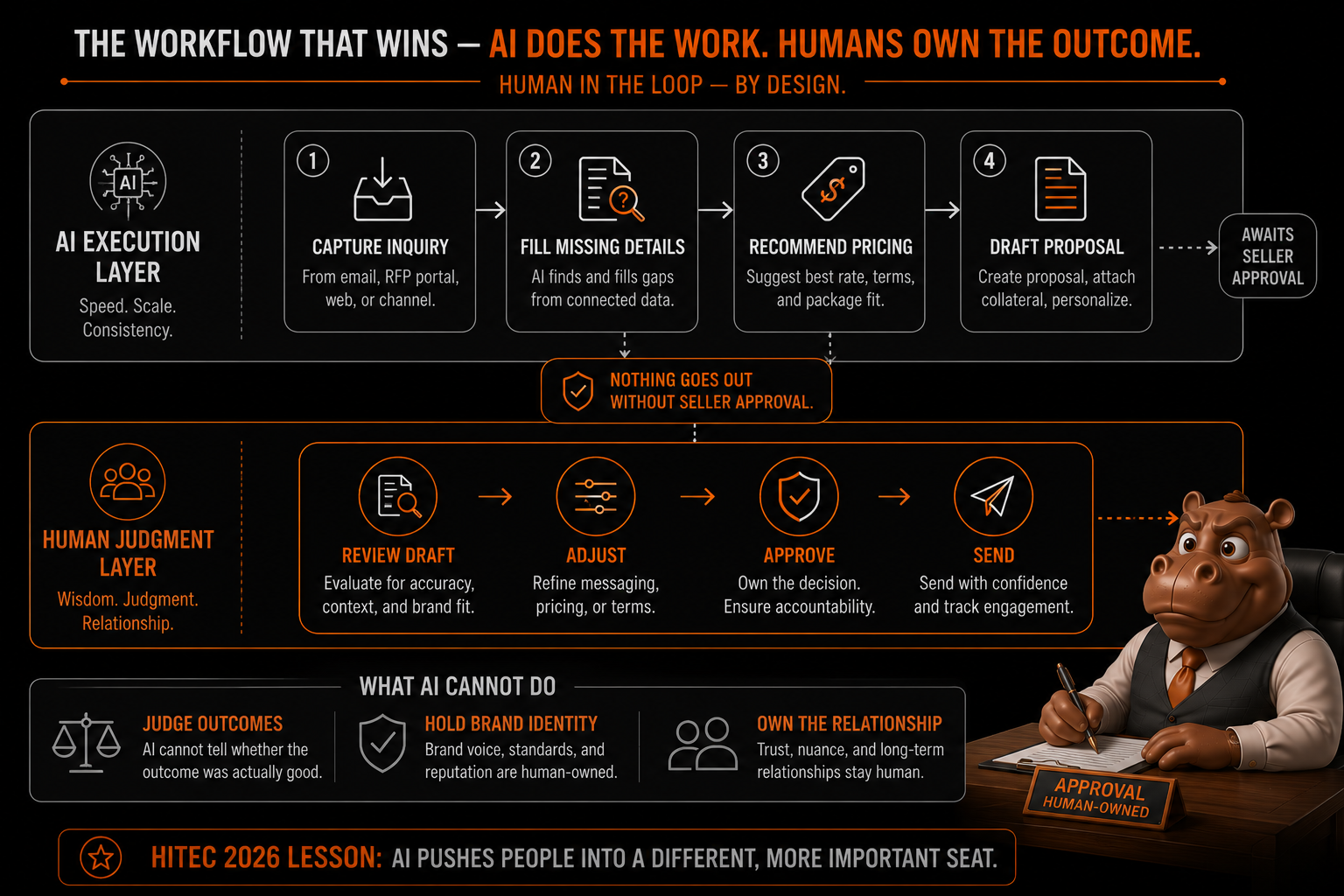
The clearest lesson from HITEC 2026 was not that AI replaces people. It was that AI pushes people into a different, more important seat. AI is genuinely good at taking messy, disconnected information and compiling it into something usable, sorting, drafting, routing. What it cannot do is judge whether the outcome was actually good, hold the brand's identity, or own the relationship.
So the modern group-sales workflow keeps a human in the loop by design: the AI captures the inquiry, fills in missing details, recommends pricing, and drafts the proposal, and a seller reviews and approves before anything goes out.
What the restructured desk looks like
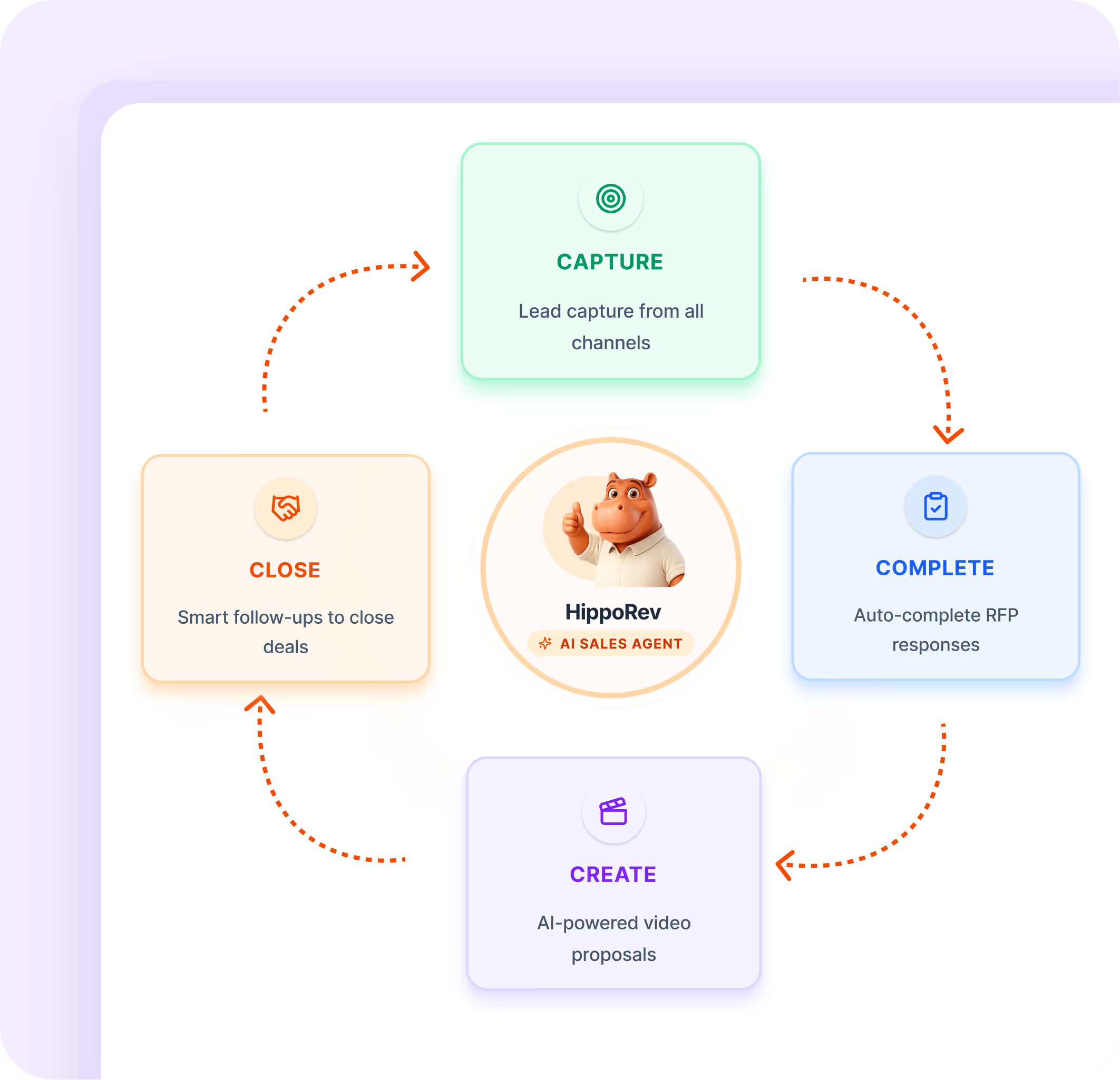
Picture the same team, with the admin lifted off it. The AI acts as the execution layer that sits on top of the stack you already run, capturing every inquiry, converting it to a priced proposal in minutes, and keeping follow-up alive so no deal goes cold. Nobody learns a new tool, because it works inside Cvent, Delphi, the PMS, and the RMS the team already uses.
The seller's day re-points from paperwork to the parts of the job that were always human: reading the room, building the relationship, and closing. An eight-person team starts producing like twelve, not because anyone worked longer, but because the hours that were lost to admin came back.
Speed becomes the number the team is measured on
When execution is the game, response time stops being a soft metric and becomes the KPI. 72% of group business goes to whoever responds first, and hotels that reply within 24 hours are far more likely to win the bid. A modern desk tracks time-to-first-response the way it once tracked occupancy, because that is the number that now decides who is in the deal at all.
How to restructure without adding headcount
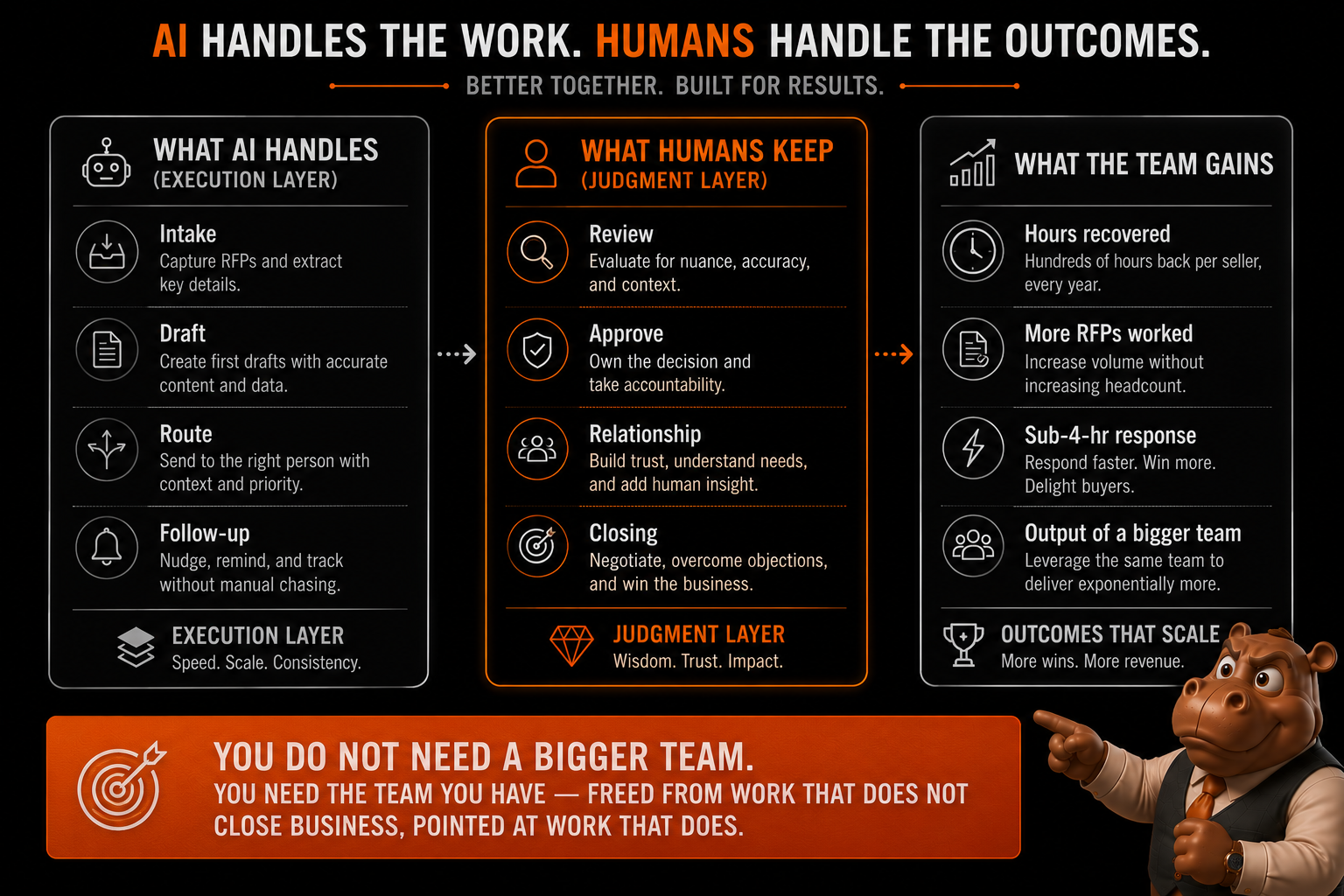
You do not need a bigger team. You need the team you have, freed from the work that does not close business, and pointed at the work that does. The honest first step is not a reorg, it is a measurement: see where the week actually goes today, and what it is costing you.
That is what a short, free pilot is for, and it is worth being clear about what it involves. Hippo Rev is the execution layer for hotel group sales: it captures every RFP, drafts the priced proposal in minutes from the data already in your systems, and keeps follow-up alive, with a seller reviewing every proposal before it goes out. The pilot runs a contained version of that for six weeks, free, on one workflow at one property or cluster, using only the Cvent and Delphi reports your team already pulls, so there is no IT project and nothing to buy.
At the end you get a before-and-after on your own data, admin hours per seller, time to first follow-up, RFPs worked, and revenue. That turns a restructuring debate into a decision you can make on real numbers: you can see, in black and white, how many hours came back and where to redeploy them.
Frequently Asked Questions
How should hotel sales teams change as AI takes over more administrative work?
Hotel sales teams should shift seller time away from repetitive execution and toward work that depends on human judgment. AI can handle tasks such as RFP intake, information gathering, proposal drafting, routing, and follow-up, while sellers focus on account strategy, relationship building, negotiation, and closing.
How can a hotel tell whether its sales team needs more people or simply less administrative work?
Start by measuring where seller time goes. If response times are slipping because sellers spend large portions of the week gathering information, updating systems, preparing proposals, or chasing routine follow-ups, adding another salesperson may simply add more capacity to the same inefficient process.
Which hotel group-sales tasks should be automated first?
The best candidates are repetitive, high-volume tasks that consume seller time but do not require much relationship judgment. These can include capturing RFPs from different channels, identifying missing information, pulling rates and availability, preparing first-draft proposals, updating systems, and triggering follow-ups. Hotels should generally automate the mechanical parts of the workflow first while keeping pricing judgment, negotiation, approval, and customer relationships under human control.
How can a hotel measure whether AI is actually making its sales team more productive?
Compare operational metrics before and after introducing AI into a defined workflow. Useful measures include administrative hours per seller, time to first follow-up, proposal turnaround time, RFPs worked per seller, opportunities that receive follow-up, win rate, and group revenue. Productivity should be demonstrated through measurable changes in the hotel's own workflow rather than generic claims about time savings.
What is the best way to test a new AI-powered hotel sales structure before reorganizing the team?
Test the workflow before changing the org chart. A contained pilot can focus on one property or cluster and one workflow, such as RFP intake through proposal and follow-up. Establish the current baseline first, then measure seller admin time, response speed, RFP throughput, and revenue during the test. The results show how much capacity AI actually creates and help leadership decide where recovered seller time should be redeployed.
Share this post
Ready to close more group business?
See how HippoRev can transform your hotel sales workflow in 15 minutes.

Follow us


.svg)