


Lead Capture
The After-Hours RFP Problem in Hotel Group Sales | Hippo Rev
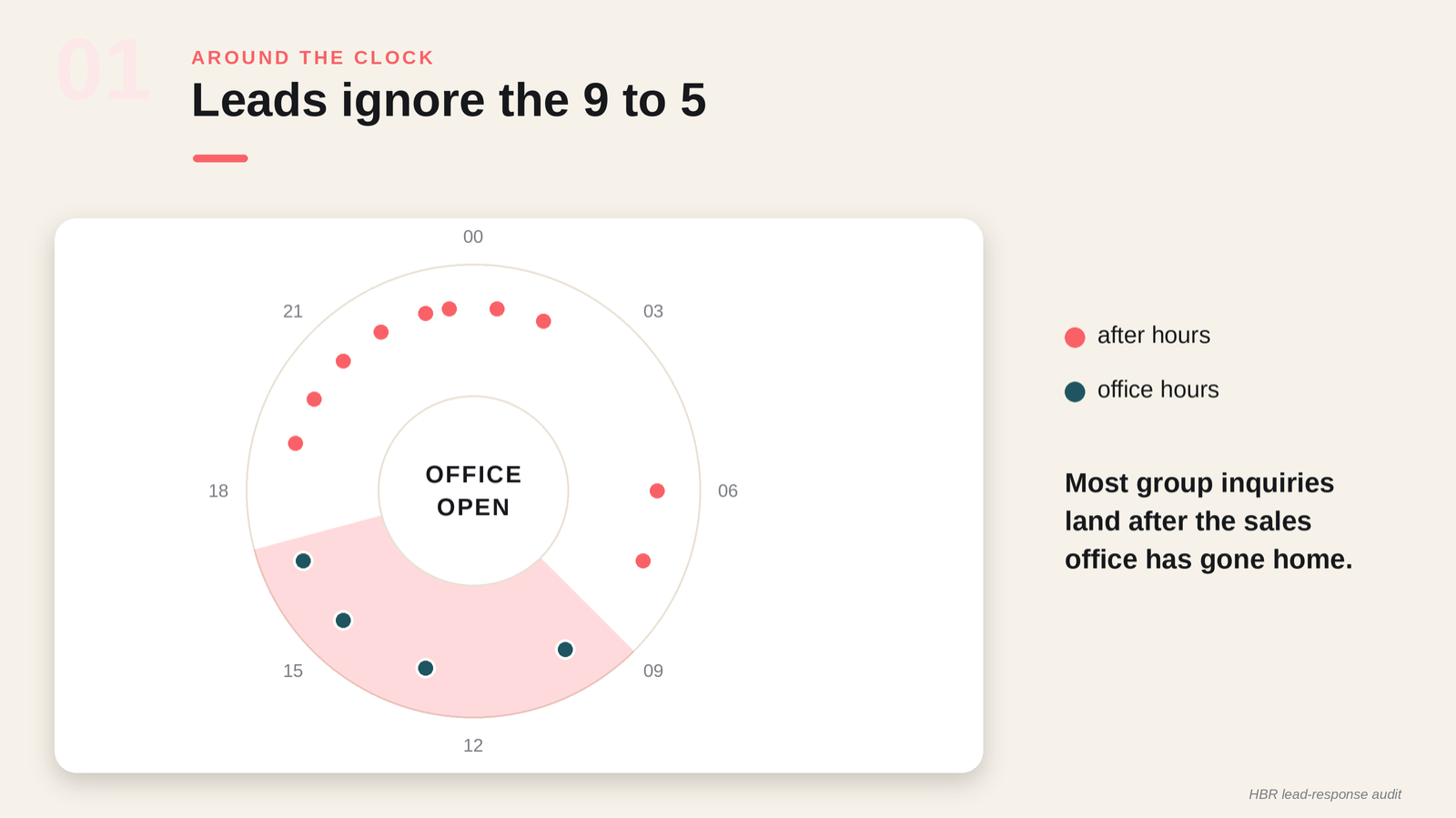
A large share of group inquiries arrive after the sales office has gone home. The front desk is not built to sell groups at 11 PM, and by morning, someone else already replied.



The After-Hours RFP Problem: How Hotels Lose Leads While Everyone Sleeps
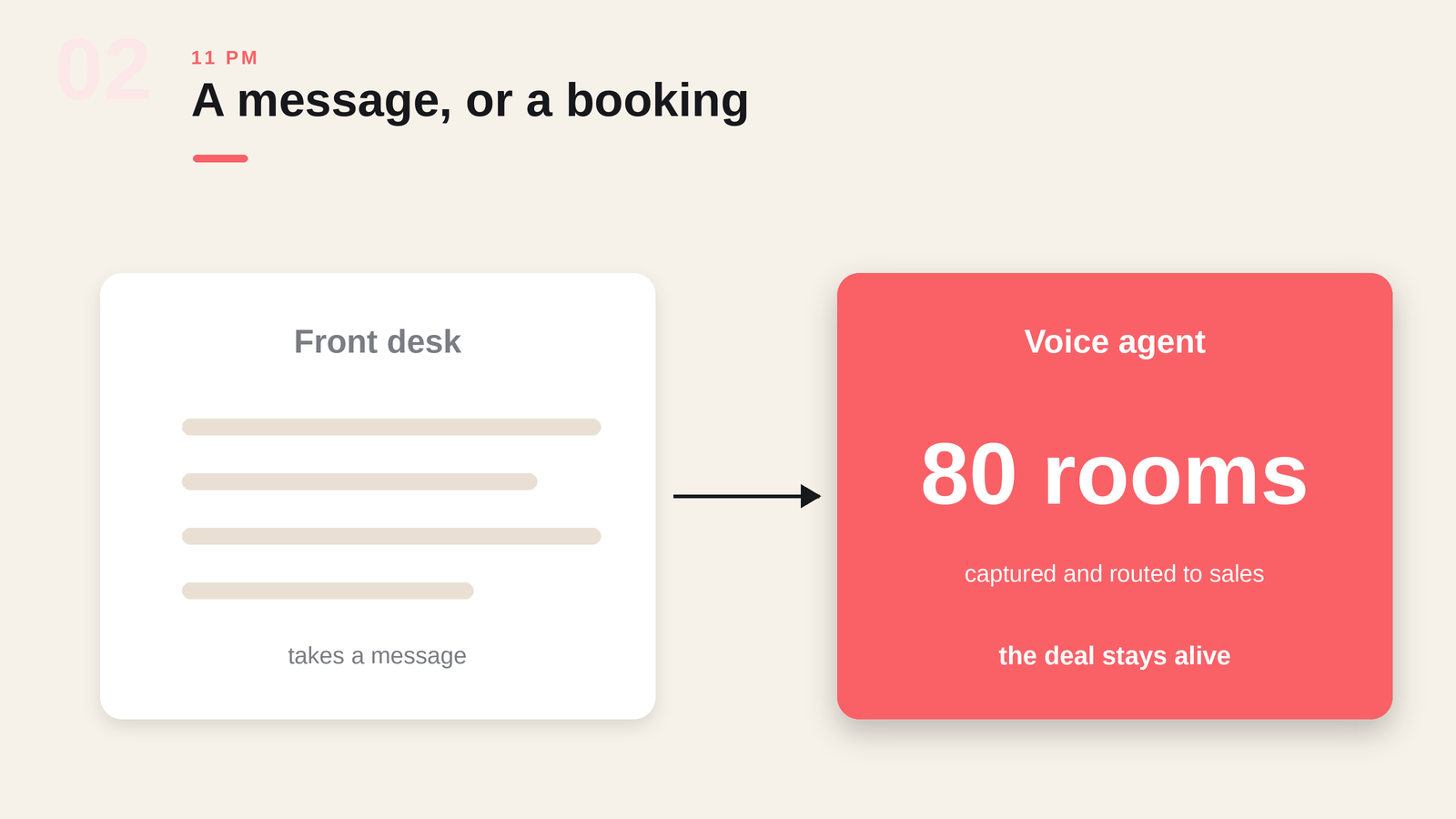
Your front desk agent answered the phone at 11 PM. A corporate planner wanted 80 rooms for a leadership offsite. The agent, doing exactly what the role asks, took a message. The planner booked another hotel across the street the next morning, before your sales team had even seen the note.
This scenario came up in demo after demo, and it is one of the most preventable losses in group sales. RFPs and phone inquiries do not respect the nine-to-five. They land in the evening, on weekends, and across time zones. The sales office is closed, the front desk is not equipped for a detailed group conversation, and the lead quietly expires overnight.
When do group leads actually arrive?
Far more often outside business hours than most teams assume. Evening and weekend submissions are common, and for global chains, a planner in one time zone routinely inquires while the sales office in another is dark. A meaningful share of phone-in group inquiries hit the property after the sales team has left for the day.
Modern buyers research when it suits them, not when your office is open. Harvard Business Review's audit of 2,241 companies found the average lead response time was 42 hours, and a large chunk of that delay is simply the clock running while nobody is at the desk. Every hour a high-intent lead waits, it cools, and the MIT and InsideSales research on the five-minute window shows how fast that decay sets in.
What happens at the front desk today?
A well-meaning handoff that loses the deal. The front desk is trained for arrivals, guest issues, and check-ins, not for qualifying an 80-room corporate offsite. The urgency does not get communicated to sales, the voicemail gets buried, and by the time a manager sees it, a competitor has already responded.
This is not a staffing failure. It is a job-design mismatch. Asking a front desk agent to capture a group sales lead at midnight is asking them to do a job they were never hired or equipped for. The information that does get taken is often incomplete, so even the leads that survive the night arrive the next morning missing the details a proposal needs.
What does a missed after-hours lead cost?
The same as any lost group deal, multiplied by how often it happens. If an average group booking is worth thousands of dollars and a real share of inquiries arrive after hours, the annual cost of the coverage gap runs well into six figures for a busy property. These are not declined deals. They are deals you never got to compete for.
Because 72% of first responders win the business, the after-hours gap is not a minor edge case. It is a structural handicap. Every night the office is closed, you concede the first-responder advantage to whichever competitor has a way to answer. We break down that advantage in the speed-to-lead piece.
What does a voice AI agent do differently?
It answers the call like a trained group-sales intake specialist, at any hour. A voice AI agent has a real conversation, captures structured lead details, and immediately routes a complete summary to the sales team, so the planner gets an engaged response at 11 PM instead of a message pad. No hold music, no lost voicemail, available 24/7.
The difference is between capturing a lead and merely acknowledging one. A Front Desk Agent conducts the intake conversation, asks the qualifying questions a planner expects, and hands sales a structured, complete record the moment they log on. The lead is warm, detailed, and already in the system, not a sticky note.
What does it take to implement, and will it feel robotic?
Less than you think, and no. In most cases you forward your existing number, with no new hardware and setup measured in a day, not a quarter. Modern voice agents are conversational rather than scripted, handle the common group inquiry cleanly, and escalate genuine complexity to a human.
The common objections have straightforward answers. Will it sound robotic? Today's voice agents are natural and conversational. What about complex inquiries? The agent captures and routes them; it does not try to close every convention on its own. Does IT need to be involved? Usually only to forward a number. The goal is non-disruptive coverage that closes the gap, not a rip-and-replace project.
For example, Wyndham Indianapolis West went live in 10 days, sitting on top of the Opera, Lighthouse, and Delphi stack it already trusted.

Wish to hear a live after-hours call handled by Hippo Rev's voice agent ?
Book a live revenue audit with us.
Frequently Asked Questions
How many hotel group leads arrive after business hours?
A significant share of RFPs and the majority of phone-in group inquiries arrive in the evening, on weekends, or from other time zones. For chains operating across regions, after-hours inquiries are a daily occurrence rather than an exception.
Can a front desk handle group sales inquiries?
Front desk teams are trained for guest service, not group sales qualification. They can take a message, but they are not equipped to capture the event details, room-block needs, and urgency that a group lead requires, which is why after-hours leads so often go cold.
Does an AI voice agent replace the sales team?
No. It handles first-touch capture and structured intake when the office is closed, then routes a complete lead to the human team. The salesperson still owns the relationship, the negotiation, and the close.
Share this post
Ready to close more group business?
See how HippoRev can transform your hotel sales workflow in 15 minutes.

Follow us


.svg)