


Event Insights
Key Takeaways from HSMAI 2026
HSMAI 2026 brought commercial leaders together across four regions with one recurring problem: hotels running on fractured forecasts, misaligned departments, and the wrong metrics. This breakdown covers what smart operators are actually doing differently on AI, loyalty, profit measurement, and group sales execution.



HSMAI's 2026 Event Insights
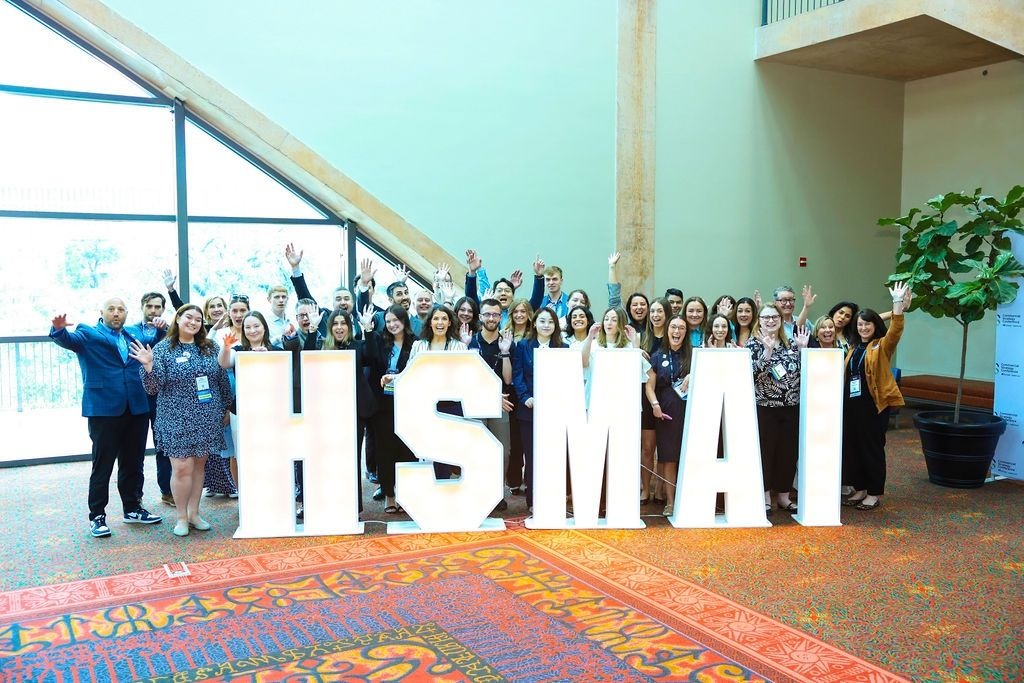
HSMAI’s 2026 event list has been interesting & insightful: San Antonio for the Americas flagship, Marina Bay Sands in Singapore for Asia Pacific, The Savoy in London for Europe's kickoff, plus a string of smaller forums and roundtables in Lisbon, Madrid, Paris, Amsterdam, and beyond. Different cities, different accents in the room, but sit through enough of these sessions across regions and you start noticing something: the same handful of ideas kept surfacing.
That's usually a sign something real is happening, not just a trend someone's trying to manufacture.
The official theme was "aligning people, technology, and data," which is the kind of phrase that goes in one ear and out the other at any conference. But sit through enough sessions and you realize the phrase was actually describing something specific: the walls between sales, marketing, and revenue management are coming down. Not because some consultant told everyone to knock them down, but because the data, the forecasts, and increasingly the AI tools all require it. The org chart is catching up to how the work already happens.
Here's what I took away from watching smart operators wrestle with that reality.
The Big Idea Underneath Everything Else
Picture a hotel where the sales team has one forecast for next month, the marketing team has a different one, revenue management has a third, and the general manager has a gut feeling that overrides all three when budget season comes around. Every department's forecast is reasonable on its own terms. None of them agree with each other.
This isn't a hypothetical. It's apparently how most hotels actually run.
Anders Johansson, who's been doing revenue management since the late 1980s, calls this the "seven futures problem," and his framing stuck with me: every commercial decision a hotel makes is a bet on future demand. Pricing is a bet. Staffing levels are a bet. Marketing spend is a bet. So when seven different people are placing seven different bets based on seven different guesses about the future, you don't get a coordinated strategy. You get seven small disagreements compounding into one big mess.
Johansson built a five-level scale to describe where hotels land on this. At the bottom, Level 0, there's no real forecast at all, just gut feel and last year's budget copy-pasted forward. At the top, Level 5, everyone in the building, sales, marketing, revenue, food and beverage, even housekeeping, is looking at the same real-time number. Most hotels, he says, sit somewhere uncomfortably in the middle: each department has built a genuinely solid forecast, but nobody's ever forced those forecasts to agree with each other.
That gap matters more than it sounds like it should. A forecast isn't just a planning document. It's the foundation everything else gets built on. Get it wrong, or get three different wrong versions of it, and the cracks show up everywhere downstream: in pricing that doesn't match demand, in staffing that doesn't match occupancy, in marketing campaigns that launch the week revenue management quietly drops rates.
This theme didn't stay in one session. In the opening keynote, Heidi Gempel talked about revenue leaders today being expected to "explain uncertainty with confidence," which is a brutal ask when you think about it. You're supposed to sound certain about things you're not certain about, because the patterns that used to be reliable, aren't anymore, and the new patterns haven't stabilized yet. Different speaker, same root problem: too many people trying to read a future that keeps refusing to hold still.
AI Isn't One Thing. Stop Treating It Like One.
Here's a distinction that should be obvious but apparently isn't: not all AI does the same job, and conflating them is costing hotels real money.
Tracy Dome broke it into three buckets, and once you hear it, you can't unhear it:
Generative AI is the stuff everyone already knows. It writes your emails, summarizes your meetings, makes you faster at tasks you were already doing.
Agentic AI actually takes action on your behalf. It doesn't just suggest, it executes. Most hotels are still in the experimenting phase here, which makes sense, because handing over the keys is scarier than getting suggestions.
Mathematical AI is the quiet one nobody's excited about, but it's been running revenue management systems for decades, well before anyone started calling things "AI" in marketing copy. It's not answering questions in plain English. It's solving an optimization problem: what's the right price, given this demand, this inventory, this moment.
Dome's line on this was the sharpest one of the conference: "revenue management is not a language problem, it's a mathematical optimization problem." Generative and agentic AI make you faster at your job. Mathematical AI actually makes the decision better. Those are not the same achievement, and right now, most of the industry's excitement is pointed at the first two while the third one, the one that actually moves pricing and revenue, gets treated like old news.
A different session, on the guest journey, made a related point from a totally different angle. The speaker's argument: the winning hotels won't be the ones that bolted on an AI chatbot somewhere. They'll be the ones where AI runs underneath the entire guest journey like plumbing, invisible, connected, doing its job from the moment someone starts dreaming about a trip through the moment they leave a review and even afterwards.
Think about it like the difference between adding a smart thermostat to your house versus rewiring the whole electrical system to be smart from the studs out. One is a gadget. The other changes what the house can do. Most hotels right now are buying gadgets.
Stop Counting Heads in Beds. Start Counting Profit.
This was the line that got repeated, almost verbatim, across at least three different sessions: stop measuring rooms, start measuring profit.
Here's the problem with occupancy as your scoreboard: it rewards filling rooms, period, without asking what it cost you to fill them or whether the people in them spent another dollar once they arrived. A hotel running 95% occupancy by giving rooms away at a loss isn't winning. It's just busy.
The speakers laid out a kind of ladder of metrics, each one a little more honest than the last. RevPAR (revenue per available room) ignores food, beverage, spa, everything except the room itself. TRevPAR pulls in those other revenue streams. Net RevPAR goes further and subtracts what it actually cost you to land that guest, the commissions, the acquisition spend. And profit per available room is the number that finally tells you the truth: not how busy you were, but how well you actually did.
Here's the kicker, illustrated with a comparison that made the room go quiet for a second: two hotels can post identical performance against their competitive set, the same RevGI, the same market share, and have wildly different profitability. One of them is simply better at getting guests to spend money once they're inside the building. Same scoreboard, completely different game.
Brian Hicks backed this up with numbers that put the shift in perspective. Back in 2011, ancillary revenue, everything outside the room rate, was under 1.7% of total hotel revenue. Today it's tracking toward 10-30%. Meanwhile ADR has basically gone sideways against inflation. So if you're only growing the line you've always grown, you're not really growing. The actual growth has moved to a different part of the building.
CoStar data shown elsewhere at the conference made this visual: RevPAR softening through 2025, food and beverage revenue climbing the whole time, with that gap expected to widen further once the FIFA World Cup and the 2028 LA Olympics start pulling in international demand.
So how do you actually capture that ancillary money? Two things, repeated by nearly everyone who touched the topic: total visibility (everyone, including housekeeping, looking at the same data) and genuine buy-in across departments, with the GM driving it. One speaker put it plainly: ancillary programs "die on the vine" the moment it becomes a commercial-team-only initiative and operations isn't pulled in.
The housekeeping example is the one I keep coming back to. Housekeepers spend more face-to-face time with guests than almost anyone in the building outside the front desk. A housekeeper who casually asks "do you have dinner plans tonight?" can outperform a marketing email, because it's a real human noticing a real person at exactly the right moment. That's not a tactic you can automate. It's a culture you have to build.
Loyalty Has a Math Problem, and It's Bigger Than People Think
The loyalty panel surfaced numbers that should worry anyone running a points program. Across loyalty programs broadly, hotels, airlines, retail, roughly half of all loyalty members are inactive. The average person belongs to about 18 different loyalty programs and meaningfully uses maybe half of them. All those unredeemed points sitting on the books? That's not a quirky footnote. It's a real liability quietly accumulating.
Against that backdrop, a genuinely interesting argument broke out on stage. One panelist made the case for emotional loyalty over transactional loyalty: "I don't think loyalty these days are all about transactional. I think emotional loyalty grows member retention and extends customer lifetime value." Another panelist pushed even further, raising a question that's been hovering over the industry for a while without anyone saying it out loud: when a hotel forces you to join its loyalty program just to unlock a price, is that actually loyalty, or is it just acquisition wearing a disguise? "Is it really loyalty in its traditional sense, or are we buying membership to a degree as well?"
That question lands because most of us have lived it. You've probably joined a "loyalty" program purely to see a lower number on a hotel website, with zero intention of ever staying again. That's not loyalty. That's a price unlock with extra paperwork.
The real insight buried under all this: the hard problem isn't getting people to sign up. It's getting them to actually engage after they do. Acquisition is the easy half. Activation is the half that actually compounds into something valuable over time, and it's the half most programs quietly neglect because sign-up numbers look better in a slide deck than engagement rates do.
Member discounts and emotional loyalty aren't opposites. You can run both. But they're different levers doing different jobs, and treating a spike in sign-ups as proof your loyalty program is "working" might just mean you're really good at handing out discounts, not that you've built any actual loyalty.
AI Is Quietly Becoming a Front Door, and Most Hotels Aren't on the Mat
Here's the part of the conference that surprised me most, because it's not the AI conversation everyone's already having.
Large language models read the internet differently than people do, and that difference is starting to affect who gets found and who doesn't. One panelist made a sharp observation: AI systems don't get overwhelmed by too many options the way human shoppers do. What actually confuses them is price-value coherence, basically, does your pricing make logical sense given what you're offering. If your room categories are named inconsistently across platforms, or your pricing looks arbitrary, that creates noise an AI system can't parse cleanly. Another panelist made the same point from a different angle: pricing inconsistency now directly affects your algorithmic visibility, not just your conversion rate.
And then there was the line that genuinely made people in the room sit up: "HTML is back." Apparently, large language models read plain HTML far more reliably than content buried behind JavaScript. Which is a strange kind of poetic justice, given how much of the last decade of web design has been a race toward flashier, more JavaScript-heavy sites. Turns out the thing that impresses a human visually might be invisible to the AI that's increasingly doing the recommending.
This connects to a story a different speaker told about his own family's vacation. He asked an AI assistant for the best luxury beach hotel for a family of four with connecting rooms. Checked Instagram. Checked Google. At every single stage, his own hotel, a real, good hotel, simply wasn't there. Invisible. And here's the number that should worry you: roughly 70% of travelers reportedly make their shortlist decision before they ever reach a booking site. If you're invisible at that stage, you're not losing a sale. You never had the chance to make one.
This is the new front door, and most hotels are still polishing the door they used to have.
The Skills Gap Nobody's Talking About
A quieter but important thread ran through the conference's talent and education sessions: the next generation of commercial leaders can't afford to be specialists in just one lane anymore.
One course facilitator described something I found genuinely telling. Sales leaders who took a revenue management course came away saying it gave them a better understanding of revenue management. Revenue managers who took the same course said it clarified the sales side for them.
Financial literacy came up again and again, not as in "go become a CFO," but as in being able to sit in a room and actually follow a conversation about cost, margin, and forecast accuracy without nodding along blindly. As one speaker put it, "there's a lot of money that goes into making money," and plenty of people who came up through sales or marketing have spent their whole careers focused on revenue without ever really learning the expense side of the business they're in.
This isn't a minor HR footnote. If the commercial functions themselves are converging, sales talking to revenue management talking to marketing talking to finance, but the people inside those functions were trained to stay in their lane, you've got an organization whose structure has evolved faster than its people have. That mismatch shows up as friction in every meeting where these departments are supposed to be working from the same playbook.
What Else Is Worth Watching
A few other signals from the conference floor worth flagging, even if they didn't get a full section above:
The Middle East just got a real lesson in demand shocks. Pre-conflict projections called for 13% growth in the region. Instead, demand dropped roughly 40% on average, with huge variance from property to property. One speaker's framing was honest in a way conference speak usually isn't: "this is not a slowdown. It's really a system shock." The instinctive response, discount harder, was specifically called out as the wrong move for markets that had spent years building a premium reputation. Worth remembering the next time demand falls off a cliff: discounting your way out can undo years of positioning in a matter of months.
China's outbound recovery isn't just slow, it's structurally different now. A speaker who's tracked Chinese outbound travel for over a decade made the point that most of the industry only thinks about Chinese travelers from the moment they land, completely missing the much bigger domestic tech and lifestyle ecosystem shaping their decisions before they ever book a flight. He flagged 2026 as a breakout year for Chinese consumer technology, including humanoid robotics, moving outbound alongside travelers. That's a signal worth tracking even if it feels distant right now.
Two enormous sporting events are coming, and the upside is bigger than room nights. The FIFA World Cup is expected to bring over 5 million international visitors to the US, and the 2028 LA Olympics are on the horizon after that. Both were specifically tied to ancillary and food-and-beverage revenue growth, not just occupancy. The opportunity isn't just selling more rooms. It's selling more of everything else, too.
So What Do You Actually Do With This?
Strip away the panel titles and slide decks, and here's what I'd actually act on if I were running a property right now:
Find out how many forecasts you're really running. If sales, marketing, and revenue management each have their own number that nobody's reconciled, you're stuck in the messy middle of that five-level scale, no matter how confident any individual forecast looks.
Sort your AI spending into the three buckets, generative, agentic, mathematical, and be honest about where the money's going. If it's all flowing toward the flashy, visible stuff while the mathematical engine that actually drives pricing decisions gets ignored, you're optimizing for demos, not results.
Swap your headline metric. If occupancy and ADR are still leading your board deck, you're reporting on a measure that's been quietly losing relevance for over a decade. Lead with TRevPAR or net RevPAR instead, and start tracking ancillary spend per guest.
Pull operations into the revenue conversation, literally. Give the whole property, including housekeeping, a simple shared number to rally around. Not a dashboard nobody opens. Something as dumb-simple as a thermometer everyone can glance at and understand.
Look at your pricing the way a machine would. Confusing room names, inconsistent pricing across channels, these aren't just annoying anymore. They're now an actual visibility problem in a world where AI systems are doing some of the recommending.
Split your loyalty metrics into two columns: acquisition and activation. Weight activation heavier. A surge in sign-ups driven by a gated discount isn't loyalty growth. It's just a price unlock wearing a costume.
Hire and train for range, not just depth. A little financial fluency for your sales and marketing people. A little commercial fluency for your revenue managers. The goal isn't to make everyone a generalist. It's to make sure nobody's stuck speaking a language the rest of the team can't follow.
Write your demand-shock playbook before you need it. The instinct to discount when things get scary is almost always the wrong first move. Decide that now, while you're calm, not later, while you're panicking.
The Thread That Ties It All Together
Pull back far enough, and everything at this conference was circling one idea: hospitality's commercial functions are being pulled together, whether by deliberate choice or by the simple gravity of shared data and shared AI tools, and the properties fighting that pull are the ones leaving money on the table.
The fractured forecast. The profit-over-occupancy shift. The loyalty programs mistaking sign-ups for devotion. The websites that are invisible to the AI assistants now doing some of the shopping for us. These aren't five separate problems. They're five symptoms of the same underlying shift: the math running underneath your revenue system, the story your loyalty program tells, the HTML structure of your website, the housekeeper who notices an empty dinner calendar, none of these are separate departments' problems anymore. They're all just inputs feeding the same number.
Worth keeping an eye on from here: whether hotels actually build that "one forecast, one truth" in practice, not just talk about it from a stage. Whether loyalty programs genuinely shift toward activation or keep leaning on the easy lever of discounting. And how fast AI-driven discovery, the assistants and agents increasingly doing the shortlisting for travelers, starts showing up in real distribution numbers instead of just conference conversation.
The next Commercial Strategy Conference lands in Orlando in June 2027. That's a reasonable deadline to check which of these ideas actually went somewhere, and which ones stayed exactly where they were this June: on a stage, getting nodded at.
Where This Is Already Playing Out
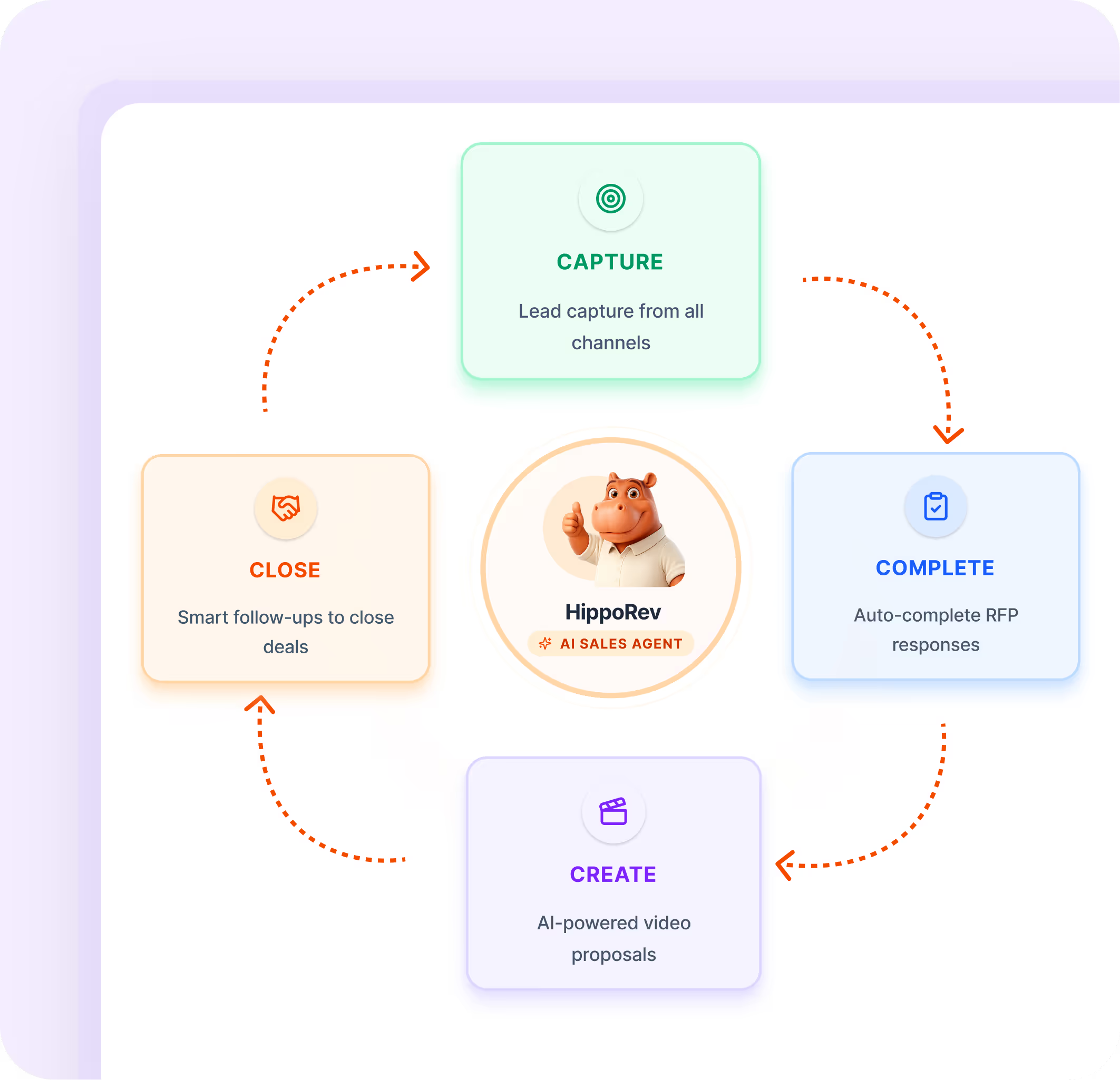
There's a real-world version of this convergence problem already playing out in group sales, where roughly a third of corporate RFPs reportedly go unanswered and most awards go to whoever responds first. Hotels already own the systems, the PMS, the RMS, the CRM, but nobody owns the motion between them, so deals stall in the same execution gap this conference kept describing. Tools like Hippo Rev exist precisely in that gap: not replacing the systems of record, but running the handoffs between them, so the forecast, the pricing, and the follow-up actually move as one coordinated effort instead of seven disconnected bets.
Group business is where the profit-over-occupancy argument gets tested hardest. A 240-room conference booking isn't just room revenue, it's catering, meeting space, and the ancillary spend that conference after conference pointed to as the real growth story.
But that upside only shows up if the proposal goes out fast, priced correctly, and gets followed through before the planner moves to the next hotel on their list. A platform like Hippo Rev, that pulls pricing straight from the RMS and keeps every proposal aligned with revenue strategy isn't just closing deals faster, it's protecting the total-revenue math this whole event was arguing for, one RFP at a time.
Share this post
Ready to close more group business?
See how HippoRev can transform your hotel sales workflow in 15 minutes.

Follow us


.svg)